
11 Apr 2026
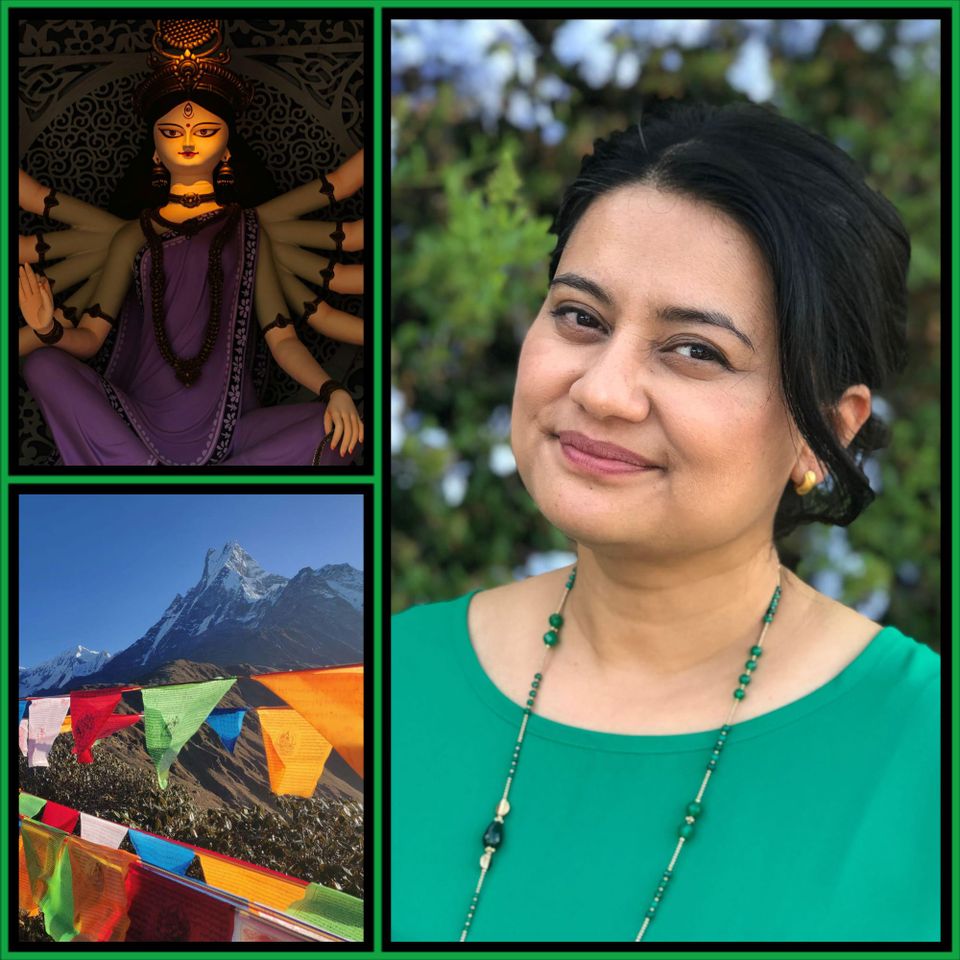
Dekila Chungyalpa on the Sacred Feminine and the Living Earth
What if the Earth is sacred—and climate is a spiritual crisis? Dekila Chungyalpa on the feminine divine and faith-led climate action.
0:00 / 0:00
11 Apr 2026
Dekila Chungyalpa on the Sacred Feminine and the Living Earth
What if the Earth is sacred—and climate is a spiritual crisis? Dekila Chungyalpa on the feminine divine and faith-led climate action.
ShareEpisode Notes
Imagine growing up believing that at the heart of existence is a Primordial Mother—and that She is the Earth.
For Dekila Chungyalpa, that idea is not metaphor. It’s inheritance.
In Tibetan Buddhism, the feminine divine appears as Prajnaparamita, or Yum Chenmo—the “Mother of All Buddhas.” As the daughter and granddaughter of nuns, Dekila was raised in a world where spiritual teaching and healing was often female, and where land itself—especially the sacred Himalayan landscape of Sikkim—was alive with presence, meaning, and obligation.
Today, she is a global conservationist and founding director of the Loka Initiative, building unlikely partnerships between climate scientists and religious leaders across traditions—from Buddhist monastics to Catholic clergy, Indigenous elders to Muslim clerics and Evangelical pastors. Her work suggests that the climate crisis is not only scientific or political—but spiritual.
- UW: About the Loka Initiative
- Loka Initiative website
- Center for Humans and Nature: Dekila on ecology and the Buddhist concept of interdependence
Transcript
Anne Strainchamps: Welcome to Wonder Cabinet. I'm Anne Strainchamps.
Steve Paulson: And I'm Steve Paulson.
Anne Strainchamps: Sometimes I wonder what it would be like to grow up picturing the face of God as female — singing hymns and saying prayers not only to a Holy Father, but to a Great Mother, the source of all life.
Steve Paulson: Many religious traditions have language for a divine feminine, sometimes in plain sight, sometimes in forgotten scriptures and teachings. In names like Gaia, Sophia, Shakti.
Anne Strainchamps: Shekhinah, Prajnaparamita.
Steve Paulson: Whatever She's called, there's often a sense that She embodies the deep wisdom of the earth.
Anne Strainchamps: So, what would it be like to grow up with Her?
Dekila Chungyalpa: Because I heard it talked about and taught at a young age, for me, as a child, the visualization of that was always that She is feminine. She's the Great Mother, and She's the Earth.
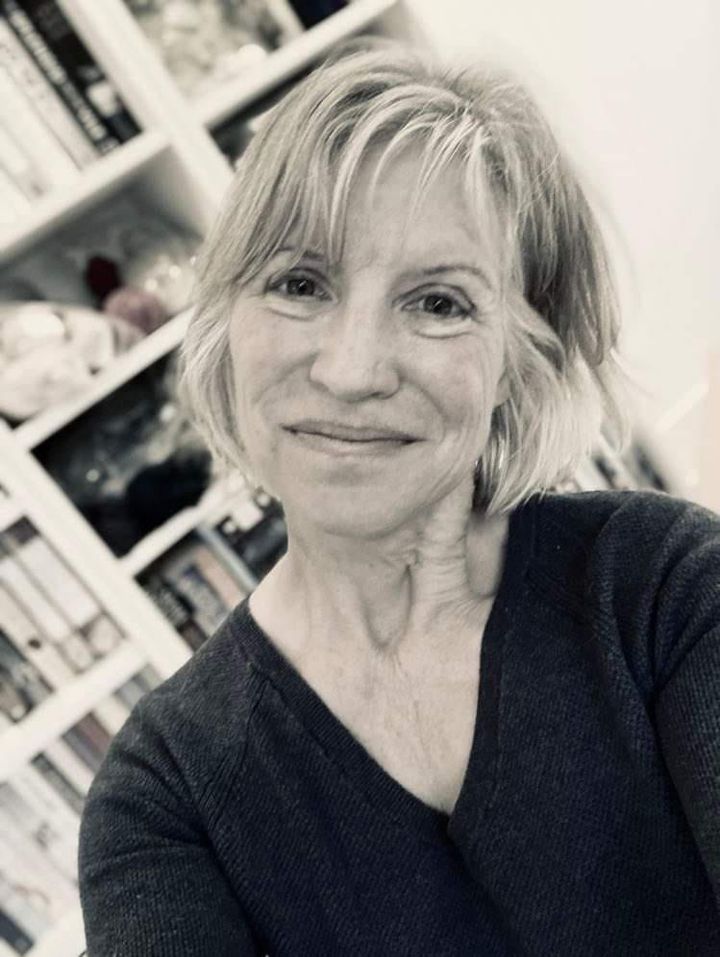
Anne Strainchamps: Meet Dekila Chungyalpa, an environmental scientist and conservationist who grew up in one of the most beautiful and sacred landscapes in the world — in the high Himalayan mountains, an area famous for Buddhist monasteries. Dekila herself is the daughter and granddaughter of a spiritual lineage of Tibetan Buddhist nuns.
Steve Paulson: So I want to hear more about Dekila, but first, I think you should talk a bit about this concept of the divine feminine. I mean, we have visited churches and art museums all over Europe, and you always gravitate to images of women — Christian saints and Greek and Roman goddesses. There's something about sacred women that just seems to pull you in.
Anne Strainchamps: Well, they're powerful. Spiritually powerful, I mean. That's something I didn't see a lot of as a child. I grew up, as you know, culturally Protestant. All the Bible stories I heard were always about men — God the Father, Jesus the Son, Matthew, Mark, Luke, John.
Steve Paulson: So you felt left out?
Anne Strainchamps: Disconnected, I think.
Steve Paulson: So when did you begin to think that there might be something in religious traditions that would speak to you?
Anne Strainchamps: I think it might have been my first experience of all that art you were just talking about. I was 12 when we moved to Italy for two years, to Florence, birthplace of the Renaissance. I remember being transfixed by Botticelli's Birth of Venus — and then the iconography of the Virgin Mary, all those paintings covered in gold leaf of the Madonna holding a baby. They're in every church, every museum. They're so powerful. She's got such gravity and presence. There's a reason they've been revered for centuries.
Steve Paulson: But I know it's not just the images that have drawn you. I've seen you for years reading books about women and nature and spirituality.
Anne Strainchamps: Those three things are linked for me, I guess partly because of ecofeminism — learning to see the historical connection between the domination of the earth and the oppression of women. Like a lot of women, I feel a sense of urgency and anxiety and grief around climate change, and it feels personal, I think partly because of my gender. On the spiritual side, modern earth-based religions like neo-paganism and Wicca have always really resonated for me. And then in a larger sense, I think that we are all living through a massive cultural shift — away from thinking of the Earth as purely material and therefore a resource, toward thinking of it as sacred. Part of what we're doing on this podcast is documenting that, right?
Steve Paulson: Yeah, absolutely.
Anne Strainchamps: Which is why I wanted people to meet Dekila.
Steve Paulson: So how did you meet her?
Anne Strainchamps: Through two good friends — Brooke Hecht from the Center for Humans and Nature and Hilary Hart from the Kalliopeia Foundation. The three of us have been talking for years about wanting to host some conversations for women about land and nature, ecology and spirituality. And then Hilary held a workshop for women writers, and Dekila was there.
Steve Paulson: Okay, let's listen.
Anne Strainchamps: I feel like, for the last year, I've been having these occasions where I'll be just with women, and it just feels like — water in a desert.
Dekila Chungyalpa: Yeah, I feel that. I mean, I grew up with women. I was raised by women, primarily. I come from Sikkim in the Himalayas, where the culture used to be quite matrilineal in many places. We do a lot of our practice together. My grandmother took her vows after she was widowed and became a nun. My mother took her vows in her late 30s. So I was raised not just by women and among women, but I was raised to look to women for spiritual practice and healing.
Anne Strainchamps: I wanted to ask you about that, because that is so rare — to have grown up in a spiritual lineage of women. There are not that many in world religions.
Dekila Chungyalpa: It was a little unique when I think back. Because my mother and my grandmother were practitioners, and I spent so much time with them, I would watch them meditate and mimic them. The experiences would happen or not, but I had very little formal instruction in many ways. My mother tried — she used to laugh because if she tried to instruct me the way she instructed her students, I was so resistant. I resented her students growing up because they got so much of her time. So whenever she tried to instruct me, I would literally just close my eyes and fall asleep. She had to devise sneaky ways of teaching me to make sure I was still doing my practices.
Anne Strainchamps: You also grew up in this small community in the Himalayas, surrounded by spectacular scenery and a landscape that was sacred. Tell me more about that.
Dekila Chungyalpa: Well, where I come from in Sikkim, it's called Beyul Demojong. "Beyul" actually refers to the secret hidden valleys. All across the Himalayas, there are these beautiful beyuls — they are all considered to be refuges for the dharma. The origin story of beyuls is that they are safe for people during difficult times, so during collapse, these are the places that will remain as refuges.
Anne Strainchamps: Like the source of the Shangri-La myth, it sounds like.
Dekila Chungyalpa: It very much is the source of the Shangri-La myth. But I grew up surrounded by these mountains and lots of sacred sites and sacred areas that have a lot of power. So there was this merging of the sacred and the sacred feminine — and the sacred feminine was also wild.
Anne Strainchamps: This is so what I want to know about.
Dekila Chungyalpa: For me, the circle was full when I was growing up, in that sense. We have all of these rituals where we actually communicate with the mountains. The mountains are alive for us. In West Sikkim, you don't even name any of the animals without adding an honorific. If you see a bear — and "bear" is "dom" in Bhutia and Tibetan — you cannot say "dom." You have to say "Aku-dom," which is "Uncle bear." It made me laugh so much, because I had these memories of getting scolded for not doing it.
Dekila Chungyalpa: I'm so grateful that some of these relationships are still intact, where nature has an innate right to existence. The indigenous communities in Sikkim — the Lepcha in particular — have these stories of the rivers, where rivers have identity, personality, likes and dislikes. Some are fast-moving and a little irritable, and some are slow to anger. There are all these storylines around them.
Anne Strainchamps: Oh, I'm remembering talking with a woman who grew up in — I can't remember if it's Ecuador or Peru — surrounded by volcanoes. It's the same thing. The volcanoes have different personalities. Some are explosive and passionate. Some are slow-moving, but then look out.
Dekila Chungyalpa: It always makes me laugh, because our mountain is Mount Kanchenjunga. He's alive to us. He's our protector deity for Sikkim, for our Beyul Demojong. He also has a personality. He's quite old — there have been tests, and it turns out he's made up of rocks that are over a billion years old. It's sort of funny because Mount Everest is, of course, the towering peak — but Kanchenjunga is so much older. Everest, he's like a younger brother. He's just very young.
Anne Strainchamps: And your mountain has never been climbed, right?
Dekila Chungyalpa: The Sikkim side has not been climbed. The Lepcha have fought for decades to protect the mountains. There is really something to be said about indigenous peoples and how they put their bodies on the line to protect the Earth, because she is sacred to them. There is also this deep holistic understanding of how our well-being is dependent on her well-being. Most of us who leave wild areas or leave livelihoods where we are closely connected to the earth forget that. We get used to taking money out of ATMs and buying our spinach wrapped in plastic at the store. We forget where it comes from.
Dekila Chungyalpa: So, because it was stamped so early in me that the sacred feminine and spiritual practice could be wild and could be in wilderness, I don't think it surprised anybody that I became an environmentalist. It was almost like, "Oh, there she goes. We all knew this was coming."
Anne Strainchamps: Say more about that — the sacred wild, the wilderness, and the sacred feminine coming together.
Dekila Chungyalpa: In Vajrayana Buddhism in particular, there are practices where you really become one with what is often described as Mother Wisdom or Mother Clear Light. In Sanskrit, it's called Prajnaparamita, which is the Great Mother. That experience of the practice is really this pure union that you have with wisdom and emptiness. This is one of the aspirations all of us have as practitioners — that we will eventually taste this great bliss. For me, as a child, the visualization of that was always that She is feminine. She's the Great Mother, and She's the Earth. That association was so obvious to me.
Dekila Chungyalpa: I don't mean that necessarily in the biological sense. I think anyone can access the sacred feminine — it doesn't matter if you're in a male body or a female body or a trans body. We can all access it.
Anne Strainchamps: What does it mean to call it the sacred feminine, then?
Dekila Chungyalpa: I think it is about the softness. There is something there about all the things we cover up as we grow older — all the softness and the yielding that we are so comfortable doing when we are younger, and that we become unable to do because we are trained not just to have a solid identity, but to build our ego castle around it. The feminine principle really comes from letting go of all of that.
Dekila Chungyalpa: When you break it down, one of the things I love in Tibetan Buddhism is that the assumption would be that the male principle is wise and the female principle is compassionate — but it's actually the other way around. The female principle is pure wisdom and the male principle is compassion. This is one of my favorite things about Tibetan Buddhism because it's so subversive. It forces you to dig in and look at your own biases, your own assumptions. But ultimately, even when I talk about the sacred feminine, I find myself having to pause and say: our goal is non-dualistic. The union is beyond gender, beyond our ideas and conceptions of what is male and female.
Dekila Chungyalpa: The times we're in — we are truly in a time of environmental and climate collapse. One of the biggest questions I have is: how do we learn from these traditions? How do we learn from traditions that have really held on to the earth's wisdom, and how do we bring it back?
Anne Strainchamps: Right. Well, for me, having grown up culturally Christian — in the sense that we celebrated Christmas and Easter, but they were about Santa Claus and the Easter Bunny — I do feel like I absorbed traditional Western Christian attitudes that equate women with Earth and place them both under a masculine God. Which is why I think to imagine the divine as feminine — that alone is radical.
Dekila Chungyalpa: I know exactly what you mean. Women historically have always been told that we are closer to nature. I identify as an ecofeminist — I studied ecofeminist theory all through school. And yes, I do think we have been harmed throughout the centuries in almost every social setting we can think of because we are identified as being closer to nature. That's true for people of color as well — Black and brown bodies. There is this deep-seated fear that nature is something that cannot be controlled. And women also exhibit those tendencies — that we cannot be controlled. We flow with the moon. We give birth. We have menopause. There are all these things that our bodies do that are beyond external control.
Dekila Chungyalpa: There are some behaviors that we pick up that are innately feminine, and that put value on things not measurable by money or by numbers — friendship and companionship and caring and psychological care. You think about how women hold families together, hold communities together.
Anne Strainchamps: Traditionally, it was women who took care of the sick.
Dekila Chungyalpa: Yes. And one of the things I noted working with different religions was that religious institutions are very often propped up by women — whether it's donations, physical labor, or organizing. All of this is being done by women, but it is men who get to sit on the thrones.
Dekila Chungyalpa: I think maybe one of the things I'm most grateful for about my childhood was that I was never made to feel that as a girl, I would be lesser as a practitioner. It meant that I really felt a sense of freedom — a spiritual freedom — in the way I would practice and how I would embody that in my life.
Anne Strainchamps: It's interesting thinking about not just our hunger to get back into relationship with the natural world, but also the value of ceremony — of having ways to really express your relationship with nature. You can stand and say, "Oh, what a beautiful mountain," or "What a gorgeous lake." But it's not the same as a ceremony, a ritual. You experienced some of those growing up. I remember reading — there was a story about ritual bathing in a river, in a cave?
Dekila Chungyalpa: Oh, yeah. When I was a little kid, my grandmother and her nun-companions went on a ritual, and they took me with them. We went and visited all the secret hot springs, the mineral springs, all across the landscape, and would make our prayers in each one of them. One of the springs, you actually have to slither down to get to a cave where the mineral spring is — it's almost completely underground. How terrified I was, slithering underground. I was so scared because the water was black, and you couldn't see very much because we had to use candles and torches. I remember being really terrified to put my feet in — until my grandmother yanked me in.
Dekila Chungyalpa: They were all there praying and singing out loud. It was just this incredible experience.
Anne Strainchamps: How many women?
Dekila Chungyalpa: Easily over 50, maybe 100 — I don't know. Everybody crammed in, people coming alone or fully clothed, or some, I think, almost completely naked. It was interesting because I could see there were other kinds of women too, other practices being done. But it was very unified. It felt like we were all singing the same chorus.
Anne Strainchamps: You were singing?
Dekila Chungyalpa: We were all singing, yeah. And that was one of my earliest memories of being in practice with my grandmother — as opposed to being dragged along as the kid who holds the umbrella for the matriarch.
Dekila Chungyalpa: And so when I came to the West — I came here when I was 15, my youngest aunt brought me to study, and I arrived in New York City. It was extremely jarring. But I think I was seeking that same sense of communal practice, communal spiritual practice, and land-based practices in particular. I keep coming back to the importance of creating rituals for ourselves. All of us need rituals that tie us back to land. All of us need rituals to remind us that we are born of the earth and that we are inseparable from her. When I have to lead meditations or give talks, I often do this exercise where I invite people to just take a moment to see if they can identify where the oxygen ends in themselves and where they themselves begin. Is there a point in your body where you can say, "Aha — this is who I am and this is where the oxygen is"? Is the oxygen alien? Is that even possible?
Dekila Chungyalpa: There is no life without nature. We are indivisible. And so the ritual has to be something that wakes us up and reminds us of that. The ritual has to create joy — we're not alone, and that's the thing that terrifies us the most. Having a ritual that brings us to recollect that we are in union all the time, every single second, is a joyful ritual.
Anne Strainchamps: I'm Anne Strainchamps, and we're going to take a quick break. We'll be right back.
Steve Paulson: Hey, it's Steve. I want to invite you to visit our Wonder Cabinet website, where you will find more information about the show and Anne and me. I really hope you'll subscribe to our newsletter — we'll tell you the story behind the name of this podcast and some of the amazing guests we'll be talking with in future episodes. You can find us at wondercabinetproductions.com. And please, tell your friends about Wonder Cabinet. This is a brand new podcast, and we'd love your help in getting the word out. Thank you.
Anne Strainchamps: I'm talking with Dekila Chungyalpa, and I want to pick up her story with her experience of working in conservation science, which ultimately led her to found the LOKA Initiative — a program that brings faith leaders from a huge range of religious traditions together with scientists who are working on climate change.
Anne Strainchamps: So I want to ask about your path to this work with faith communities. You initially came to the U.S. to study science, and you wound up a field conservationist running programs — and at a certain point you just felt like this wasn't enough?
Dekila Chungyalpa: I've sometimes described the experience I had as a kind of bifurcation of identity. I wanted to be an environmentalist in a professional way and work on environmental protection. As my career developed, I started experiencing this strange bifurcation where I was a scientist by day and a practicing Buddhist by night. In science — in any profession that is science-related — talking about your faith is absolutely unacceptable. We've created such a separation. This is, of course, part of Euro-derived scientific knowledge, the idea that we can really think our way out of everything. What I was taught in school was very much that your emotions are what will lead you astray.
Dekila Chungyalpa: I sometimes tell this story because I think it captures the training. One of my first field trips, I was with a chief scientist, a very famous conservationist in the field. We were in the Terai — the long grasslands between Nepal and Bhutan, tiger and elephant habitat, absolutely gorgeous. I was in the back of a jeep taking notes as he was showing me the landscape, and then I saw a baby rhino for the first time in my life and I just squealed. Something came out — "Oh my God, that's so cute." He whipped around and looked at me and said, "We don't use those words. We say 'charismatic megafauna.'" It was hilarious and sobering, and I knew exactly what he meant. I started using those words. But that is the training — in the science world, we are trying to convince everybody that we are not emotional, spiritual beings. We are bias-free. That's what we want everyone to believe.
Dekila Chungyalpa: Of course, that's not true. In my case, there was always going to be a breaking point. The breaking point came when I had actually climbed the ladder toward what I thought was success. I had very recently been made director of a field program for WWF US. I was the only woman of color who headed any of those programs — definitely the youngest by far, and the only brown woman from the global south who headed that program. I had arrived at what everybody had told me was success. And then I started having nightmares.
Dekila Chungyalpa: The region I was working on at that time was the greater Mekong region — absolutely stunning, the second most biodiverse river in the world, the mighty Mekong. I was based in Laos. But I kept having this recurring dream that I'm walking in a forest. Initially, everything is wonderful — it's beautiful. And then all of a sudden, I realize it's very quiet. I cannot hear birds. All I can hear are my feet. And then I realize I cannot see or hear anything where life exists. Everything is dead, and I'm in this dead forest, frantic, trying to get out.
Dekila Chungyalpa: No one needs to interpret that dream. I would wake up panicking and really struggling. Those dreams were petrifying because here is this thing that I hold most sacred — nature. It is the basis of my being. My entire practice is inseparable from this experience of being one with nature. And in my dream, what I was processing is that nature is extremely wounded.
Anne Strainchamps: Your dream was also telling you that part of you is dead.
Dekila Chungyalpa: Yes, absolutely. Part of me had died. And there was no confusion around this message. I held it for some time, and then I expressed it to one of my good friends, and he said, "Oh, I have panic attacks." He was working on regional climate projections of what was coming in ten-year cycles, and he said, "I'm having panic attacks about this — I don't know how to get the governments to care." Pretty soon it just became this conversation among all my friends, all my colleagues.
Dekila Chungyalpa: I remember the first time I brought it up at D.C. headquarters — they pretty much laughed me out of the room. To say that conservationists are experiencing PTSD seemed so ridiculous at that time. They were like, "Oh, pull yourself together, girl." And not only that — "Oh, your generation is so weak. In my time — you guys are just too emotional."
Anne Strainchamps: Yeah, millennial snowflake, get over it.
Dekila Chungyalpa: That's right. So there was this real inability for us to understand what was happening and for others to care. In many ways, it was very organic that I began working with faith leaders, because it just happened to be this beautiful, wonderful journey.
Anne Strainchamps: It was also, in some ways, a very practical move. I read that no matter what project you were working on, you just felt like this is not going to scale fast enough to make a difference. And then you watched His Holiness give a talk.
Dekila Chungyalpa: His Holiness, yes. To explain why I lost faith, I have to explain what 2009 was like for environmentalists, probably all around the world, but especially in the U.S. Obama had just come in. There was a lot of hope and enthusiasm and excitement. I had colleagues and close friends working on what was going to be the first major climate bill. That crashed and burned in the Senate — it went through the House of Representatives, but it completely failed. It was devastating for everybody because we believed that with Obama would come this real transition.
Dekila Chungyalpa: Then, five or six months later, I was in Copenhagen for the Convention of the Parties — COP15. The UN brings all the government representatives together and we're supposed to come up with a climate accord that actually protects the planet. COP15 was a disaster. And I have to be honest and say the U.S. government was part of the reason it collapsed — the U.S. really scuttled that deal. I and almost all my friends just lost heart. I have a friend, a very senior person on climate change, who would not get out of bed for months. We had to hold an intervention to get him out of bed. It was just devastating, because we are the people — professional environmentalists are the people who spend every moment of their day in communication with the Earth. And what the Earth was telling us is that we're running out of time.
Dekila Chungyalpa: So one of the experiences that really brought it home to me was that I was in Bodh Gaya — the biggest pilgrimage site for Buddhists around the world, where the Buddha was enlightened. We have these massive periods where pilgrims come from all over the world. His Holiness the Karmapa was holding the Kagyu Mönlam at that time. I'm sitting there in the audience, kind of checked out — I'm there mostly to keep my family happy. And His Holiness suddenly, out of nowhere, starts talking about vegetarianism. As Tibetans and Himalayan people, this is very atypical. We come from the highlands where it's cold and not much green grows, so we lean on meat and dairy quite a lot. He started talking about vegetarianism, and at one point he just said, "And because of climate change, it's really necessary." I was completely transfixed. There were tens of thousands of people in the audience. He said, "I've become vegetarian — it's not that hard. Based on the Buddhist principles of compassion, would any of you consider giving up meat?" And the sea of hands went up, including mine.
Dekila Chungyalpa: It was this amazing moment of seeing mass behavior change because that one person who can influence behavior change for all those people happened to make an ask.
Anne Strainchamps: And to be clear, I think what you're saying is it's not necessarily that it's an authority figure — even if he's an authority within a faith. It's what the faith itself represents, which is an entirely different way of relating to and thinking about the natural world.
Dekila Chungyalpa: Absolutely. I think there is something to be said about how we message, who the messenger is, and how close the message is to your own belief system and your values — those three things. Right now, working with faith leaders, what is really clear to me is that they are master communicators. They are also masterful at creating joyful occasions, joyful gatherings. There is something skillful about doing that — it doesn't just happen. You have to design it in a skillful way.
Dekila Chungyalpa: So I turned to WWF and I convinced them to let me work with religions in five different places around the world. I said to them, "This is a pilot project — it doesn't matter what religion, what background, or even what conservation issue." And I love them because they let me. For five years, they funded me to work with the Catholic Church, with the Vatican, with indigenous leaders, with Buddhist monks in Cambodia and in the Himalayas.
Anne Strainchamps: I'm very curious about how this worked with Christian leaders.
Dekila Chungyalpa: I worked with all of these different religions in different places around the world — the Amazon, East Africa, the Mekong, the Himalayas. The hardest place to work was the U.S., because there is such a huge schism between science and religion the way we see it in the U.S. and Europe in particular. And there is this whole projection that it's Judeo-Christianity and its values that has brought us to this point. But what I learned was that even in my earliest overtures with the Evangelical church in 2009, they were really willing to hear me out. They didn't trust me — they didn't trust the institution I represented — but they were willing to hear me out. And I'm not sure you can say that about science, actually.
Dekila Chungyalpa: There have been times where scientists have really shut me out when I said I'm going to work with religions. So we have to be really honest and say that these biases exist at both ends — it's not just one side. But the other thing I learned was that if I stopped trying to convince them to see the world the way I did, there were actually meeting points where we naturally agreed. It turns out we naturally agree that natural disasters are terrible for human beings, and we should do everything we can to help people recover. The Evangelical church is one of the most generous post-disaster donors anywhere in the world. If we bring someone from a similar congregation elsewhere — let's say Africa or Latin America — and they come and talk about how climate change is devastating the planet, nobody walks out. Everybody is there witnessing.
Dekila Chungyalpa: What became clear to me, over the years, was that the most fundamental piece of working with religions is trust. They have been othered for so long, and so often the language is so emotionally charged for both groups, that we really have to create safe spaces where people can talk and nobody interrupts — people just listen. One of the things I've learned along the way is that a lot of Evangelical preachers feel very lonely. They understand what is happening. They know what is coming. But they might be in a congregation that is more conservative than them, or they don't have the science or the vocabulary to explain it in ways that make sense. Almost every faith leader I ever spoke with around the world has said, "I know what the problem is, but I don't know what to do because my resources are limited."
Anne Strainchamps: The objections are not necessarily paradigm-based — not about climate denial. Not "this is all a liberal myth."
Dekila Chungyalpa: Yeah, no — there's a whole diversity of where people stand. For me, one thing I know is that someone like me will never reach a far-right person. Someone like me will never reach someone who really genuinely believes that if you don't believe in Christ, it's over for you, and that you should not be in America — people who really believe that America should be a Christian nation. I will never reach them. But an Evangelical pastor can.
Dekila Chungyalpa: So I'm very clear about the fact that this is partly why I created this project. I want to feel safe in America. I'm American, and I would like to feel safe here. I know without a doubt that the way forward cannot be to pretend like this is not happening. How does that protect me and the people I love, when this kind of nationalism is rising? We have to find ways to bridge. We have to empower people who are in the middle — who are trying to understand what is happening to their own faith and how it's being co-opted into politics. I see that as part of my responsibility now, doing this work with faith leaders.
Anne Strainchamps: We've talked about the struggle to find and hold on to a different paradigm — in terms of how we see and feel ourselves in relation to other beings and the natural world. Is there another paradigm that is compatible with science?
Dekila Chungyalpa: I'll be up front — I'm raised Buddhist, so obviously Buddhism is what I know best. One of the things that has been really obvious to me is that there are certain principles in Buddhism that really mirror nature, and natural principles that mirror Buddhist principles. Going back to this idea of interdependence — what I absolutely love is when I look at the planet, what I see is a massive closed loop. I see a planet as an entire system where you have the atmosphere, the lithosphere, the hydrosphere — air, water, land — and nothing really leaves or enters it. Everything is happening here. The people we love, the people we hate, all the wars, the people being bombed with U.S. money and the retaliation that will come — that is a karmic cycle of its own. All of these things are happening in this closed system.
Dekila Chungyalpa: The amazing thing for me is that we as individuals are born, we live, hopefully we thrive, and then we die. And then the coolest thing happens — we decompose. And when we decompose, we become energy for another life cycle. This amazing recycling of energy and nutrients, constantly again and again creating life — this is interdependence. This is actually how life is created. We are constantly weaving into one another. There can be no real separation.
Dekila Chungyalpa: So this idea that we other somebody else just because they don't agree with us — even if they hate us — I philosophically cannot accept that. Which is partly why my life's work has been about bridge building. I have to figure out ways where we are able to put down our hate and move forward, because ultimately what happens to them happens to me, and vice versa.
Anne Strainchamps: I do feel like this circles back to mother wisdom and to the way we all begin in a mother's body. Oxygen and carbon that came possibly from somebody who had a life and died and decayed — and here you are. That's the ultimate female principle.
Dekila Chungyalpa: A lot of the time when I'm meditating, especially on impermanence, I find this almost deep humor. I start laughing because I think about Mother Earth and about the great mother — Prajnaparamita — and I think about how there is such a deep-seated sense of play and humor in the design of life. This idea that no matter how separate we think we are, actually we are inseparable. No matter how divided and alone we feel, we are completely in union all of the time. So it is less of something alien — a wisdom we have to go out and find — and more of just allowing ourselves to sink into what we already know.
Dekila Chungyalpa: I really urge people who don't feel connected to just go spread eagle on land. Allow yourself to experience the sensation of being held by the land, by the earth. There is not a moment of existence where she's not holding us up.
Anne Strainchamps: Dekila Chungyalpa founded and directs the LOKA Initiative at the Center for Healthy Minds in Madison, Wisconsin. This episode was produced in partnership with the Center for Humans and Nature and the Kalliopeia Foundation.
Steve Paulson: During the next year, we'll be bringing you more conversations about spiritual ecology, the earth, and women's lives.
Anne Strainchamps: I'm Anne Strainchamps.
Steve Paulson: And I'm Steve Paulson. Wonder Cabinet comes to you from Madison, Wisconsin, and Vershire, Vermont. Our audio engineer is Steve Gotcher. Our digital guru is Mark Riechers. Send questions or comments to us at wondercabinetproductions.com and sign up for the newsletter while you're there.
Anne Strainchamps: Be well. See you next time.
Subscribe to make sure you never miss an episode.