

14 Nov 2026
From Addiction to a Godless Grace with Meghan O’Gieblyn
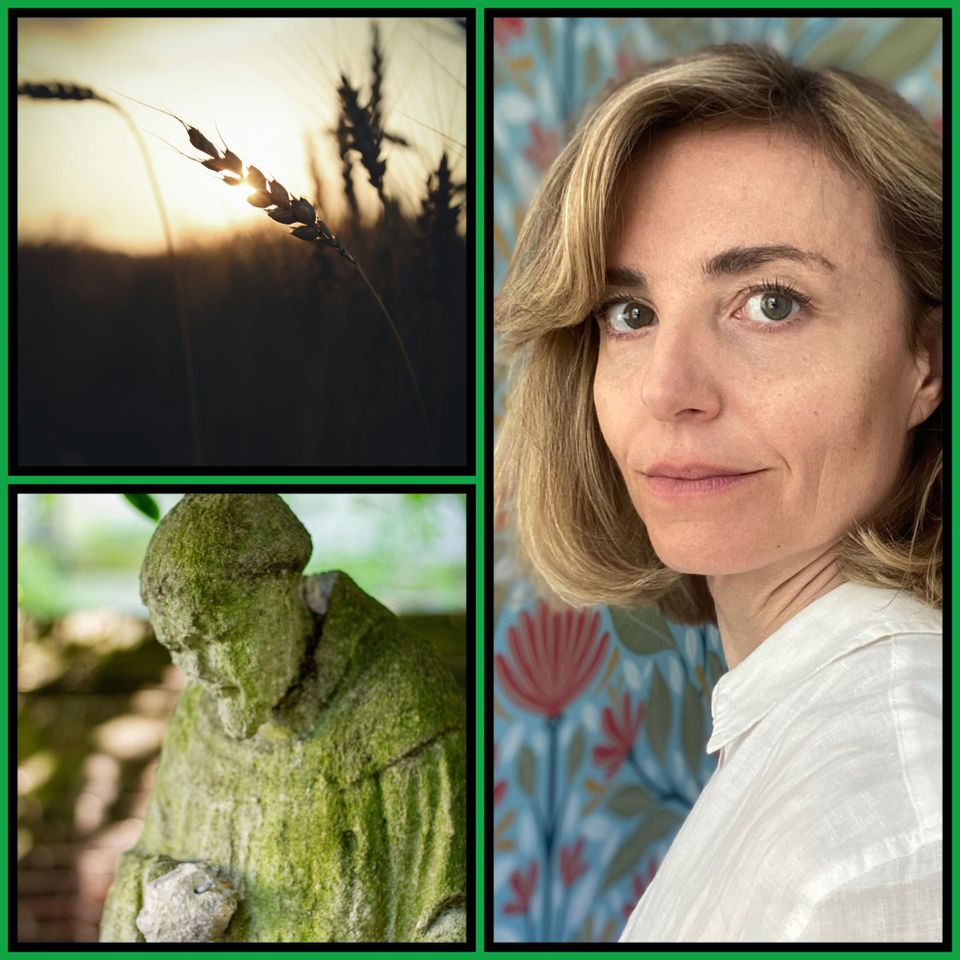
Meghan O’Gieblyn’s searing memoir on her “double midlife crisis” — a relapse after 11 years sober and a failed religious conversion — and the philosophers who saved her.
0:00 / 0:00
14 Nov 2026
From Addiction to a Godless Grace with Meghan O’Gieblyn
Meghan O’Gieblyn’s searing memoir on her “double midlife crisis” — a relapse after 11 years sober and a failed religious conversion — and the philosophers who saved her.
ShareEpisode Notes
Where do you turn when your life falls apart? When you’re stuck in shame and despair? Essayist Meghan O’Gieblyn worked through her own crisis with the help of an unusual guide: the French philosopher and mystic Simone Weil.
In her searing memoir "Will and Attention," O’Gieblyn tells the story of her "double midlife crisis" — a relapse into drinking after 11 years of sobriety and a failed attempt to become Catholic. Raised Evangelical, she left the church long ago, and her life since has been a kind of spiritual quest for deeper answers than religion gave her. In this conversation, O’Gieblyn recounts her struggle with a nearly fatal addiction, her recovery, and a gnawing spiritual angst. Her honesty is bracing, at times almost uncomfortably so, as she describes the allure of drinking and the secret life she hid from family and friends. “I knew that it was bad and that it made me unhappy,” she says. “But I did it anyway.”
To sort through it all, O’Gieblyn turns to philosophy. She wrestles with Nietzsche, William James, and Iris Murdoch, along with Weil, who helped her understand why her willpower kept failing her and how “attention,” as Weil described it, offered a path forward. The book blends personal, almost confessional writing with rigorous inquiry, the qualities that drew readers to her previous books, "Interior States" and "God, Human, Animal, Machine."
Along the way O’Gieblyn confronts big existential questions. How do we find meaning in our lives? Why should we be good? How can we reckon with a divided self “who both wants and wants not to want”? And how can beauty be a guide for living?
- Personal website
- Book: "Will and Attention"
- New Yorker: “Is Will Power Overrated?”
- New York Review of Books: “Wishing It So”
- New Yorker: James Wood’s review of “Will and Attention”
Transcript
Anne Strainchamps: Welcome to Wonder Cabinet. I'm Anne Strainchamps.
Steve Paulson: And I'm Steve Paulson. Where do you turn when your life falls apart?
Meghan O'Gieblyn: I had tried to become Catholic, but it didn't work out. I started drinking again after I'd been sober for 11 years, shortly after that. I was at a place where I was very bewildered by my actions, and will had failed me in every area of my life.
Steve Paulson: Today, writer Meghan O'Gieblyn talks about how she found her way through a crisis with the help of an unusual guide, Simone Weil.
Anne Strainchamps: The French philosopher, mystic, and political activist who died during World War II.
Steve Paulson: But left behind a record of profound spiritual experiences. She became one of the 20th century's great philosophers. And for Meghan O'Gieblyn, they cracked open a fundamental problem in her own life, why willpower kept failing her. And this is the subject of her stunning new memoir called Will and Attention.
Anne Strainchamps: You know, I think what is so remarkable about Meghan's work is the way she blends very personal, almost confessional writing with rigorous philosophy. I mean, that's what people loved about her previous two books of essays, Interior States and God, Human, Animal, Machine. But my sense is this book is at a whole other level.
Steve Paulson: Will and Attention is the story of Meghan's struggle with addiction and recovery and with a crisis of faith. She grew up evangelical, left the church, and her life since has been a kind of spiritual quest for deeper answers than she found in religion. And she is unflinchingly honest. At times, it gets almost uncomfortable. I mean, she talks about drinking as religious rapture, but above all, this is a philosophical memoir.
Meghan is wrestling with thinkers like Nietzsche, Iris Murdoch, William James and Simone Weil. And she's asking profound questions, not just how we can find meaning in our lives, but also why should we be good? What are the risks and rewards of staring into the void? And how can beauty be a guide for living?
Anne Strainchamps: Big existential questions that do not have clear answers.
Steve Paulson: Exactly. My kind of book.
Anne Strainchamps: Let's listen.
Steve Paulson: Meghan, the title of your book comes from this quote from the French philosopher Simone Weil. "We have to try to cure our faults by attention and not by will." And you have that pinned above your desk, right?
Meghan O'Gieblyn: Yeah. I came across this quote about four years ago. I had just come back from something of a double midlife crisis and happened to be reading Weil's writing and came across this one line. And it just struck me really hard, like it was one of those experiences where you feel like you've heard somebody articulate something that you've known deep in your bones for a long time, but maybe couldn't put into language.
I also didn't understand it, which I think was part of the appeal. I really understood the part about will, right? Because I had not been able to will myself out of an addiction, and I hadn't been able to will myself to believe in God, even though I wanted to.
Steve Paulson: Why do you think it failed you? Because, I mean, a lot of people would say will is the thing that makes us go, that gives us a good life. If you try hard enough, if you have enough grit, if you have enough stick-to-it-ness, that's the ticket to success.
Meghan O'Gieblyn: I don't disagree with that either. I think in a lot of areas of life, willpower can take you very far. What it can't do is enact some sort of inner personal transformation, help you overcome an obsession. You can't will yourself to have creative inspiration.
I had gotten to a really bad place in my 20s where I was drinking and just trying to control it. And I exerted an extreme amount of willpower in trying to limit the amount that I drank, only drinking during certain days or hours, or trying to change up what I drank. All these things that addicts do to try to solve what's fundamentally just a disease, right? That was one way in which will had failed me.
So I was curious about the quote. You know, she positions will against attention. This idea that attention is the solution. Her writing is so elliptical and elusive. She says attention at its highest is the same thing as prayer. She says attention is a state of mind where the “I” disappears. But then the orientation also requires being very open and letting go of attachments and expectations, because the thing that keeps us from true attention, in terms of seeing the whole picture, is that we're really narrowly focused on something that we want out of the situation, right?
Steve Paulson: So I want to come back to your story. But first, I mean, you've already mentioned Simone Weil, and she's the touchstone in this book. I mean, the philosopher that you keep coming back to. She's fascinating and very enigmatic. She signed up for these leftist causes. She went off and fought in the Spanish Civil War, right? And then she died really young. Like at 34. And some people say she starved herself to death. She led this very ascetic life. I mean, she was basically denying herself any kind of pleasure and really sustenance.
Meghan O'Gieblyn: Yeah. And she had this just strong talent for asceticism. It's going back to when she was a child and she gave up sugar out of solidarity with the troops on the Western Front when she was like 10 years old, I think.
Steve Paulson: So she had this very idealistic streak.
Meghan O'Gieblyn: Yeah, right. And she did go for long periods of fasting or eating very little. And there's been a lot of debate about whether that was just ordinary anorexia or whether it was, you know, it was often for spiritual reasons. Sometimes it was for political reasons. But she did come down with tuberculosis when she was 34 after surviving on basically children's war rations for a long period of time. And she refused to eat on her deathbed. And so the coroner ruled her death a suicide.
Steve Paulson: I mean, one wonders what was going on.
Meghan O'Gieblyn: Yeah, yeah. What was so fascinating to me in reading about her is that she is, by all accounts, just like the most strong-willed person who's ever walked the planet.
Steve Paulson: And yet she was saying, no, we shouldn't pay attention to will. We should pay attention to attention instead.
Meghan O'Gieblyn: Yeah, and I think that there's something I recognize in that, too, because I'm a very willful person also. And I think that it's really the people who are very strong-willed who suffer the most from their will and who come to realize its limitations also.
Steve Paulson: She grew up as a secular Jew, but, I mean, she's identified basically as a Christian writer. She was drawn to Catholicism, but it's not exactly clear whether she believed in God.
Meghan O'Gieblyn: Yeah. She referred to God as the void, which many people have interpreted as a form of atheism, or it could also be interpreted as a form of negative theology, that God is beyond human understanding. We can't really wrap our minds around God, so we have to imagine God as nothing. But yeah, her spiritual writing is very idiosyncratic.
She started to be attracted to Christianity in her late 20s. And she had an experience where she was on vacation in Italy. She walked into a little chapel in Assisi and felt immediately that she was compelled to kneel.
Steve Paulson: Assisi, where St. Francis made his mark.
Meghan O'Gieblyn: Yes, it was actually the chapel that St. Francis built, which is still in Assisi. But she never converted to Catholicism because she didn't like the idea that all of these other religious traditions that she believed contained truth were seen as heretical by the Church.
Steve Paulson: Yeah, so you mentioned that she talked about the void, looking into the void, which was maybe her understanding of God. And my sense is that idea resonates with you, looking into the void. What does that mean for you?
Meghan O'Gieblyn: I think the thing that most immediately resonated with me was that I had grown up evangelical in a type of faith that was very experiential. People talked about having visions from God, God speaking to them directly.
Steve Paulson: Did that happen to you?
Meghan O'Gieblyn: No, never. And I always thought that there was something wrong with me because, you know, I did all the things. I prayed. I tried to live a good life. I studied theology. But I never had a direct experience of God or even a sense there was something larger than me.
And I was really trying to get away from this idea that I grew up with, which is like God is some benevolent bearded Santa Claus in the sky who wants to make your life better and has a special plan for you. And I had always had a problem with that just because it's not attuned to my experience in the world, which is so much vaster and more mysterious than that. And there's all these theological problems that arise, like why do bad things happen to good people? And so I had the sense that I wanted to expand that, but it had no starting place at all. And so the idea of a void was something I could, at that point, maybe the only thing I could wrap my mind around.
Steve Paulson: So I want to come back to your story and what you described at the top as your double midlife crisis. You started drinking again after 11 years of sobriety. You went back to institutional religion. I mean, you had grown up in a Christian fundamentalist family. You went to Bible school. You rejected all that. You came back to religion in some way. And so tell me a little bit about what led you up to that point, to this double crisis.
Meghan O'Gieblyn: Yeah, I was raised in an evangelical family. I would say that we were fundamentalists. My family doesn't use that word. But, you know, we were taught six-day creationism. I was homeschooled growing up. We believed that Christ was going to return, probably very soon. I studied theology at Moody Bible Institute in Chicago for two years. Very old, very conservative Christian school. And I had a faith crisis while I was there that was largely related to the big problem that everybody ends up leaving over, it seems like, the problem of evil.
Steve Paulson: How can we account for evil with a benevolent, all-knowing God?
Meghan O'Gieblyn: Yeah, exactly. And I wasn't given satisfying answers to that at the time. And it was also compounded by the problem of evil in terms of hell. Like, why does everybody have to suffer in hell? And so I left the school, and then I left the faith shortly afterwards.
Steve Paulson: This was in your early 20s?
Meghan O'Gieblyn: Yeah, it was in my early 20s. And I ended up living in Chicago for many years. I started drinking pretty soon after that. I don't want to be too confident about cause and effect, but it felt like it was related to this sort of existential crisis of my life having meaning and this larger worldview where I felt like history was going somewhere. And then having lost that and just feeling like, why should I try to do anything now? So, yeah, and I was working in restaurants and bars during those years. I ended up landing in rehab when I was 28.
Steve Paulson: I mean, if you don't mind going here, because I think this is sort of an important backdrop to what ended up happening. I mean, it got really bad.
Meghan O'Gieblyn: It got really bad, yeah. There was a point where I couldn't pay my rent anymore, and I had lost several jobs in a row. And so I moved back to my parents' place in Michigan, was living with them, was continuing to drink alcoholically there, and they very quickly found out, and I got in a fight with them about it, and I left out of anger. And I didn't have anywhere to go. I didn't have any friends in Michigan anymore. So I basically was living out of my car for the last six weeks before I finally landed in treatment.
Steve Paulson: You said you nearly died.
Meghan O'Gieblyn: Yeah, I mean, I woke up many times in places where, I mean, I woke up on the curb, like in the street. You know, anything could have happened to me. I drove, it's hard to talk about this now, but I drove in blackouts on the freeway.
Steve Paulson: Oh, my God. Wow.
Meghan O'Gieblyn: Yeah, just did all sorts of things. And the fact that I survived just feels, I don't know how it happened. I don't attribute it to any kind of higher power or anything. I just, I got lucky. But yeah, so I finally got to a place of real desperation where I called my sister and told her I wanted help. And she took me to a treatment center. And I did, I think, two weeks of inpatient, was introduced to recovery communities through that. And once I got out, I had a real desire finally. And it's so mysterious when that moment happens for people.
Steve Paulson: Desire for what?
Meghan O'Gieblyn: Desire to stay sober, to not live that life anymore. And I ended up staying sober for 11 years after that.
Steve Paulson: And by all outward appearances, you had a really good life. I mean, your writing career took off. You wrote these really highly regarded books. You became a prolific magazine writer, in top magazines. You got married. I think you described yourself as a cheerful nihilist.
Meghan O'Gieblyn: Yeah. That was more so when I was drinking.
Steve Paulson: Oh, when you were drinking. Okay. Sorry.
Meghan O'Gieblyn: Well, yeah, so it's funny. I mean, this is just a product of my delusional alcoholic mind where, you know, I thought, yeah, life has no meaning, but hey, let's eat, drink, and be merry, right? And obviously somebody who was drinking to the point of oblivion doesn't actually believe that.
I felt like I got the door cracked a little bit on spirituality through being involved in recovery communities, where there is this emphasis on a higher power or being open to some sort of spiritual practice. And I meditated a lot.
Steve Paulson: I mean, because part of, at least AA, as I understand it, is you're surrendering to a higher power, right?
Meghan O'Gieblyn: That's part of the 12-step model, yeah. And I did do some 12-step work. And yes, surrender is a huge part of that. And I think that that was something that to me was really familiar from growing up in the church, where I would often hear people tell their testimonies. It was always about, you know, I tried to live by my own will and my will failed and I had to ask God for help.
So, yeah, I had a greater sense of not being in control, but also not having any sense of what I was surrendering to. Because this is a tricky thing. It's like you're supposed to hand your life over to some higher power. Okay, well, what is that? Is it the universe? Is it fate? Is it, you know, like a traditional God? I think what I wanted was this very childish desire for protection. Like I wanted to surrender, but with the assurance that I was going to be taken care of and that my life was going to go well.
Steve Paulson: You're talking about these years of sobriety.
Meghan O'Gieblyn: Yeah, this is during sobriety.
Steve Paulson: Okay. So, skipping ahead, I mean, the subject of your book is you had this relapse. You started drinking again after 11 years, which suggests something was missing for you.
Meghan O'Gieblyn: Yeah, something was missing, and I think that was part of what I was looking for in Catholicism, was just some clearer sense of God or of something that I could submit myself to.
Steve Paulson: There is another explanation for this, that maybe life just seemed kind of boring. Maybe you craved the chaos, the excitement, the wildness of your drinking years.
Meghan O'Gieblyn: That's been the hardest thing to acknowledge, and I don't think I was ever able to acknowledge it until I started writing the book and thinking really deeply about that part of my life. But I did have this feeling in the years leading up to both of these returns of, like, is this it? Which I think is a question that gets more urgent as you arrive closer to midlife. This was during my late 30s. Where, yeah, I had turned my life around. I had achieved all these things. I was happy. I was in a great community. But everything kind of felt flat in a way.
And I compare it to this word that arrives out of Christian monasticism, which is “acedia.” It's a word that's really difficult to translate into English. It sometimes means listlessness or sloth or restlessness. I thought of it as a kind of metaphysical boredom, you know, the sense that I'm doing all the right things, I'm checking all the boxes, but what does it all mean?
Steve Paulson: Yeah. Well, you also refer to William James, the great philosopher who lived a little over 100 years ago. He talked about sick souls. And he said he himself was a sick soul. I mean, these people who just sort of, they can't be happy. They're just always struggling. What about you? I mean, do you think you had a sick soul?
Meghan O'Gieblyn: 100% sick soul, yeah. I had a friend who was reading that book and they're like, I don't know if I'm a healthy soul or a sick soul. I'm like, you're definitely a healthy soul if you have to ask that question. But yeah, the condition that he describes that most resonates with me is this idea of being divided against yourself, of wanting two things at the same time. And I think it becomes really acute in an addiction, for example, where part of you wants to get out of it and be better, and part of you wants to stay sick.
Steve Paulson: Well, I mean, there are a couple of ways to look at this. On the one hand, if you just sort of can't get to this place of happiness or joy or contentment or something like that, maybe you need therapy or psychedelics or something else. Or maybe that's the thing that drives you. You know, the people who are asking the big existential questions. Why are we here? Nietzsche, Simone Weil, Dostoevsky, Meghan O'Gieblyn. I mean, you know, seriously, would we have these great works of art, these great works of literature, if people didn't struggle with the really big questions?
Meghan O'Gieblyn: Yeah, yeah. I think that's a great way to think about it. And that's kind of where I ended up. Yeah, I think so much of the book was about trying to get rid of that second self. How can I not be at war with myself? And I think the spiritual answer to that is, well, you have to transcend your ego and you can reach the state of unity where you're not fighting yourself anymore. And then there's shortcuts to that, which is intoxication. Maybe psychedelic experiences. Sometimes people seem to experience some kind of ego death.
Where I've arrived at is, like, I think we need to have the two selves. You know, we need to have that second self that is witnessing our actions.
Steve Paulson: That is dissatisfied.
Meghan O'Gieblyn: Yeah, that's dissatisfied, right. That this is part of the human condition. That we, you know, not only have desires, we can want different desires. For me, I think I've come to see it as like the foundation of a moral life, that you need to be able to be in dialogue with yourself.
And I think the thing that is so hard and maybe what characterizes the sick soul is that you're in a state of dissonance, right? You're in a state of sharp contrast between what you want. There's this beautiful metaphor in Socrates, and Hannah Arendt talks about this a lot, where he says, the worst thing is for me to be out of tune with myself. The idea is that you want to harmonize the multiplicity within you and to create something beautiful out of it.
Steve Paulson: You know, I think in some ways what you're describing, your circumstances are, you know, unique to you, but I think it's fairly common, what you're talking about. I mean, not just people who've struggled with addiction, but the search for something greater. You know, maybe it's faith. But then there are all these people who are spiritual seekers, but they don't believe in God. They can't go there. But most of them then just get on with their life. You know, okay, that's the way it is. And the thing that's unusual about you, kind of unique about you, is you have this rigor, this intellectual rigor, this spiritual rigor, that you're not willing to just leave it there. You have to kind of investigate that to the point where it can make you miserable.
Meghan O'Gieblyn: Yeah, yeah, absolutely. Thanks for saying that. I feel very seen right now.
Steve Paulson: And I guess the question is, why? Why do you think you are that way?
Meghan O'Gieblyn: I don't know why I'm that way. I mean, for a long time I've attributed it to the fact that I was introduced to these big questions at a young age, growing up religious. And I'm really grateful for that upbringing, the fact that it did attune me to these large metaphysical questions.
And I have a friend who I've talked to about this who's a cosmologist. And he says he loves going out in nature and hiking and camping and looking. And he's like, it's enough just to see the wonder of the world and the night sky and these moments of awe of existence. And I said, well, don't you wonder, why is this here? Why are we here? What's this all for? And he's like, no, I don't really think about that. And part of me envies that, because it is sort of a contentment, and it's a sort of realism, too, in the sense that, like, the things that I'm interested in and questioning, there really are no answers to.
Steve Paulson: Years ago, I interviewed Richard Dawkins, the famous atheist, and we got into a little argument for a few minutes where he said, there are no legitimate “why” questions. Why are we here? There are only “how” questions, like, you know, how did the universe begin and whatever. And my response was, maybe we can't answer the “why” questions, but don't we need to ask them? I mean, I sort of feel compelled to ask them. And he said, no, if there's no answer, there's no point.
Meghan O'Gieblyn: Well, yeah, that's true within this framework in which we're completely immersed, which you could call naturalism or scientific materialism, where we've completely ruled out metaphysics, telos, all of those “why” questions. I think they're important to ask. I mean, to me, they feel important to ask because I can't suppress them. And I think even for people who end up being satisfied either with sort of religious answers or with the sort of secular mystery that we're never going to know, I think those questions arise at some point in everyone's life. Maybe it's not every day, but you go through a life crisis of some sort or you experience something that jolts you out of your ordinary existence. And suddenly those questions, which seemed really abstract, become much more concrete and urgent.
Steve Paulson: Hold that thought, and after the break, Meghan will talk about how she coped with the allure of drinking.
Anne Strainchamps: Hi, it's Anne. I am so glad you're joining us. We have some amazing guests lined up for the weeks ahead. I'm really excited about them. And here's a tip. Maybe you know this already, but if you follow Wonder Cabinet on Apple Podcasts, those new episodes will show up automatically, like a little weekly gift in your podcast feed. I hope you like it.
Steve Paulson: This is Wonder Cabinet. I'm Steve Paulson. Let's get back to my conversation with Meghan O'Gieblyn about her memoir, Will and Attention.
So I want to pick up the story of your relapse, your double midlife crisis. So you started going to a Catholic church, you started going to Mass, and you started meeting with a priest about this, and then you started drinking again. And the thing that I find kind of fascinating in this story is you went to Mass first, and then you started drinking after, right? And it seems like that sequence is important.
Meghan O'Gieblyn: It felt like the same desire, which was confusing to me. What I wanted in Mass was, in just a purely sensory, aesthetic sense, I wanted the big chapel, the darkness, the mystery, even the Latin.
Steve Paulson: I mean, you grew up in a church, a different church, I mean, evangelical church, and you grew up, you know, God-infused. Why wouldn't you be hungering for God again, I guess? You don't think that was it?
Meghan O'Gieblyn: Well, I think, yeah, maybe my upbringing gave me a certain disposition toward it. I had been writing at that point in my life about Christianity, just in a sort of journalistic or critical capacity. I thought at the time, like, well, this is my beat because it's something I know, it's practical, whatever. And I think really what that was obscuring was a way for me to stay connected to something that I had completely suppressed in myself and was still operating at some unconscious level, was, yeah, this real affinity for the Christian story that I still had, and a deep way in which I was shaped by that story and couldn't quite let go of it. And I loved that in Catholicism, that story was treated with reverence and beauty and mystery in a way that it wasn't in the megachurches that I grew up in.
And also just, I had this sense of, like, the demands of religion and what it asks of you. You know, I think the thing that maybe is most characteristic of Christianity for me is this notion that you have to give your whole life to it. Like it's the most important thing and everything in your life should be directed toward this one thing.
Steve Paulson: And there was something that was very attractive to you about that.
Meghan O'Gieblyn: Yeah, very attractive. There's this story in the New Testament about the pearl of great price, about this guy who sells all of his possessions just so he can have this one precious pearl. It's supposed to be about how you should sacrifice anything for the kingdom of God. It's also, I think, a story of an addiction, right? This is the thing that I think is so bewildering to people who are watching someone struggle with an addiction, is that they'll sacrifice their job, their career, their family, everything for this one thing.
Steve Paulson: Well, so I want to ask about that, about the drinking piece of this, your relapse. You talk about drinking as a kind of religious rapture.
Meghan O'Gieblyn: Yeah. I have a very abnormal reaction to alcohol. From what I've understood from people who are normal drinkers, it's just sort of like you get a little bit relaxed and have a warm, fuzzy feeling. And to me, it is like being lifted out of my body and liberated from my mind completely.
Steve Paulson: This is transcendence you're talking about.
Meghan O'Gieblyn: It's total transcendence. It's religious rapture. It's like anything that I've read about mystical experiences, it feels like I've glimpsed that through intoxication.
Steve Paulson: And for someone like you, who, obviously, you're incredibly self-conscious, self-critical.
Meghan O'Gieblyn: Yes.
Steve Paulson: I can see what a relief that would be.
Meghan O'Gieblyn: Yeah. And, you know, I tried through many years of, like, yeah, doing recovery groups, meditating, to try to get to that kind of state. And just, you know, the thing about spirituality is it's so slow. You know, like people have to meditate for their whole lives before they're able to be free of those thought patterns often. You know, when I returned to drinking, it was like, oh, everything that I've been trying to do through this slow, grueling work, I can just have like that.
Steve Paulson: Was the surrender to addiction kind of like the surrender to God?
Meghan O'Gieblyn: Yeah, yes, exactly. And I mean, I was able to let go when I was drinking in a way that I just wasn't in ordinary life. You know, I think one of the reasons why spirituality is often part of recovery groups is because there is this connection between spirituality and spirits. Carl Jung had this phrase, he used this Latin phrase, spiritus contra spiritum, or spirituality against spirits. And he thought that basically the only thing that could cure chronic alcoholics was some sort of spiritual transformation. Like when you surrender to God and say like, okay, I can't do this anymore. This is in your hands. It's really similar to taking a drink and just saying like, screw this.
Steve Paulson: Do you think Carl Jung was right? That the only way out of addiction is essentially spiritual transformation?
Meghan O'Gieblyn: I don't think that's the only way, no. I think that you hear people quit addictions in all different ways, and nobody has a monopoly on the way out. It's largely mysterious. But for me, cultivating a spiritual life, especially since I've come back from the relapse, has been really crucial to my sobriety.
Steve Paulson: Now, the other piece of this, your relapse, is that you're doing both these things in secret. You're going off to Mass in secret. You didn't even tell your husband. You were drinking in secret as well. And I mean, you were lying to people.
Meghan O'Gieblyn: Yeah. And it was a very familiar habit, you know, because I lied about my drinking a lot in my 20s. And you get really good at lying when you're an addict, out of necessity, and having a double life. And I think the secrecy was part of the appeal in some way, that I wanted to have something that was protected from the rest of my life that was mine.
Steve Paulson: So you got found out at some point and you somehow got through this. What do you think was different this time?
Meghan O'Gieblyn: Well, when I came back, I realized, and I mean, this is really the starting of the book, like this book began as notes I was taking on stuff I was reading right after I came back from the relapse. And I realized that I really had to figure out a lot of things that I had been glossing over.
Steve Paulson: I mean, that's interesting. You're saying actually the writing of this book helped you get through it? I mean, this was part of your recovery, was writing the book.
Meghan O'Gieblyn: Yeah. Yeah, it was. It was a way to think really hard about a series of problems that I felt like I had not been turning my attention to. I think when I was in recovery groups, I had this very pragmatic idea about spirituality, which is that, okay, none of this is real, right? We're going to say that we believe in some higher power. It doesn't have to really be true. It's just something to get me out of this pattern of drinking. And there's a lot of people who do that and stay sober for really long periods of time. I mean, I was sober for a decade. The phrase I often hear is like, “fake it till you make it.” Take the actions and your mind will follow.
I did that and it kind of worked. But then what happened was that I got into the state where I was going through the motions and didn't really have any foundational belief. You know, I was working with other alcoholics and telling them like, oh yeah, you've got to cultivate your spiritual life, but I had basically no spiritual life of my own. You know, I was living in a sense of bad faith and again, being in this sort of doubleness. And so I thought I have to figure out a way to believe in something that I can actually buy into and that isn't just like a fairy tale that I'm telling myself.
And so that meant going back to a lot of these theological problems that I had struggled with when I left the faith, including the problem of evil and, you know, whether it's possible to be good for its own sake without expecting something in return. That was a big one for me.
Steve Paulson: You actually ask the question, why should we be good? I mean, most people just take that as a given. Of course we should be good. That's just sort of our natural inclination. Maybe we aren't always, but you actually ask that as a real question.
Meghan O'Gieblyn: And it felt important to me, and it feels insane to bring it up with anybody else. This is part of a series of questions that I inherited from leaving the faith, really late in life, in my 20s. And I read a bunch of Russian novels when I left Christianity.
Steve Paulson: Not sure if that's a good idea.
Meghan O'Gieblyn: No, but I really identify with these questions, which is like, yeah, if God doesn't exist, everything is permitted.
Steve Paulson: Right, yeah, the great Dostoevsky question.
Meghan O'Gieblyn: Yeah, and that was a really real question to me. I think part of it, for my alcoholism, because I have this disease that for whatever reason, what I really want to do in the depths of my soul is just drink until I die. And in order to try to overcome that, I had to find some sort of reason to be good that was just as strong as that and that couldn't be negotiated. Because I think this is the problem, is that like, yes, my life was very good for 10 years. I had every logical reason to not drink, but sometimes we don't want what's good for us, right?
Steve Paulson: Well, I mean, given what you've said, it sounds like there's a piece of you that doesn't want to be good. Actually sort of wants to be the bad girl.
Meghan O'Gieblyn: Yeah, yeah, absolutely.
Steve Paulson: I mean, still. Maybe it's more fun.
Meghan O'Gieblyn: Yeah, it's hard to know how much of it is me and how much, you know, it's funny. People who are addicts talk about their disease as though it's this external entity, like, oh, my disease is telling me this or my disease wants me to drink poison. I mean, I use that language, but I'm talking about myself. That's part of me. I think it's easy to isolate that as being some clinical thing. Like, oh, I have this gene or something that makes me want to do this. Maybe there's some truth to that, but it's also just who I am. It's whatever we would call like original sin or fallen nature. This part of us that just doesn't want to do the right thing or sometimes wants to do the wrong thing just out of spite, maybe to prove that we're free.
Steve Paulson: So, earlier you were talking about how drinking was basically a kind of religious rapture. I mean, it was a transcendent experience. And now you're saying you've got to find something else that compensates for that. So what is that?
Meghan O'Gieblyn: For me, it's this sense of goodness as beauty. I got this idea from Iris Murdoch, and she was a British moral philosopher who drew so much of her philosophy from Simone Weil's work. And I had this epiphanic experience reading her book, The Sovereignty of Good, where she talks about what is the good. She had almost this Platonic understanding of what goodness was. She thought it was something real and transcendent, and that we could see glimpses of it down here, even if we couldn't look directly at it.
Steve Paulson: What does that mean, that good is transcendent and real?
Meghan O'Gieblyn: It's not just a linguistic construct. And she would say there's certain things that we just intuitively respond to as good, like an act of heroism, somebody who's speaking the truth when they are going to be punished for it, somebody who's sacrificing themselves for someone else. And I found that convincing, that idea that there is almost an aesthetic quality or sort of moral beauty to goodness that we respond to as humans, regardless of what culture we come from.
She said that, yeah, beauty is the only visible sign of goodness, or it's the only type of goodness that we love immediately without any sort of spiritual training. And I love that idea. If you think about the answer to, like, okay, why should I live a good life? You can negotiate anything that has to do with self-betterment or stability or health.
Steve Paulson: Right. Now, we live in a culture that is obsessed with self-improvement. I mean, just with optimization. That is American culture right now.
Meghan O'Gieblyn: Absolutely. But if you say, I want to be good because this way of life is beautiful, it's really hard to argue with that, right?
Steve Paulson: What does that mean in everyday life for you?
Meghan O'Gieblyn: That I want to speak the truth, that I want to try to see reality clearly without delusions and fantasies. I mean, I think that's what ego is, is basically this delusion that you're the center of the world.
Steve Paulson: That's truth, but where does beauty come into this?
Meghan O'Gieblyn: For me, it's just easier to think about, like, I don't want to drink because my life is really ugly and I become really ugly when I drink, as opposed to I don't want to drink because then I'm going to maybe get in a car accident or lose my job or something like that.
Steve Paulson: You're not going to get anything from this. I mean, it's not instrumental. You're not wanting to be good because, you know, you're going to get into heaven or something like that, but it's not for anything. It has to just be for its own sake.
Meghan O'Gieblyn: Yeah. And I think that's the thing that is important about beauty, is that it has intrinsic value. We never ask like, why should I stand here looking at this incredibly beautiful tree, or why should I, you know, go look at Rembrandt's paintings, or whatever the case may be. Beauty is sort of the place where questions end. And I realized, I think that was the only place where my questions were going to end also.
Steve Paulson: So coming back to what we were originally talking about, sort of will versus attention. I mean, will, I guess, is you're always doing it for some purpose. Attention is, I guess that's what you're talking about now, right? A different way of thinking about it?
Meghan O'Gieblyn: I mean, I think it's the opposite of will because you can't experience true attention when you're willing. So Weil often talks about willing as a form of eating and attention as a form of looking. And she talks about this story in the Upanishads about two birds that are on the branch of a tree, and one is eating the fruit and the other is just looking. And she said the biggest mistake in our lives, like the cause of sin and error, is that we're trying to eat things that we should only look at. And that you can't, basically, you can't have your cake and eat it too, right? You can either look at it or you can eat it.
I think that's so true. It's almost like, you know, when I'm living my life in a way that's very willful, and I get into this pattern all the time, I have to fight every day against it. Like, okay, here's my list of to-dos, what I've got to do today. Here's what I want to achieve. Like I'm missing so much and I'm not remaining open to just the beautiful contingencies of life that happen to us if we allow them.
Steve Paulson: I mean, you've come to this conclusion that will doesn't get you through the big questions that really matter. Knowing that is different than actually living that. I mean, it's hard.
Meghan O'Gieblyn: Oh, yes. Yeah, I mean, it's the work of a lifetime, really. And it's slow. The thing that's so difficult in modern life is that we feel like everything has to do with some end, like productivity, usually, which is not an end in itself. It's a means, right? But we treat it like an end, like, okay, I have to be as productive as possible. And it's really hard to justify things like, I don't know, just sitting with somebody who's suffering or experiencing something beautiful in nature, right? Or just reading poetry. I often feel like I'm being self-indulgent if I want to read a poem when my inbox is so full. But that's the human experience that we're cheating ourselves of. And I think that it's becoming more and more difficult to cultivate those moments of attunement to things that have value for their own sake.
Steve Paulson: Near the end of your book, you have this fascinating thing that you say. You say, really the great riddle of our existence is not the problem of evil. It's the problem of good. Why is there goodness in the world? Why is there beauty in the world? Have you come to any conclusions about that?
Meghan O'Gieblyn: No. And it's funny because it's the complete inverse of this question, which is like, why is there evil in the world? And I had this moment where, you know, I was in Italy and swimming and just watching people do these cliff dives. And I don't know why it happened then out of all times, but I was thinking, I guess I was thinking about how, like, oh, it's remarkable nobody's gotten hurt. And all of a sudden, it just exploded in my brain of, wait, why isn't everybody always falling to their deaths? Why is this here? Why did this huge volcanic rock end up in these beautiful cliffs? I think it really started with, why does anything exist? Why is there something instead of nothing? Why is there beauty? Why is there goodness? Why is there art and music and human kindness?
It was amazing because it was a question that didn't need to be answered the same way that the problem of evil felt like it had to be answered. It was just a sense of shock at existence. Those moments are, I think, what I'm talking about, the moments where the questions become irrelevant.
Steve Paulson: So I'm very interested in the experience of wonder, given the name of our podcast. It sounds kind of like wonder, what you're talking about, or does that word mean anything to you?
Meghan O'Gieblyn: I feel like it's not strong enough.
Steve Paulson: Yeah.
Meghan O'Gieblyn: Yeah, I feel like “shock.”
Steve Paulson: Okay, yeah. I mean, some people would use the word awe.
Meghan O'Gieblyn: Yeah, awe too. I mean, I think it was all those things, all those things together. But it is almost, to me, and maybe I think what I'm trying to convey with shock is a sense of disbelief. Like, how is this possible? Iris Murdoch calls these moments the sparks. She says there's like a little spark. There must be more than this. It's this sort of gesture toward, this is not an accident. There's some sort of order or mystery beyond this world that we're never going to understand.
I think it's really important to let those moments be sparks and to not try to kindle them into a fire, which is I think what we do with, like, dogma and religion, which is like, okay, well, therefore there must be a God and X, Y, Z, and it just goes from there. And that is, I think, where the human will enters into wonder and tries to steer it in certain directions. And I think really the basis of all wonder, awe, shock, spark, whatever you want to call it, is that we can't will it. It just happens to us. It happens when we're least expecting it, the way that creative inspiration happens when you're least expecting it. There's ways in which you can orient yourself toward those moments.
Steve Paulson: You can become more receptive.
Meghan O'Gieblyn: You can become more receptive so that when they happen, you're there and you don't miss it. And I think that's what attention is.
Steve Paulson: So I'm curious about the writing of this book. You've said that the writing was really important. It was sort of your personal way through, in a sense, a lot of these issues that we've been talking about. You were also revealing a great deal about yourself. I mean, you were exposing yourself. There is shame, embarrassment. You're talking about how you lied to friends and family members. How do you deal with that as a writer, putting that out in the world?
Meghan O'Gieblyn: I don't want to give the impression that it was easy. But I will say that I think it was less shocking to me than it would be for a lot of people because I have been immersed in addiction recovery communities for so long, where all we do there is just talk about our worst moments. And it's like when it works, it's this incredibly destigmatizing thing where you can laugh at stuff. You feel like, okay, we're all human. We're all in this together. But yeah, I mean, I did think about it a lot, writing about such, you know, it's different to share your experience with a few other people who understand addiction as opposed to with the wider world.
Steve Paulson: There is a long tradition in spiritual literature of confessional writing. Is this your confession here?
Meghan O'Gieblyn: You know, I think this book is part confession and part testimony. You know, I grew up Protestant, so we didn't have confession. And I actually, because I never converted to Catholicism, I never got to do confession either.
Steve Paulson: Although you were confessing to your priest when you were meeting him, right?
Meghan O'Gieblyn: Yeah, we had a lot of intimate conversations, definitely, about my life. And testimony has a very different purpose, where you're not, I always think of confession as that you're disburdening yourself, right? That you're sort of like, okay, I need to get this off my chest. And testimony is a much more structured and deliberate narrative form where you're standing up in front of the congregation. You're saying, here's where my life went wrong, here's how I hit bottom or realized I needed grace, and here's how God saved me. And so I think all of my writing kind of stems from this desire for testimony, the sense that my story is just one piece of evidence toward this great pool of first-person writing out there, of people talking about their own experiences.
Steve Paulson: Do you have daily practices that help you sort of deal with these issues that we've been talking about? I don't know. Do you pray? Do you meditate? Do you do things like that?
Meghan O'Gieblyn: Yeah, I pray every morning on my knees. I meditate for very short periods of time because my mind is so, you know, I talk in the book about how I don't know how to pay attention. My mind is all over the place constantly, but I found that I can get some relief for very short periods of time.
Steve Paulson: But you're not praying to God?
Meghan O'Gieblyn: You know, I sometimes say God, but it's difficult. Prayer is really tricky for me because I've had to, like, unlearn prayer, because I was taught, you know, ask for what you want, maybe say some gratitude for some things. And I try mostly to pray for other people. And if I'm praying for myself, I try to pray for things like, help me speak the truth today, right? I don't know who those prayers are going to, if they're going to any sort of sentient being, but it does orient my life toward, I mean, it's a form of attunement, right? Reminding myself of what I'm doing every day and what I want, what the better part of me wants.
Augustine says somewhere that there's this question in Christianity of why do we pray? God already knows what we want. And he says, we pray in order to enlarge our desires. I think that that's really interesting, this idea that prayer is a way of teaching yourself to want the right things and bring your attention back to those things every day.
Steve Paulson: A final question. What do you hope your readers take away from this book, whether they've had addiction issues or not?
Meghan O'Gieblyn: I don't offer any answers really. It's not like I have, like, you know, five lessons that I learned from my double midlife crisis. But I think about what books have done for me, especially first-person writing over the years, which is to make me feel less alone. I think there was a period, maybe when I was first starting to go to Mass, where I felt like my spiritual desires were completely irrational because everybody in my life thought religion was kooky. And I found comfort in reading spiritual autobiographies and hearing people talk about, like, no, this is real. This longing that I feel that we have no scientific explanation for, it's real. So I hope my book can contribute to that genre of just affirming the reality of that experience.
Steve Paulson: I have no doubt that it will. I mean, your combination of spiritual memoir, what you went through, and the rigor with which you're dealing with these questions, it's extraordinary.
Meghan O'Gieblyn: Thanks for saying that.
Steve Paulson: Thank you.
Meghan O'Gieblyn's memoir is called Will and Attention. Her criticism and essays appear in the New Yorker and the New York Review of Books, among other places. And you might want to check out her previous books, Interior States and God, Human, Animal, Machine.
Wonder Cabinet comes to you from Madison, Wisconsin and Vershire, Vermont. Thanks as always to our audio engineer Steve Gotcher and our digital producer Mark Riechers. I'm Steve Paulson.
Anne Strainchamps: And I'm Anne Strainchamps. Send questions and comments to us here at wondercabinetproductions.com and don't forget to sign up for the newsletter while you're there.
Steve Paulson: Be well. See you next time.
Subscribe to make sure you never miss an episode.