

07 Nov 2026
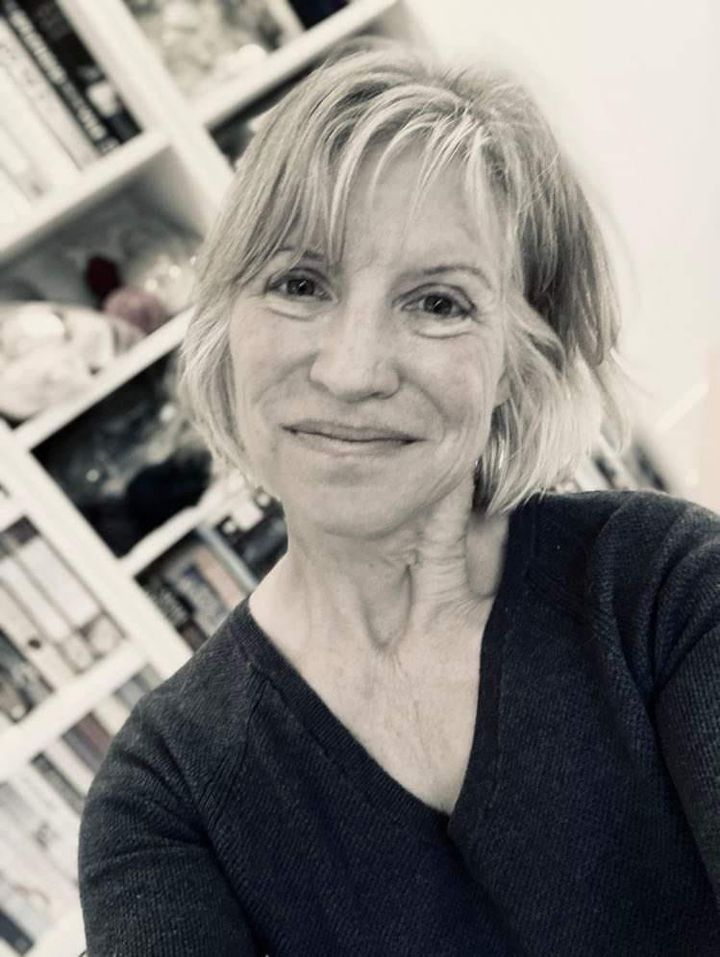
Hannah Fries on the Language of Forests and 'A Wild Ecology of Wonder'
For poet Hannah Fries, the terminology of forest ecology and botany opens a door into “the exquisite strangeness” of trees.
0:00 / 0:00
07 Nov 2026
Hannah Fries on the Language of Forests and 'A Wild Ecology of Wonder'
For poet Hannah Fries, the terminology of forest ecology and botany opens a door into “the exquisite strangeness” of trees.
ShareEpisode Notes
Budbreak. Witch’s broom. Wind throw. These are some of the evocative words gathered in "A Forest Language: Words that Illuminate the Astonishing World of Trees," a new book of micro-essays from poet, essayist and Storey Publishing editor Hannah Fries. This week, she joins us to talk about the power of naming and how words can open a window onto the secret lives of trees.
Hannah’s writing lives at the intersection of science, poetry and wonder. So imagine a field guide written by a poet – a compendium of tree terminology, illustrated with line drawings of leaves, bark, and seed pods. Each word introduces a kernel of new knowledge while simultaneously drawing us deeper into mystery and what Hannah calls “the wild ecology of wonder.”
We sat down with her on a gorgeous October morning, at peak leaf season, to talk about the magic of naming, what we lose when we forget the names of the trees and birds around us, and poetry as a practice of paying attention. We also hear how non-poets can borrow a poet’s tools to see the natural world more closely.
- Website
- Book: "A Forest Language: Words that Illuminate the Astonishing World of Trees"
- Video of stoma (“plant mouth”) opening and closing
- Performance: “Night Migrations,” lyrics by Hannah Fries. Composer: Oliver Caplan. Performed by New Hampshire Master Chorale, Juventus New Music Ensemble.
Transcript
Anne Strainchamps: Welcome to Wonder Cabinet. I'm Anne Strainchamps.
Steve Paulson: And I'm Steve Paulson. And this week we're thinking about woods and words.
Hannah Fries: Bud break, bursting into tenderness.
Anne Strainchamps: Poet and essayist, Hannah Fries.
Hannah Fries: A beech tree's buds are long and golden brown and sharp as the tip of a needle. Watch your eyes in an understory of beech in winter or early spring. When the beech finally lets the fresh light touch its pointy defensive buds, fragile leaves unfold like bright crepe. They are edible. Allow yourself to tear one crinkled leaf and taste that soft chlorophyllic green. Bud break comes like a shiver of knowledge. That yes, it's worth it all. Everything to come.
Anne Strainchamps: That's an excerpt from A Forest Language, a new collection of tiny, one- or two-page-long essays from Hannah Fries.
Steve Paulson: An example of what it would be like if poets wrote field guides.
Anne Strainchamps: So a couple of things to say about Hannah. She's a native New Englander. She grew up in New Hampshire with woods to wander and trees to climb. And she still lives in the woods. She's married to a forester, lives in the Berkshires, taps her own maple trees. And her writing sits right at the intersection of science and poetry and wonder. So she's our kind of guest.
Steve Paulson: You had her latest book, A Forest Language, on our coffee table all summer. What stood out to you about it?
Anne Strainchamps: One thing is just how it feels. Hannah's a book editor with Storey Publishing. She knows what makes you want to hold a book in your hand. So this is a small volume, just the right size for a bedside table. It's illustrated with line drawings of leaves and bark and seed pods. And inside is a compendium of these very evocative tree words.
Steve Paulson: Really? Like what?
Anne Strainchamps: Bud break was one, witch's broom, wind throw, thaw circle. Words that paint pictures. And then there are other words that are more like a foreign language: samara, lenticel, stomata. Each one is a small window into the secret and in some ways utterly alien lives of trees.
Steve Paulson: It sounds a bit like The Lost Words, that big illustrated book of nature words that Robert Macfarlane and Jackie Morris did a few years ago.
Anne Strainchamps: Yeah, so that one, you probably remember, was inspired when the Oxford Junior Dictionary did this very shocking thing and removed a bunch of everyday nature words.
Steve Paulson: Yeah, I remember that, yeah.
Anne Strainchamps: It seems like the editors had decided children didn't need to learn words like acorn and fern and bluebell. And so the Lost Words Project was about rescuing nature literacy. And Hannah's project, I would say, is less about preserving endangered words, and more about how unknown, little-known words can illuminate and embody the natural world.
Steve Paulson: A tradition that probably is as old as human culture. I mean, I can imagine some of the very first words must have been for trees or water or various animals.
Anne Strainchamps: Every culture recognizes the power of naming, and there's something deeply magical about it. And so what happens when we forget or never learn the names of trees and birds and plants? What kind of impoverished imagination results?
Steve Paulson: This was one of the last interviews we did before we left Vermont. And it was peak leaf season then. Must have been a great time to be talking about trees.
Anne Strainchamps: It was. Hannah drove up to visit us on this gorgeous October morning. And she and I made tea and we sat at our dining room table and talked about words.
Steve Paulson: Let's listen.
Anne Strainchamps: So, Hannah, thank you for coming in.
Hannah Fries: Thank you for having me. It's a delight.
Anne Strainchamps: On this beautiful fall day with gorgeous trees. Perfect time to be talking about trees.
Hannah Fries: It is.
Anne Strainchamps: You grew up not too far from here in New Hampshire. Did you have a childhood among trees?
Hannah Fries: I definitely did. There was a red maple in our backyard. And from when I was pretty little, I was very proud that I could climb my way up to the level of the roof of our two-story house.
Anne Strainchamps: You're kidding. And your parents were okay with that?
Hannah Fries: My parents were okay with that.
Anne Strainchamps: My mother would have come out shrieking, “get down out of there!”
Hannah Fries: They were encouraging of tree climbing. I was very careful, but I do remember being up high and feeling the tree swaying in the wind and my heart kind of pounding. But the thrill of being able to see over and the fact that I could get up there and the neighbor boy who was a year or so older than me couldn't. It was very satisfying.
Anne Strainchamps: Every little girl should grow up climbing trees. And then, in this little bit that I'm remembering, you talk about reading in the tree. I just loved this image of you taking your copies of Thoreau and Emerson up to the tree. I thought, no, this is too perfect.
Hannah Fries: It really kind of is, isn't it! I think it was American Studies in high school when we had that introduction to the transcendentalists and it just felt like I should read these in my tree. And yeah, so I would tuck the book into the belt of my pants and climb up there.
Anne Strainchamps: Did you resonate with the transcendentalists even then?
Hannah Fries: I did. As a teenager, the idea of escaping to the woods “for reason and faith,” I think, is an Emerson quote. It just felt true to my own experience of what I felt. So as a young person, it was one of those moments of seeing oneself in literature for probably one of the first times.
Anne Strainchamps: Well, already, here are the two themes we'll explore – words and woods. What would you pick for us to begin with?
Hannah Fries: Chloroplasts? Sort of the story of the beginning.
Anne Strainchamps: Oh, that's a perfect beginning!
Hannah Fries:
Chloroplasts, harnessers of light.
Billions of years ago, long before plants existed, chloroplasts were independent living beings floating in the great ocean of a nearly barren planet. Most likely, they were cyanobacteria, single-celled organisms that still exist today. And they had a superpower. With the chlorophyll inside them, they could create their own energy through photosynthesis. By producing oxygen, they had already begun to change the atmosphere of the planet.
Then, about one billion years ago, a eukaryotic cell with a nucleus came along and engulfed some of these ancient little bacteria. Ever since, the tiny bean-shaped chloroplasts have had a close relationship to the nucleus of the cell that ate them.
Without chloroplasts, plants and trees as we know them would not exist, and neither would we. But those microscopic bacteria in the ocean of a molten planet with a gaspingly thin atmosphere held breathtaking potential. They were harnessers of light. And out of this, lest you think of yourself as small, everything.
Anne Strainchamps: We're getting deep time in! I love that. This is not your first book about trees, but it is the first one specifically about woods and words. You have a great line, “saying is seeing.”
Hannah Fries: It is. Giving a name to something brings it literally into our lexicon, but also into our imagination. Language, of course, is what we humans have for making and searching for meaning. At the same time, having a word for something becomes another way of seeing. In writing these pieces, I tried very hard to not reach for the easy metaphor or human parallel. And then sometimes a metaphor would just rise up, and I'm like, I didn't even have to say it.
Anne Strainchamps: Well, sometimes it's right there in the word, right? Heartwood? Woundwood? Wolf tree? It's just there.
Hannah Fries: Yes. And the reason it's there in the word is because we are human. We are always searching for connection and finding those resonances. And there's a real joy in that.
Anne Strainchamps: I don't think anthropomorphism is a bad thing if it's a way to simply connect and then become curious.
Hannah Fries: I think it's only a danger when it closes us in, when we say, “ah, we see it now – they are just like us.” Instead of trying to imagine a radically different selfhood of another being, which we can't ever actually imagine. That can take us so much further into the mystery. Like, let's not shut down what is mysterious.
Anne Strainchamps: Were there any words you found that helped you see something really new, see trees in a new or different way?
Hannah Fries: Crown shyness was the word that inspired the book to begin with. I got a pair of earrings as a gift from my forester husband. They came with a little card, a little explanation that they were inspired by the concept of crown shyness. When the crowns of trees don't grow fully into each other, but rather if you're able to look up at them, they form more like interlocking puzzle pieces.
Anne Strainchamps: They leave that little strip of sky, just a little strip between them. So they look like they're reaching for each other, but they don't quite touch. Like they've given each other a tiny bit of breathing space.
Hannah Fries: Yes, like these bright little rivulets in between the crowns. Which, you know, is a wondrous thing. I have never been able to see that in person because the canopy is usually two-layered in the northeastern woods. But there was a term that is used scientifically, and yet– shyness? You know, it's such a human emotion and such an interesting thing to come across. It made me wonder what other words out there could be explored.
Anne Strainchamps: The words range from the more poetic words we were talking about, crown shyness and woundwood and heartwood and wolf trees. But then there are very precise scientific terms, often with Latin roots. The one that I can't get out of my head is stomata. This idea that leaves have tiny mouths.
Hannah Fries: They're not actually mouths, but yes, little tiny microscopic openings.
Anne Strainchamps: I'm imagining the underside of a leaf with something like a thousand little tiny lips.
Hannah Fries: Yes. It actually looks just like that! I'll have to send you the link to an image, a video actually, that shows a single stoma opening and closing and it looks uncannily like a pair of lips. It'll give you the shivers.
Anne Strainchamps: So, I think you wrote about having this experience, which I did, that the more I read, the weirder trees began to seem. I thought I’d begin to understand them better, but instead, they began to seem stranger.
Hannah Fries: Yeah, I write in the introduction about having an experience of stepping outside and looking up at the trees and having this kind of shiver sensation of like, “oh, wow, these are strange.” If I were an alien who'd never seen a tree before and I saw these for the first time – these long, skinny, bristly things sticking up from the earth, towering over most other life on the planet? It just gave me this sense of strangeness. Like you can try to sort of erase the image that you have in your mind of a tree and see if you can see it with a blank slate. Just for a second, you know. It’s very hard. And it's like, they're alive, too.
Anne Strainchamps: And, going back to the stomata: every little piece of this tree, every leaf on this tree, is eating, is sucking in and breathing. Even the bark is breathing. There's another word, lenticel. These are the cells in the bark, right, that take in air? So these beings that we see as big stationary objects, are constantly in motion, they are eating all the time. At a certain point, trees start to seem a little scary!
Hannah Fries: Yeah, there's this whole active dynamic going on that's part hidden, part on the surface, but much of it we can't even see. And lenticel was one of those words that, you know, now I see lenticels! Because you can see them on some kinds of trees. If you think of a pin cherry or birch where those little horizontal lines appear…
Anne Strainchamps: Those little horizontal lines that everybody's seen on birch bark?
Hannah Fries: Right.
Anne Strainchamps: So wait, what are they?
Hannah Fries: The lenticels. They're not very visible on a tree that has craggy, vertical bark. But on those trees that have smoother bark, and also even on fruits – like, the little dots on an apple or a pear, those are also the lenticels.
Anne Strainchamps: Okay, wait. I have apples I just picked. Here is a Wolf River apple that just came off one of my mom's antique apple trees. So what are we talking about?
Hannah Fries: So you see how it has these little dots scattered around it, the lighter colored dots?
Anne Strainchamps: Little pale green dots scattered over the red surface.
Hannah Fries: Yeah, so the fruit as well as the bark breathes. The tree, like most organisms, needs oxygen, not just carbon dioxide. You know, we think of trees as taking in carbon dioxide and releasing oxygen, and they do. But they are constantly breathing in oxygen, through their skin. I don't know another way to say it, but through their outer layer. They don't have lungs, so they aren't breathing through one track like we are.
Anne Strainchamps: So the little dot is an opening?
Hannah Fries: An opening, which you can't actually see.
Anne Strainchamps: And even the fruit breathes. Wow. I’m thinking about the way words alone have opened up this magical experience – I mean, talk about enchantment. But there's also been all this new research in the past 20 years about how trees and plants themselves communicate. They have their own language, through chemical signaling and mycorrhizal networks. What did you find out that stayed with you about trees and forest communication?
Hannah Fries: Yeah, there's so much fascinating stuff right now. It is incredible. One of the words in the book is rhizosphere.
Anne Strainchamps: What is that?
Hannah Fries: Well, before I really looked into it, I imagined it as being this whole atmosphere, area around the roots. But actually, it turns out that technically the rhizosphere is only a couple of millimeters from the roots. It's a world that exists in miniature, in a very tiny micro way. But it is in this area where you have the most buzzing, alive interactions happening. The mycorrhiza and bacteria, everything that's in the soil, all of these creatures have their own way of sensing and signaling among them. So it's not just the tree, it's the tree in the forest. It's the tree in context. It's the forest in its place on Earth.
Anne Strainchamps: As humans, we're so illiterate. That's not to say we're stupid, but we're limited in what we can take in or notice through our senses. So I was wondering if that feeling of being at the edge of wordlessness feels to you familiar as a poet? Because I think of that as something that poetry does. It tries to evoke states or perceptions that really can't be put precisely and neatly into words.
Hannah Fries: Absolutely. Some people, I think, do learn to do this on another level, whether it's bird language or sensing the kind of fungi that might be in this place. I think we can learn to attune ourselves a little better, and when we do, I find you get that little tingle, that wordless tingle of “there's something here.” Sometimes we get the goosebumps. I recently found out that another word that was once used to describe the goosebumps was the holy shivers.
Anne Strainchamps: Oh, I love that.
Hannah Fries: Which I love too. It's a sign that there's something here beyond us that we are sensing in our bodies, beyond the edge of our understanding. And often it's where a poem begins for me.
Anne Strainchamps: Really?
Hannah Fries: Yeah. I mean, I know lots of writers who will say that it begins with a phrase or a word. But for me personally, it often begins with a wordless feeling, a sense of something I can't quite say that I want to get across. And building the poem, or sometimes a little micro-essay like these, is an act of creating a scaffolding around that wordless space, making a kind of vessel for it so that it has a shape. It still can't quite be spoken, but it has somehow hopefully been revealed.
Anne Strainchamps: Hold that thought. We'll be right back.
Steve Paulson: Hey, it's Steve. I want to invite you to visit our Wonder Cabinet website, where you will find more information about the show and Anne and me. And I really hope you'll subscribe to our newsletter. We'll tell you the story behind the name of this podcast and some of the amazing guests we'll be talking with in future episodes. You can find us at wondercabinetproductions.com. And please tell your friends about Wonder Cabinet. This is a brand new podcast, and we'd love your help in getting the word out.
Anne Strainchamps: I'm talking with Hannah Fries about the mysterious ways words can illuminate the world and about poetry as a practice, a way of paying attention.
Anne Strainchamps: How would you as a poet teach non-poets? Like, how do I cultivate that? I mean, there are all these MFA programs. Maybe there are poetry exercises you've learned that you actually repurpose, on walks in the woods or along a stream or something?
Hannah Fries: I do like to think of it and talk about it as a way of being in the world, even when you're not actually writing. Paying close attention to it, asking questions of it, noticing the little things. That sounds very basic, but I think it's very true. And I have memories of late childhood, when it seemed to become uncool to note like, “oh, look at the moon tonight. Isn't that beautiful?” You might get an eye roll. Or you fall behind your group of friends because you're checking out this butterfly because you just learned how to tell the difference between a male and a female monarch and you're trying to figure it out. And they’re like, “come on, what are you doing?”
Anne Strainchamps: We get pulled away from wonder.
Hannah Fries: We do. I also think right now there's a hunger for wonder.
Anne Strainchamps: Oh, so much.
Hannah Fries: Such a hunger. And I'm seeing it everywhere. People are seeking it out. They're realizing that this is something that we have gotten pulled away from.
Anne Strainchamps: I also think there are a few cautionary notes. Since we started doing the podcast, of course I notice the word wonder everywhere. But – and you know the kind of thing I mean – often it feels like, let's just add this to your morning stack. Go outside, get your two minutes of sunlight straight in the eyes, write something in your gratitude journal, and make sure you feel some wonder. And no doubt, I would be a better, kinder person if I had morning routines like this. But at the same time, I think there's maybe a risk of wonder getting simplified.
Hannah Fries: I know exactly what you mean. Previous to this book, I did a book called Being With Trees, which was in its first edition called Forest Bathing Retreat, because forest bathing was...
Anne Strainchamps: Oh, that was huge.
Hannah Fries: It was a trend. But I remember being very disenchanted when I would get emails and questions from people like, “well, exactly how much time do I need to spend in the woods to get particular benefits?” As if it was this transactional thing or like a pill that could be prescribed for self-improvement.
Anne Strainchamps: Add it to the supplements.
Hannah Fries: Right. So that was very disenchanting, because the way that I think of approaching it – and going back to your question about the poet's approach to the world– is not through the question of like, what am I gaining? It’s an act of giving of attention. I believe there's a Mary Oliver quote about attention being prayer in a sense. It's a giving of the self. It's a pouring out of the self through one's senses.
Anne Strainchamps: That's really beautiful. And such a reversal. Because even despite everything I just said, I absolutely do look at the leaves turning and think, oh, that's so beautiful. And I do think of it as a gift FOR me. Like, “how lucky I am that I get to live here and see these beautiful leaves turn color in the fall.” It never occurs to me that my attention could be a gift TO the world.
Hannah Fries: I think it can be. I think that's the gift that we've been given – our ability to give out again our own attention.
Anne Strainchamps: Yeah. And the gift probably isn’t really, or only attention. It’s gratitude.
Hannah Fries: Well, yeah. Which, again, has been made into a self-help thing because of course it makes you feel good. But that's not really the point of it. A friend of mine who's a composer recently set a poem of mine to music that's being performed for the first time this weekend.
Anne Strainchamps: Congratulations.
Hannah Fries: Thank you, but... One of the incredible things about that is to have somebody else's attention in such an intimate way. That's where connection happens. And I think that can happen not just human-to-human, but also human-to-non-human.
Anne Strainchamps: You're making me think about my mother-in-law. For 35 years, on every family member's birthday, she writes a long letter about how she sees what this last year has been for you, what she's noticed about ways you might have grown and things you've done, things that might have been hard that you overcame, and where you might be headed in the next year. I've saved every one of them. Because it feels precious, that kind of attention.
Hannah Fries: Yeah, and similarly my dad wrote a letter to me and each of my two sisters the year we graduated from college, which I believe his own father did for him. And it is the same thing – you know, showing you yourself again. And in such a generous way, so filled with love and attention. It stayed with me in terms of how I perceive myself in the world.
Anne Strainchamps: And so we know how this feels on a person-to-person basis. We just need to extend it beyond the human realm. I love how quickly the forest words you've used take us into what I think of as a sacred space. And so it's not surprising to me that as the book goes along, life and death are there all the time. I heard you give a book talk the other day, and you said that writing this book and spending time in trees has changed how you think about life and death, not just in trees, but in humans too. Could you say more about that?
Hannah Fries: Yes. It became one of those themes that came up over and over and over again because so much of what's happening in a forest is this churning of life and death together. There are so few clear lines or divisions or endpoints in a forest. It's not so much the individual tree, but rather the tree in its context of life. For example, you can cut a tree down completely to a stump and still have stump sprouts grow.
Anne Strainchamps: That's one of your words, stump sprouts.
Hannah Fries: Yes. We think of cutting as definitively killing a tree. But that's not always the case. There's this whole life in the roots that might be able to regenerate that actual tree. There's also the constant recycling of life. The forest relies on the snags and partially decomposed or decaying trees on their way to becoming nurse logs.
Anne Strainchamps: Nurse log. Another wonderful word.
Hannah Fries: After a tree falls, it has a whole other life as nursery for more life, for the trees that might grow over it and take the nutrients from it to, of course, all of the insect life and fungi and moss. And it just becomes the forest again. So the question even of “at what point is this tree dead?” becomes irrelevant. It's all part of the life of the tree and the life of the forest.
Anne Strainchamps: Oh, I love that. You're reminding me, we recently aired an interview with naturalist and philosopher Melanie Challenger, and she was talking about seeds. She got really interested in sequoias and their seeds are serotinous, meaning they only are opened and released through fire, a forest fire.
Hannah Fries: A word that's in the book, yeah.
Anne Strainchamps: But those seeds raise such an interesting question for her – namely, are they alive or not? Because these seeds have already been fertilized. They are essentially the embryos of tiny, tiny trees. They're not exactly alive, they're not agents yet, they're not able to do what they're going to do. But they do have some metabolism. So where does life actually end and where does life actually begin? It’s not black and white.
Hannah Fries: I listened to that interview just yesterday as I was driving up here and I had that same thought when I heard that piece about the seeds, that same question. And it really has led me recently to even question whether that question itself – where does life begin and end? – is even a very productive question.
Anne Strainchamps: That's interesting.
Hannah Fries: In the big scheme of things, I've just started to think that maybe it's all one thing. Life and death are both just part of life, it's all braided and wound up together. As humans, we're so concerned with life and death as a binary and what comes after life. We get very preoccupied with that. But it has changed the way I think to kind of step back and try to see it as a more holistic process where life is constantly being created and recreated.
Anne Strainchamps: Has it made you feel less afraid of death?
Hannah Fries: It is a comforting thought to me to think of people who I love who are gone as actually being part of that churning of life.
Anne Strainchamps: They're still in the continuum. And always will be.
Hannah Fries: Indeed.
Anne Strainchamps: Well, we should end with your beautiful last essay, Refugium. Would you read that one? And there's a poem that you wrote also. I love them both so much. I wondered if you'd read them both.
Hannah Fries:
Yes. Refugium is the last essay in the book, and it's the one that led me deepest into deep time.
Refugium, a promise of the world to come.
When glaciers last crept down from the Arctic 20,000 years ago, there were places where the icy fingers didn't reach. Mountaintops, hot springs, lowlands beyond the ice. There were pockets of green where things crawled and slithered and ate and mated. Protected places where life went on and from which life set forth again as the ice receded.
Hemlock and white pine waded out the Wisconsin glaciation in a refugium in the eastern foothills of the Appalachian Mountains. When the time came, as the great slow thaw exposed new ground for seeds and roots to find, the trees spread northward.
Now, as the climate swings the opposite way, where will the refugia be? Will sugar maples still be found on cool north-facing slopes? Will isolated stands of hemlock and genetically resistant ash serve as refugia among the unwitting invasive species that are killing them? Will fire refugia keep safe for a while the trees and plants and creatures in their care? And what of the refugia for our spirits as we face whatever is to come?
The gift of a refugium is time. It holds in its small cup of safety a promise for a new world to come. And it lends out to the living all the years, centuries, millennia it might take to finally find that world.
Even in easier times, it is wise to tend the refuge. What is Earth after all but a momentary refugium in the inhospitable blackness of space? From a vantage point far beyond our grasping glows the blue-green dot, a brief and luminous memory in the mind of the universe. It is the memory of a place where a simple cell had the ambition to harness the energy of a star.
And from it, the green wonder of leaves, the trunks rising up, bursting and blooming into the sky. All of life in the sweet, cool shade below.
Anne Strainchamps: That's so beautiful.
Hannah Fries: Thank you. And in the poem, you will probably hear some images that are shared between the two, but it was one that just fed itself into another form.
The Whole of It.
If you step back, you can see it all
on the horizon: your mother's death, the children
grown, their smooth eyelids crossed with veins
like saffron filaments. Further still, and see
your smiling grandmother treading the cold ocean,
tiny lakes in her collarbones. Your great-
great-grandchildren drawing their names
in the sand with sticks. The seas
rising and falling, ice scraping the earth,
and pockets of life surviving – lee sides, hot springs,
protected places. First light on the first day
of your life, and first light of first stars.
And in this way, every death, each apparent ending,
might, in the mind of space-time, be woven
into one memory, so that always is
this tree, and the long days of falling in love
over the intricate pattern of bark and leaf,
and the first green cell learning to swallow sun.
Anne Strainchamps: Wow. That's just… thank you very, very, very much.
Hannah Fries: It's been so lovely talking with you.
Anne Strainchamps: That's poet, writer, and editor Hannah Fries. We were talking about her new book, A Forest Language: Words that Illuminate the Astonishing World of Trees. I'm Anne Strainchamps.
Steve Paulson: And I'm Steve Paulson. Next week, I'll be talking with Meghan O'Gieblyn about her stunning new memoir, Will and Attention. We'll talk about growing up in the evangelical church and then leaving it, about Simone Weil, addiction and transcendence.
Anne Strainchamps: Wonder Cabinet comes to you from two places we love, Madison, Wisconsin, and Vershire, Vermont. Thanks to our audio engineer, Steve Gotcher, and to our digital producer, Mark Riechers.
Steve Paulson: Be well, and join us again next time.
Subscribe to make sure you never miss an episode.