
04 Apr 2026
Manvir Singh: Was Shamanism the First Religion?
Can shamans really enter unseen worlds and speak with spirits? Anthropologist Manvir Singh investigates this ancient practice in remote Indonesia.
0:00 / 0:00
04 Apr 2026
Manvir Singh: Was Shamanism the First Religion?
Can shamans really enter unseen worlds and speak with spirits? Anthropologist Manvir Singh investigates this ancient practice in remote Indonesia.
ShareEpisode Notes
Shamanism may be humanity’s oldest religion – a tradition found across cultures, where healers slip into unseen realms, speak with spirits, and bring back knowledge from beyond the visible world. But in a modern, scientific age, these practices can seem like little more than superstition. But what if they reveal something deeper in human experience?
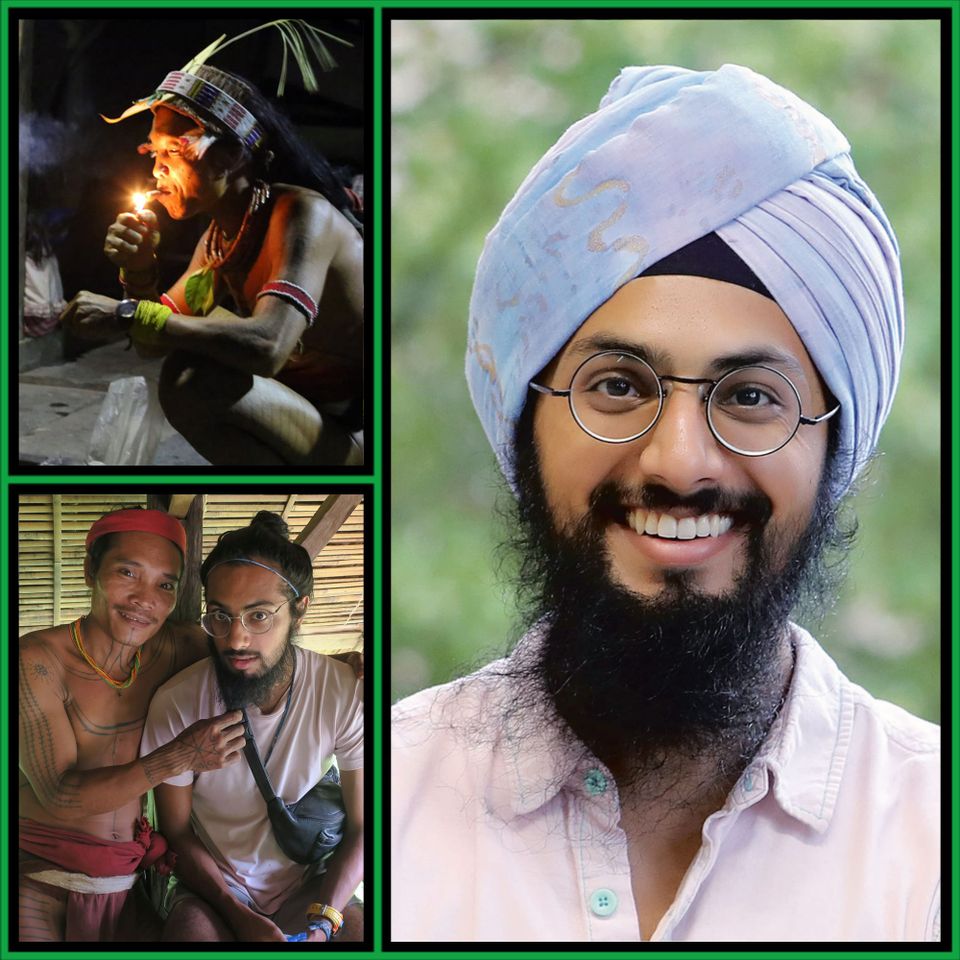
Anthropologist Manvir Singh set out in search of answers. On a remote island in Indonesia, he lived with the Mentawai people, watching as their shamans — the sikerie — drummed, danced and entered trance, their tattooed bodies painted in turmeric. In these altered states, they appeared to move between worlds.
How does an empirically-minded scientist make sense of such experiences? Singh combines immersive fieldwork with cross-cultural research into shamanic traditions, past and present. He calls shamanism a “timeless religion,” one that may go back to our earliest ancestors — and still lives on in the world’s major religions.
Along the way, he asks a provocative question: Was Jesus a shaman?
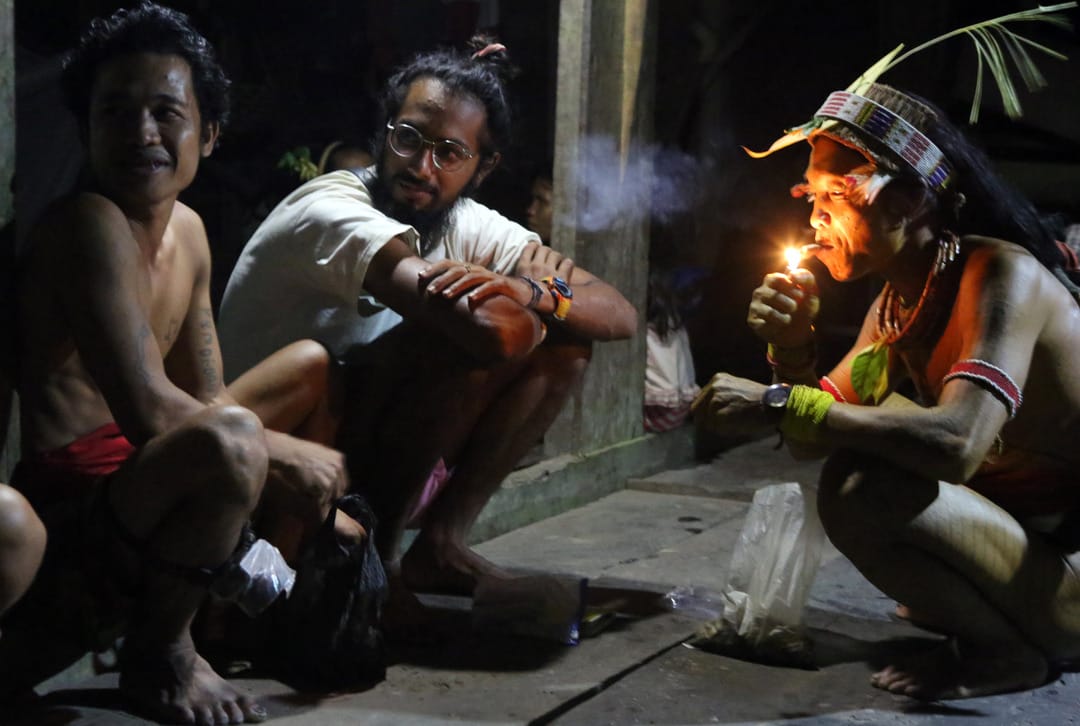
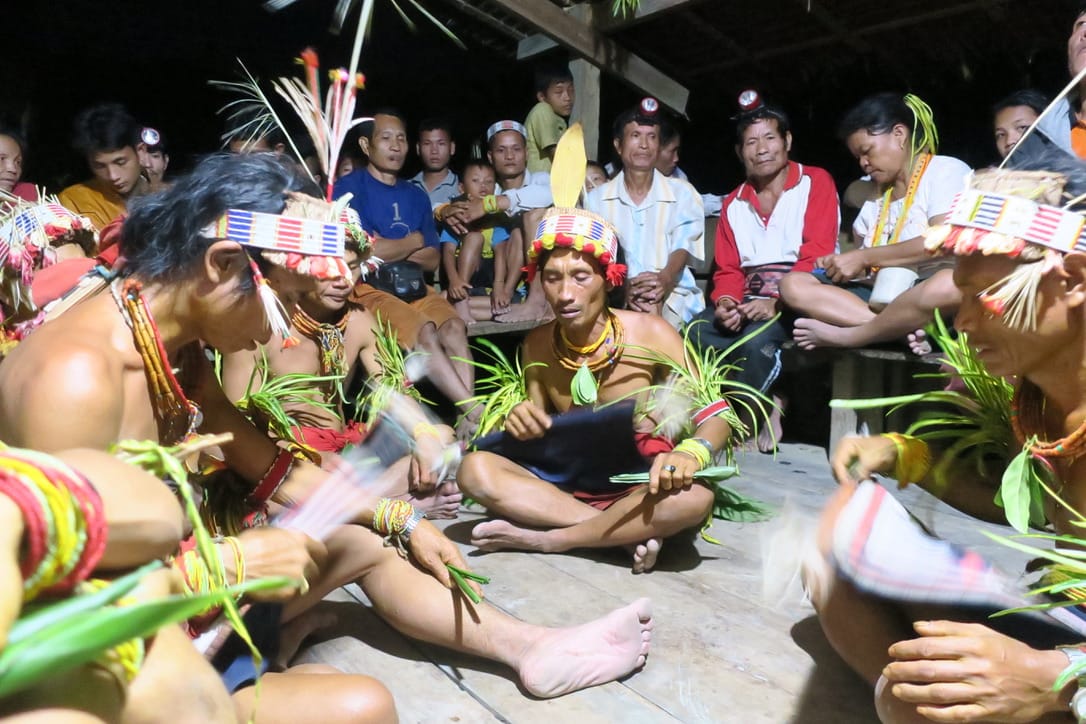
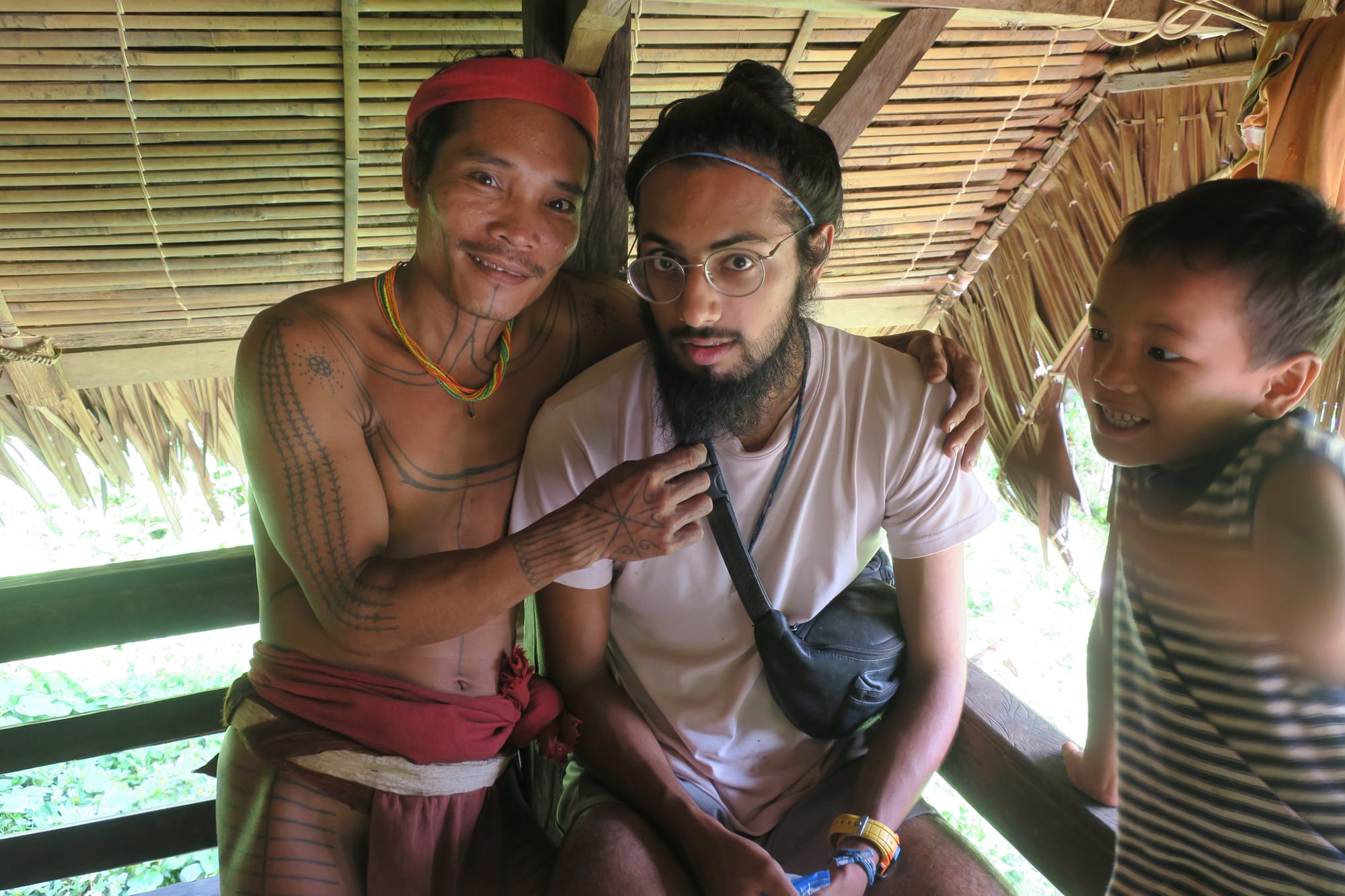
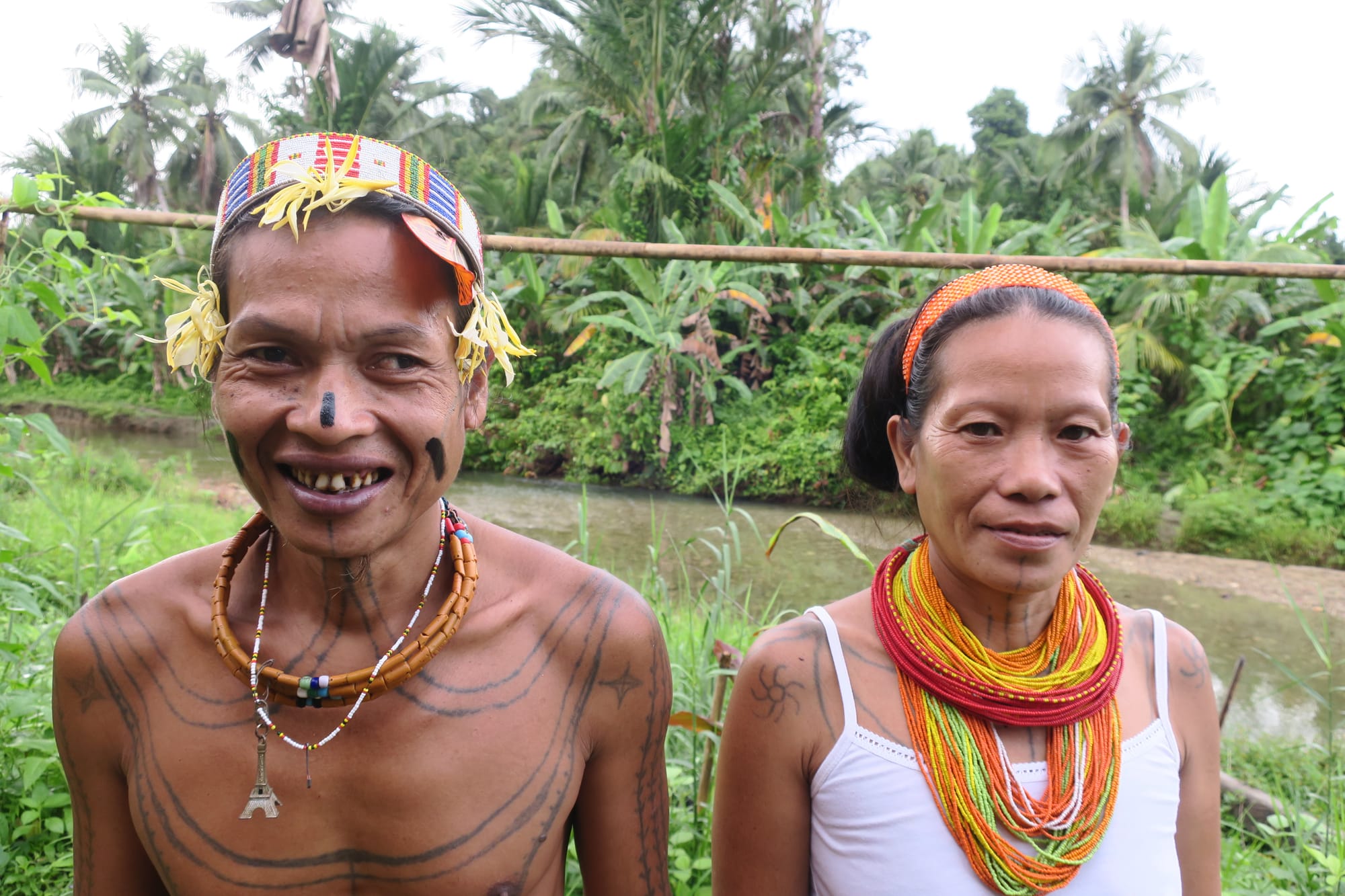
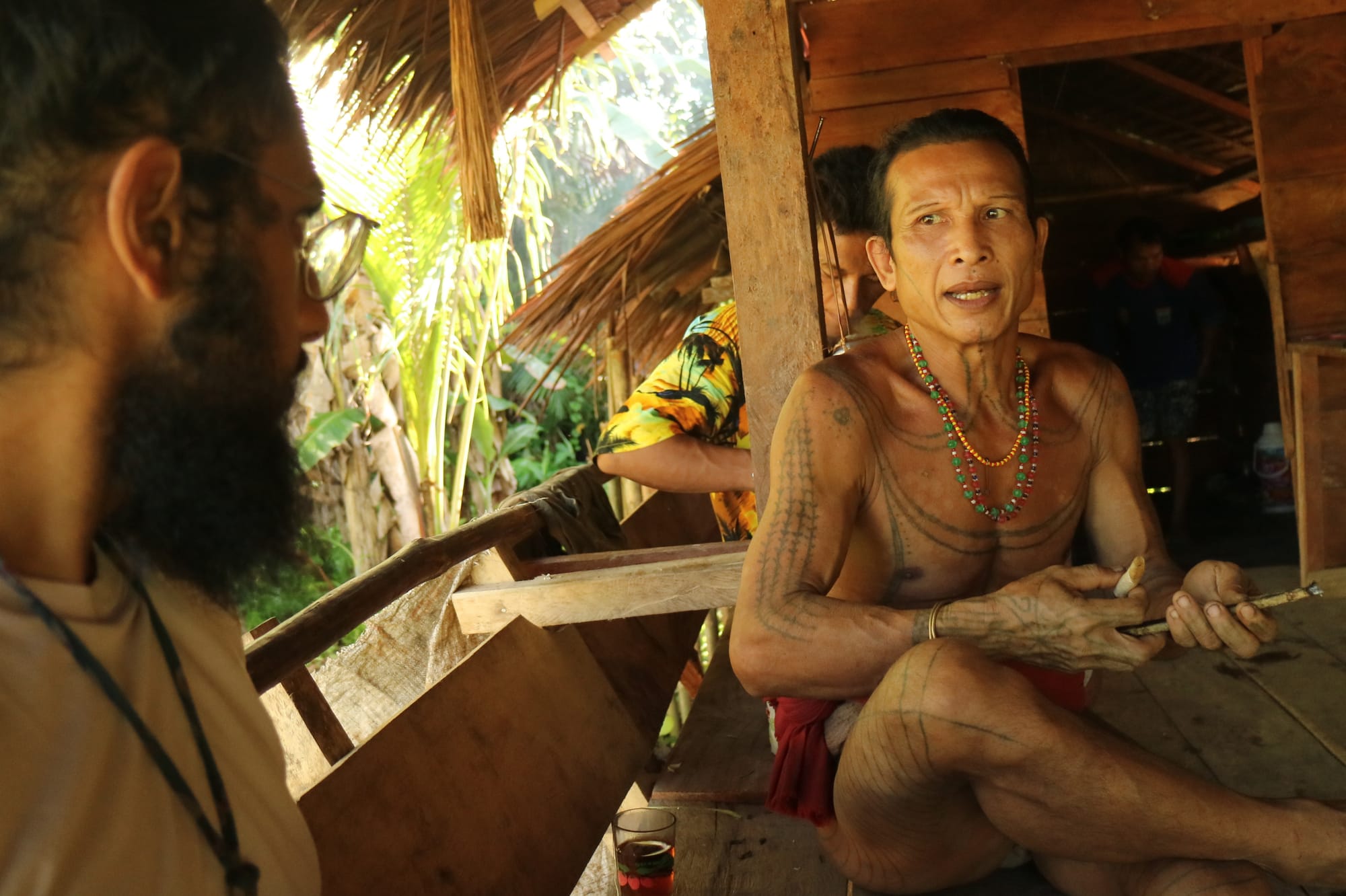
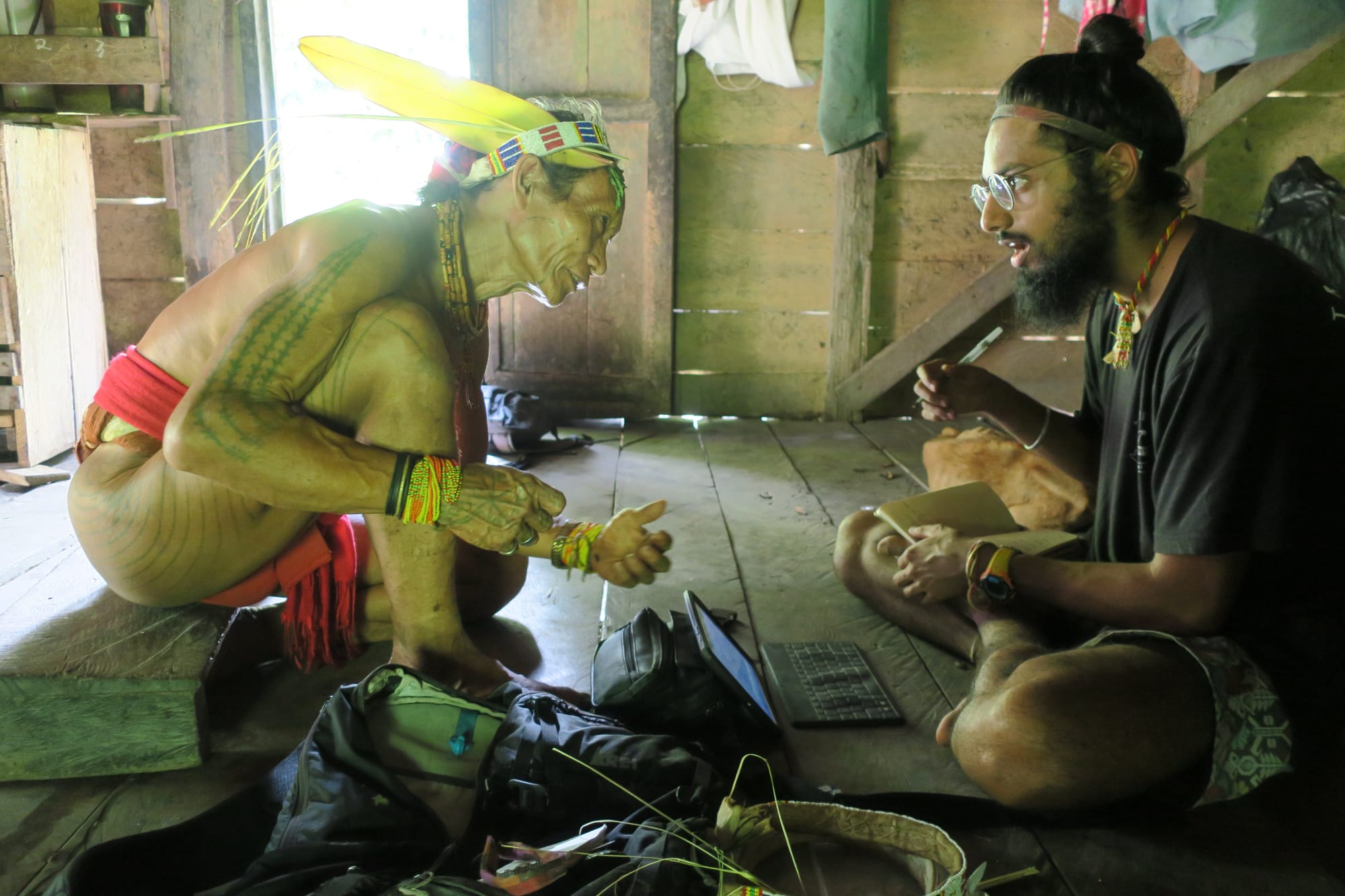
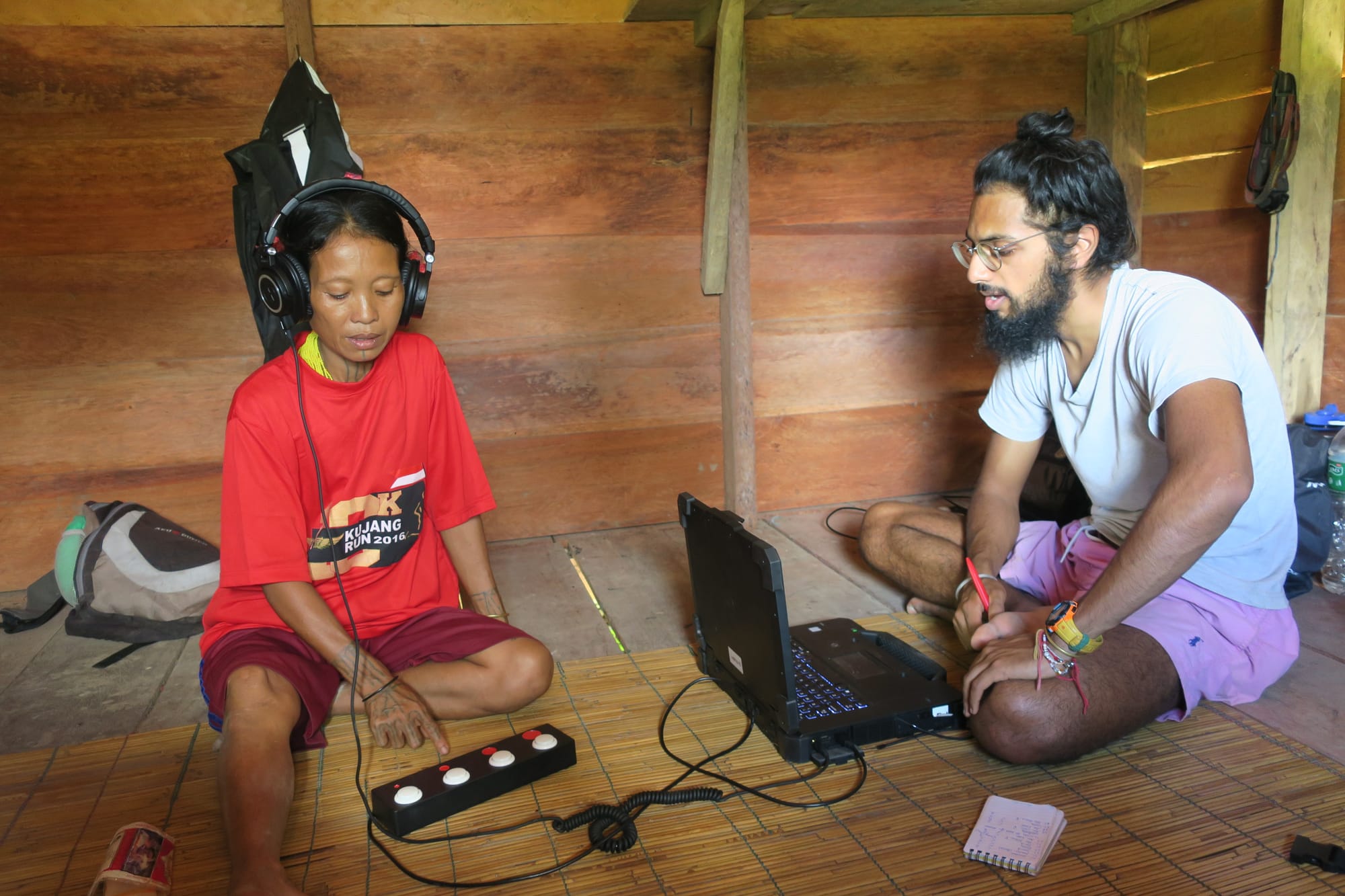
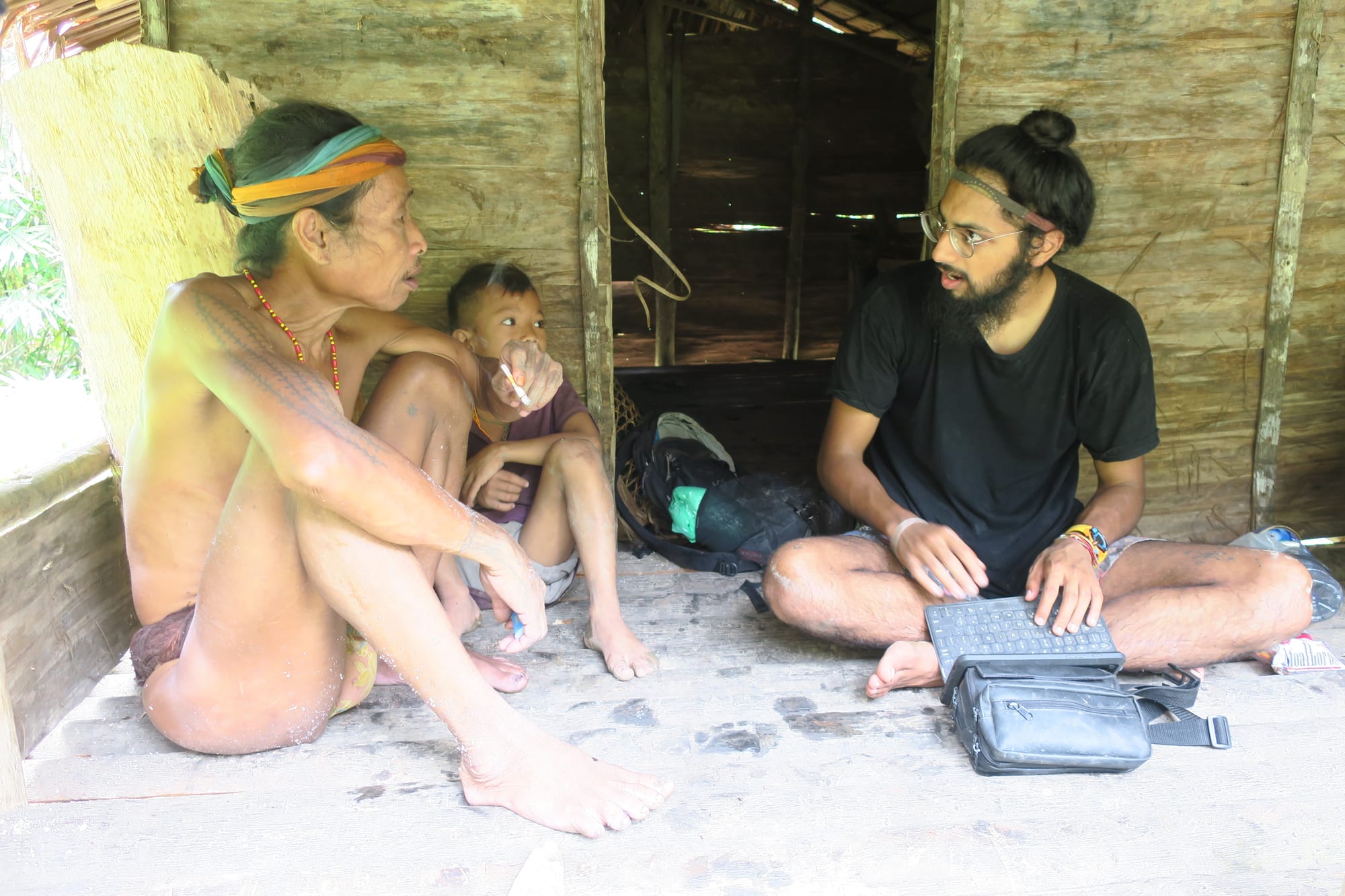
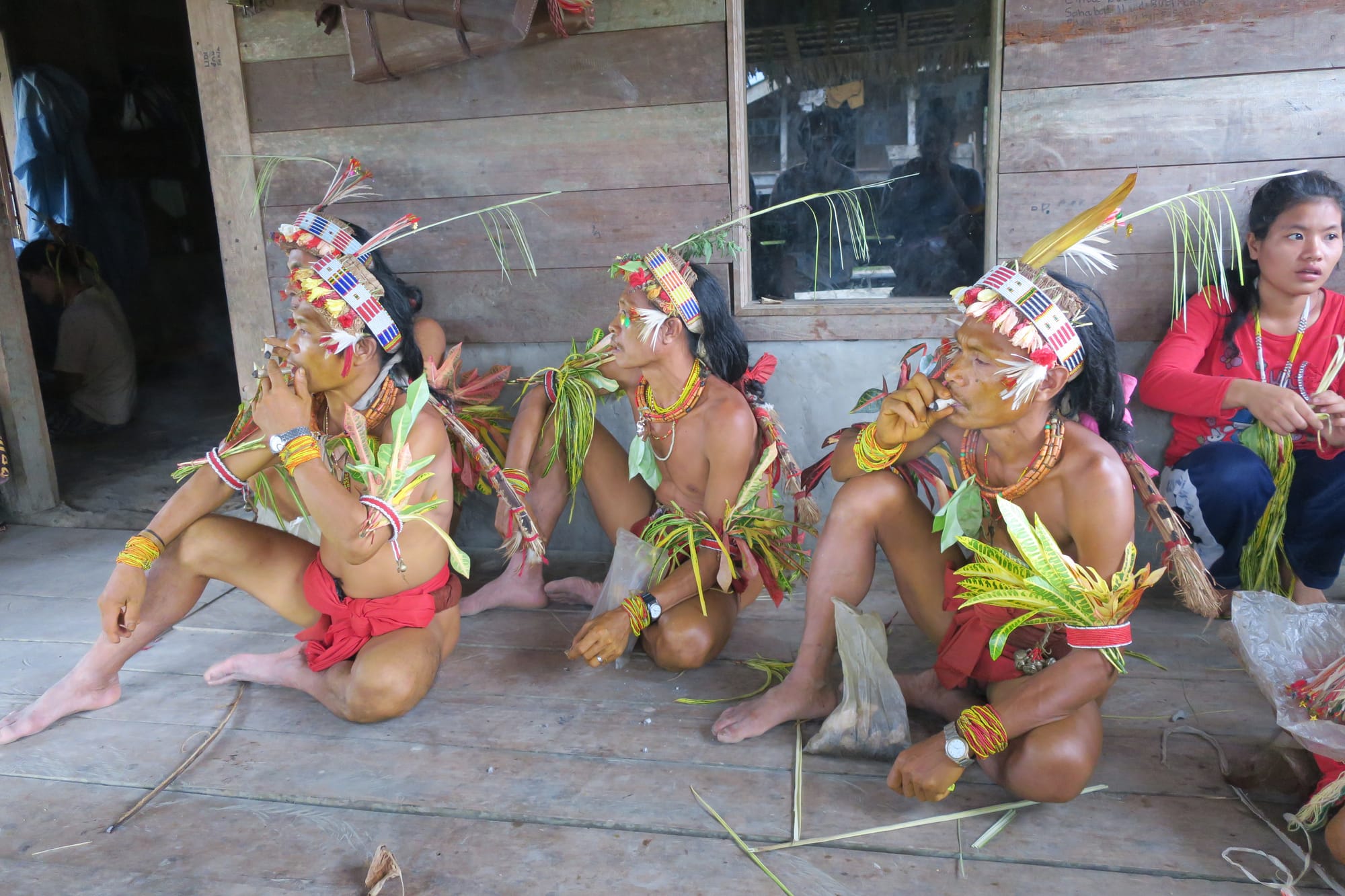
Photos from Manvir's fieldwork.
- Manvir’s book, Shamanism
- Manvir’s article in The Guardian on the debate over the history of psychedelics in indigenous cultures
Transcript
Anne Strainchamps: Welcome to Wonder Cabinet. I'm Anne Strainchamps.
Steve Paulson: And I'm Steve Paulson. Every culture has stories of people with supernatural powers — people who can fly or become invisible, hear the dead, see the future.
Anne Strainchamps: In our culture, they're the stuff of superhero movies and paranormal fiction. But what if we took them more seriously?
Steve Paulson: Anthropologist Manvir Singh has traveled all around the world to meet people who seem to be able to enter alternative, hidden realities…
Anne Strainchamps: Who can talk to spirits and cast out demons.
Steve Paulson: The people we call shamans.
Manvir Singh: You have the altered states. You have an engagement with unseen realities — fighting ghosts, fighting witches. You have services like healing and divination. Sometimes it might be dancing and drumming. Sometimes it might be hallucinogens. Sometimes it might be darkness, ritual surgery, death and rebirth. Sometimes it might be understood that your soul is leaving your body, another soul is coming into your body. So yeah, I think there's some deep recurring heart that echoes and manifests in different ways in different contexts.
Anne Strainchamps: Manvir Singh calls shamanism the timeless religion, because in one form or another, it's always been there. So we're going to hear the conversation that he and Steve had. But before we get there, I really want Steve to tell you this story.
Steve Paulson: Okay, so you've heard this story before, but let me try to encapsulate it. When I was seven, my family lived in Northeast Brazil, where my dad had a research project. And while we were there, my mother got really sick. She had these blinding headaches and a sort of partial paralysis that kind of moved between her hands and her feet, and the local doctors could not figure out what was wrong. But then our housekeeper, Maria, started having the same symptoms. And the weird thing was they would switch back and forth between her and my mom.
Anne Strainchamps: Alternating symptoms.
Steve Paulson: Yeah. And now I should mention that there's a strong Macumba tradition in this part of Brazil — it's kind of like the local voodoo. And Maria knew some spirit mediums, and one of them told her that my mom had accidentally insulted the local Macumba high priestess. I think she had borrowed a sewing machine and not properly paid for it. And this high priestess cast the evil eye on her. And what do you do at that point? You go to an exorcist.
Anne Strainchamps: The whole family.
Steve Paulson: We did, yeah. So one evening, we all piled into the car, drove down to a church in a beachfront favela. My brother and I sat in the pews while my mother was taken back behind a curtain where there were ritual prayers — a whole group of spirit mediums. I don't really remember all of this, but apparently there were a lot of strange sounds and shrieks back there. And after a while, my mother came out, we drove home, and her symptoms were gone.
Anne Strainchamps: So she was cured?
Steve Paulson: Pretty much.
Anne Strainchamps: I mean, one explanation would be that it was all psychosomatic.
Steve Paulson: Yeah, it's an obvious explanation. My mother has always said that that is one possibility — she doesn't know. I will say that later, my dad talked to a doctor and described what happened, and the doctor just shrugged his shoulders and said, you have to accept the idea that there's no medical explanation for what happened.
Anne Strainchamps: The thing is, this was a long time ago — as you said, you were seven. But your family still talks about it. So this experience clearly had a big impact on all of you, and I think affected how you see the world.
Steve Paulson: It is part of our family lore. I've never known what to make of this story, but the idea that there is some other dimension of reality where really weird stuff can happen — that has always seemed like a possibility to me. But I'd never actually thought about my mother's experiences having anything to do with shamanism until I talked with Manvir Singh.
Anne Strainchamps: The anthropologist.
Steve Paulson: Yeah, at UC Davis. And he is also a regular contributor to The New Yorker. He's just written this great book called "Shamanism: The Timeless Religion," which is based on his field studies in Indonesia and other places, where he spent a lot of time with traditional shamans trying to understand what they're doing.
Anne Strainchamps: And he has a theory.
Steve Paulson: He does have a theory. He thinks shamanism was probably the first — maybe the original — religion, and he says you can see evidence of it in mainstream religions like Judaism and Christianity. He also thinks you could consider Jesus a shaman.
Anne Strainchamps: That is not something I read in the Bible, but okay, let's listen.
Steve Paulson: So you did a lot of your groundbreaking work in Indonesia, studying the culture of shamanism. Can you sort of describe a little bit about where you went and how you immersed yourself in this world?
Manvir Singh: Certainly, yeah. So I have been working on an island off the west coast of Sumatra — west, west, west Indonesia, right on the edge of the Indian Ocean. I work on an island called Siberut. I first went in 2014, and I had a backpack full of gifts: cigarettes, coffee, tea, sugar — all things that anthropologists on Sumatra had informed me to bring.
Manvir Singh: I had the name of a person I needed to find, Rustam. And I get there and had a whole saga of trying to find him — I was misdirected, there were suggestions that maybe Rustam had died. But in a short time, he had heard that someone was looking for him. Word travels remarkably fast. He lives maybe 14 miles from the port, but word had gotten to him, and that night he came and picked me up. So it was an incredible summer, but also — "scary" isn't the right word, but — overwhelming.
Steve Paulson: And you were specifically going there to study shamanism, is that right?
Manvir Singh: Well, I was going there to study indigenous religion and law. Shamanism was something I was very interested in, but I was also interested in taboos, injustice. In short, I was overwhelmed. I left, but I came back, and that summer I just explored the southern part of the island with Rustam — he took me all over. And then I came back a third time, and that's when I actually built a house.
Steve Paulson: Wait, so you built a house?
Manvir Singh: Well, I paid other people to build a house. And "house" makes it sound more fancy than it actually was — it was like a wooden hut with two rooms and an attached kitchen. It had a thatch roof. It was really pleasant. It was on a river. Eventually the river actually shifted, and a part of the house just collapsed into the river.
Steve Paulson: So why were you so interested in shamanism in particular?
Manvir Singh: Before I went, I was intrigued in the way that many people are intrigued by shamanism — by altered states, by entheogens, but also by mythology, by religion. But I didn't know so much about shamanism specifically. That first summer, the sikerei, the shamans of the Mentawai, were really almost evocative individuals. Part of that is because of how everyone else treats them — a sikerei walks in and you can kind of feel the social gravity. But then also they're very visually salient. The Mentawai have overwhelmingly adopted clothes, but the sikerei still wear loincloths. They have tattooed their bodies. They grew out long hair.
Steve Paulson: So you know immediately if you are in their presence.
Manvir Singh: Yeah. And then during their ceremonies, they paint themselves in turmeric, and they'll wear leaves and a special shaman headdress and a shaman necklace. They're very striking. That summer, I started to get glimpses of this very fascinating world in which they existed. I would hear shamans sing their shaman songs. I would hear them shaking their bells. I would see children imitating them. And then near the end of the summer, I saw a very brief healing ceremony. I came away from that summer incredibly intrigued — oh my God, I want to learn so much more about this.
Manvir Singh: Among the Mentawai, altered states are induced by drumming and dancing. But in other places it might be hallucinogens. In another place, a part of becoming a shaman requires transforming your eyes — or a death and rebirth ceremony, or ritual surgery.
Steve Paulson: Can you describe one of these ceremonies? What was it like to witness one?
Manvir Singh: They have many, many techniques. You can think of an analogy with a doctor in a biomedical context where, depending on your ailment, they will try different things. Almost all shamanic healing ceremonies feature summoning the patient's soul, sweeping away good and bad spirits, potentially some herbal application, maybe a removal of a physical embodiment of the illness, and some animal sacrifice that is for everyone to feast on — but also a way to pay the shamans.
Manvir Singh: But then the quintessential thing that the sikerei do is called Lajo Simagre. Later at night, people will come out. They'll have drums — often python skin or monitor lizard skin drums. They will play those, and then the shamans will dance. They'll dance in these circles.
Steve Paulson: So more than one shaman.
Manvir Singh: Yes, yes, yes. Often more than one. Sometimes you can have a single one for more basic treatments, but Lajo Simagre often involves multiple shamans.
Steve Paulson: And why would people be going there? I mean, what were they trying to heal?
Manvir Singh: Let's say I suddenly am feeling sick. I might suspect it's a number of things — maybe someone yelled at me and I feel like my soul had gone away, maybe I fell out of a canoe and I feel like my soul had been lost, maybe I think it's sorcery or black magic. Maybe I haven't been sharing meat and the crocodile spirit has climbed into my house. Maybe I ran into the forest spirit — this kind of trickster forest spirit. Maybe I have broken taboos. Each of these ailments requires a different treatment.
Manvir Singh: Lajo Simagre is for calling souls, but also calling good spirits. It's believed to be a dance so beautiful — not only the way that the sikerei dance, but they also have a plate of magical herbs, essentially. It's believed that this is incredibly enticing. So as the spirits are coming to the dance floor, the shamans are entering trance.
Steve Paulson: And did people generally feel healed after this?
Manvir Singh: I would say often, but not always. This is something I tried to study more systematically. There's a professor at Harvard Medical School, Ted Kaptchuk — he is one of the world experts on placebo — and we had designed a study to actually test whether shamanic healing ceremonies provide therapeutic benefits. It's very, very hard to test, honestly, because it's incredibly uncomfortable to walk up to someone who's very sick and say, can you do this pain scale?
Steve Paulson: Oh, yeah. Right.
Manvir Singh: And so that felt very inappropriate. We found another way of looking at it retrospectively. We haven't analyzed it yet. But I think just anecdotally, you often find therapeutic responses — people will often say they feel better because of these shamanic healing ceremonies.
Steve Paulson: And of course you always wonder, did they really get healed, or was it that they wanted to get healed? The expectation, the placebo, essentially — okay, I've been through this and I'm going to feel better. I do feel better.
Manvir Singh: I mean, it's an interesting question. So I think the placebo could potentially be a mechanism for making them feel better. I would also say something I found so striking about these healing ceremonies is how jubilant and celebratory and festive they feel. I was a receptionist in high school in a hospital, and my great uncle contracted cancer and died — my understanding of biomedicine and healing was always that it's much more somber. But then I go to Mentawai and someone's foot seems like it's going to fall off, and everyone is dancing and feasting and you're staying up all night. After the shamans dance, other people are dancing. So I think social affirmation can potentially be a source of healing.
Manvir Singh: And then I also think these are very powerful experiences. In a similar way to how a lot of therapy works — psychotherapy, including psychedelic-assisted psychotherapy — I think they're powerful ways to change patients' narratives about themselves. One being, the crocodile spirit has attacked me, and now the shaman has engaged with the crocodile spirit, they've removed it, they've enticed it, they've put it in the river. Or, I feel like my soul had fallen out when you yelled at me, but now the shamans have done all of these things to call back souls, and look — other people are falling into trance. The souls are here. I think it needs to be studied more systematically, but I think it's plausible that this is an important mechanism that's also playing.
Steve Paulson: So what do you think the shamans are doing to enter these trance states? I mean, they have to sort of transition into this entirely different state of consciousness. I'm assuming it probably takes a lot of practice to be able to do that sort of on command. What do you think is going on there?
Manvir Singh: Well, it's very rare — I can't even think of an example where you'll have a shaman immediately entering a trance state. Instead, it's often after quite a bit of dancing and drumming. So I think what seems most plausible to me is that the Mentawai, like many peoples, have figured out essentially a cognitive technology — dance and drumming — that after a while can induce trance. And what you'll often see is the sikerei entering trance, and then it's one in the morning, there's been music for a while, and you'll start to see other people also entering trance. You'll see women in the kitchen entering trance. You'll see a woman sitting down — maybe the shaman's wife — entering trance. So I think in that context, it's very much the music.
Steve Paulson: And one of the points that you make in your book is that the stranger — and I guess you might say the more bizarre the behavior — the more compelling the shaman tends to be. In other words, if the shaman just sort of looks like the rest of us, people aren't going to take that much notice. But the special power of the shaman is that they're so different from everyone else.
Manvir Singh: Certainly. And there's constantly a discourse about whose trance is legitimate and whose is not. I actually have a video where one guy — he's new, this is during his initiation — and he enters trance first by clapping. And you hear everyone laugh. The sense is, that's not trance. It looks like you just clapped and started shaking. But there's another person there who is a much more experienced sikerei and a much more respected one, and even just watching it, it looks like something that's much harder to do performatively. It looks like a different kind of state.
Steve Paulson: But there is a performance element to this. I mean, if you're going to connect with the people around you, if they're going to believe that you're the real thing — which isn't to say that they're faking it or they're con men — but there is a performative aspect to it.
Manvir Singh: For sure. Working in Mentawai and studying shamanism more generally has made me really wonder and tussle with this performative dimension. To take another example you also find very common cross-culturally: sleight of hand. What the sikerei will do is, among their many treatments, let's say my knee is hurting — they'll massage my knee and then they'll pull out what looks like a rock. You find this in many places, and anthropologists have done a lot of research showing that in many cases this is very explicit sleight of hand. We know many of the techniques that shamans use.
Manvir Singh: But the striking thing is that these shamans, when their own children get sick, go to other shamans. I've seen shamans just in their houses really desperately cycling through interventions. So I think there is a performative dimension, but there is also something that really bleeds into a sense of authenticity — if you know what I mean.
Steve Paulson: Now, you are an ethnographer, an anthropologist who immerses yourself in the place you're studying, which I'm guessing in this case meant participating in certain ceremonies?
Manvir Singh: To some degree, yeah. I would often sit and watch. So in Mentawai, you're in a space where the sikerei are entering trance, other people around you are entering trance. And I have really felt an invitation — a pull — to just let myself fall into it. The thing is, honestly, among the Mentawai I never let myself enter trance. Partly, to be totally honest, because I wonder if I'll just look like an idiot.
Steve Paulson: You always felt like you had to kind of keep wearing your scientist hat?
Manvir Singh: Well, I wouldn't say so. I think I was afraid of looking like an idiot, but I was also — well, to take another example, I'm always apprehensive about taking a lot of photos because I don't want it to become about me. I'm incredibly grateful that they're letting me into these spaces. Maybe they would love it if I entered trance. But I just think it would suddenly become such a thing.
Manvir Singh: Nevertheless, we've been exploring research opportunities, doing reconnaissance, visiting communities in eastern Colombia near the border with Venezuela. As part of that research, we've been studying Yopo, an Anadenanthera psychedelic snuff. We've been offered it, and I have tried it. So in other contexts I have maybe more readily done so, but with the Mentawai I've been more apprehensive.
Steve Paulson: I mean, you're upfront in your book that you've taken psychedelic substances. Did they have much of an impact on you? I know you don't want to have the focus on you, but I'm going to put the focus on you right now. Were you moved? Were you transformed at all in any of these experiences?
Manvir Singh: Some of them, certainly. In the book, I talk about two in particular. One, when I took the Yopo snuff — I would say I was not transformed by that, because I was not cognitively or psychologically prepared. I was a mess. I don't remember a lot of that experience, other than vomiting and having a lot of nasal discharge and thinking that I was time traveling, and then waking up and seeing that I was a mess.
Manvir Singh: So that one, if anything, taught me about the substance and the importance of — well, if you contrast my behavior with that of the shaman's apprentice, they were very different. The importance of experience and understanding the substances. But I talk about another experience in the book that was profound, where I felt like I was communing with a being, and I also understood myself and my thoughts and my behavior in a totally profound way.
Steve Paulson: How long did that last?
Manvir Singh: The experience? It was two experiences over two nights, each of which I think were like eight, maybe ten hours.
Steve Paulson: Did that give you any insight into all of this — what you were studying — having the experience yourself?
Manvir Singh: Certainly, certainly. Although it was interesting. It gave me insight into, for one, how relatively important is belief versus experience? Coming from a Western context where belief is treated as this very important thing — even when we were talking about the placebo effect, there's often this story that the extent to which you respond to therapy depends on how much you believe in it. But that was a context where, even during the experience, if you asked me whether I believed, belief felt irrelevant. It was the experience that was so profound.
Manvir Singh: More generally, I think my work has really led me to appreciate how much different societies have figured out how to manage and cultivate these experiences for particular ends. I mean, even the Yopo experience — I was a mess. If you just find Yopo and snuff it, you're going to be on the ground with nasal discharge and vomiting. But if you have a whole discourse about how to use these substances and you have experts who use them over and over, then you have the capacity to really develop a very sophisticated ethno-psychopharmacology. That's also something I've really appreciated.
Steve Paulson: I mean, there are some big metaphysical questions here. The big one is, is the shaman actually going into some other dimension — not just a different part of consciousness, but actually connecting to some other realm. What do you think?
Manvir Singh: So do I think, for example, that a shaman is engaging with a crocodile spirit?
Steve Paulson: Yeah.
Manvir Singh: I don't think we can conclude that. I would say I'm also kind of an uber-agnostic. I think we largely know nothing about reality. We probably know a drop in an ocean-wide planet of what's going on in reality.
Steve Paulson: Is that question important to you — to try to figure out what's really going on? Is that what you were trying to understand?
Manvir Singh: Honestly, I don't think it was a big part of what motivated me. Fundamentally, I'm really interested in cultural parallels and cultural diversity. I think it was almost like an aesthetic fascination that pulled me in. Ultimately, the question of whether or not they are doing what they claim — I guess that's something I did not feel so compelled to figure out.
Steve Paulson: We're going to take a short pause here. And when we come back, we'll hear Manvir's provocative take on the origins of religion. And the question: was Jesus a shaman?
Anne Strainchamps: Hi, it's Anne. I am so glad you're joining us. We have some amazing guests lined up for the weeks ahead, and I'm really excited about them. And here's a tip — maybe you know this already, but if you follow Wonder Cabinet on Apple Podcasts, those new episodes will show up automatically, like a little weekly gift in your podcast feed. I hope you like it.
Steve Paulson: You're listening to Wonder Cabinet. I'm Steve Paulson, talking with the anthropologist Manvir Singh about his cross-cultural study of shamanism. Let's go back to the conversation.
Steve Paulson: Does shamanism exist around the world? I mean, in what we would call traditional cultures — is this universal?
Manvir Singh: It's near-universal, yeah. There are a couple of exceptions we can identify. If you're looking at non-industrial societies, many of the examples of exceptions that you will find seem to have been societies that lost shamanism. The Northern Aché in Paraguay don't have shamanism. The Sirionó don't have shamanism. The Tiwi do not have shamanism. The Hadza. But many of these are hunter-gatherer populations that became very small. We also know the Northern Aché lost the ability to make fire — they lost dancing, they lost lullabies. They underwent catastrophic cultural collapse, as did the Sirionó. So more generally, yes, I think shamanism is ubiquitous, although technically not universal.
Steve Paulson: And does it sort of look the same in these different cultures, or is it very culturally specific?
Manvir Singh: Basic elements of it are there. You have the altered states, you have an engagement with unseen agents or realities — gods, spirits, fighting ghosts, fighting witches. You have services like healing and divination. And then you have some other similarities — you have these dramatic initiations where the person fundamentally transforms, you often have taboos, you often have music. But then you also have incredible diversity. You have diversity in how these altered states are induced and understood. So sometimes it might be dancing and drumming, sometimes it might be hallucinogens, sometimes it might be darkness. Sometimes it might be understood that your soul is leaving your body, another soul is coming into your body, you are calling souls or spirits and talking to them. The mode of existential transformation can be very different — ritual surgery, death and rebirth, long bouts of asceticism. So yeah, I think there's some deep recurring heart, but then that echoes and manifests in different ways in different contexts.
Steve Paulson: So, if it is universal or nearly universal, it raises some pretty profound questions about why. And I know you're interested in this larger question of what are the origins of religion — why do all human cultures, as far as we know, have religion, however you want to define that. Is shamanism kind of the first religion?
Manvir Singh: So yeah, I think shamanism likely characterized the earliest religious practices of behaviorally and cognitively modern humans. I think as long as we've had recognizable religion, we've probably had shamanism. The way that I myself understand religion is that we live in an uncertain world, and we converge on ways to explain it and to intervene in it to manage that uncertainty. Our explanations and understandings of uncertainty manifest as religious belief, and then the ways we try to manage, control, and tame uncertainty — that is religious ritual, with shamanism being a very, very compelling version of that.
Steve Paulson: Why is that so helpful in taming uncertainty?
Manvir Singh: We can imagine we are in an environment where people get sick, people randomly die, it's hard to predict the rain. If I come to you and I say, hey, Steve, I know a family member of yours has been sick — I can talk to the rain goddess or I can talk to the illness demon, I can fight them off — that would not be very compelling to you. But if I seem like a fundamentally different human to you, if I have lost my skeleton and have crystals inside my body and I engage in some kind of practice that makes it feel like I'm fundamentally transforming in your eyes — a different kind of being — then I think that makes it much more compelling both to you and to me that I am interacting with the agents that oversee uncertainty. That's very centrally what's going on with shamanism: altered states and fundamental transformation make very compelling for everyone involved that you are tussling with the forces that are believed to control the uncontrollable.
Steve Paulson: Did you ever witness anything in any of these ceremonies that you just couldn't really explain? I mean, things that seemed to defy your scientific understanding?
Manvir Singh: Certainly, yeah. In Mentawai, there are descriptions of what spirits look like, and they're said to live in certain places. I've gone by on my motorcycle and been like — what is that? In graveyards, they say you see beings that are white and glowing. And I, on one occasion, drove by a graveyard and felt like I was staring at the kind of being that they're describing.
Steve Paulson: I mean, give me an example of this. Something that's just like — wow, wait, really?
Manvir Singh: Well, I've also seen — my first summer, I went to Mentawai, and there was a kid who woke up paralyzed. There was a shamanic healing ceremony, and he came away not being paralyzed. He was walking. And I think there are different explanatory frameworks you can have for that — maybe it was conversion disorder, maybe he was implicitly performing illness. But I was very struck after that, and talked to friends about what it might have been. I talked to a psychiatrist friend who had a framework that favored, yeah, this is conversion.
Steve Paulson: And you can always come up with explanations that sort of explain it away. But there might be other explanations that really do correspond more with this idea that there is actually this hidden world, this unseen reality that changes people.
Manvir Singh: Certainly. I mean, this is maybe going a bit too far, but I think a natural thing after you engage with something like psychedelics is — the state of being that I have right now and my state of consciousness is an arbitrary one that is geared for particular ends, that is good for what natural selection wants. I get food, I fight for status, but I can produce a very different state of consciousness that experiences reality in a very different way. And what about the nature of reality am I missing in this everyday one that I'm getting insight into while in one of these altered states? That is something I continue to wonder about. It is the case that after some of the experiences I write about in the book, I come away thinking — I wonder if I glimpsed something that I may be quick to dismiss otherwise.
Steve Paulson: Did that glimpse give you a hunger to get more of a taste of it?
Manvir Singh: I guess to a degree, but then life can sweep you away.
Steve Paulson: I know you've got a little kid, a small child. And yeah, it's a little hard to kind of be in contact with these other realms when you've got a little person to take care of. I mean, I get it. Life intrudes.
Manvir Singh: Yeah, but I will say my own relationship with spirituality and religion has really gone in many directions over the course of my life. I still wear a turban, although my own relationship to the metaphysics of the religious tradition I'm from, Sikhism, is complicated. But at this point in my life, I think what I really appreciate is experience. I still sometimes go to the Gurdwara with my family — the Sikh temple — and I listen to the Kirtan and I read the lyrics, which are sublime. And I at least revel in that experience for now.
Steve Paulson: So we've been talking about what I would call traditional cultures, for want of a better word, and the shamanic practices there. What about looking at more mainstream organized religion? The Bible, for instance — if we read the Bible, do we see elements of shamans?
Manvir Singh: For sure. The Hebrew prophets are quintessential shamans. If they weren't being analyzed within biblical literature, we would much more freely acknowledge that they're shamans. They are entering altered states, sometimes even induced by music, and then they are divining — speaking about the future, speaking about events that are in other places. They're engaging with an unseen being, the Holy Spirit.
Steve Paulson: Who are some of those people you're thinking about?
Manvir Singh: Elisha, Elijah, possibly. I'm not very good at pronouncing Old Hebrew, but there's a word, Nabi, which is often translated as "prophet" in the Hebrew Bible. And Martti Nissinen — he's a Finnish scholar who has done really, really incredible work tracing prophetic behavior throughout the classical Mediterranean. He has made a very compelling argument that the Nabi — he doesn't call them shamans, he calls them possessed prophets or something like that — but I think the Nabi look quintessentially shamanic.
Steve Paulson: And what about Jesus? Was Jesus a shaman?
Manvir Singh: So Jesus very clearly exhibits two of the three features of shamans. He's engaging with unseen agents — he's exorcising demons, he's calling upon the power of the Holy Spirit. And then he is also healing, obviously, very frequently. He's divining, he's prophesying. So then the question is, does Jesus enter altered states? This is something that theologians argue over. There are very suggestive passages — I think it's Mark 3:20 to 22 — which describes a scene where Jesus is healing and people are flocking to him to be healed. He's, depending on the translation, described as being out of his mind or astonished. People are saying that he's demon-possessed.
Manvir Singh: So I think more generally, we know that the Eastern Mediterranean during this time was very shamanic. We know that the Hebrew tradition was quite shamanic. We know that the Greeks were pretty shamanic. We know that, for example, the Neo-Assyrians had quite a bit of shamanic practice. And here we have an individual who's healing, divining, engaging with other beings — and then followed by the early Christian church, where the Day of Pentecost is people speaking in tongues, and the Apostle Paul is talking about the gifts being speaking in tongues and healing. It's a very ecstatic context that looks very shamanic.
Manvir Singh: So I think we should more readily entertain the hypothesis that Jesus was a shaman. And we also know that after this very ecstatic period, as the Christian church centralized, there was a big turn against ecstatic behavior. So there may have been a desire to ramp down that kind of behavior in the early gospels. We know that the early church really tried to argue that the Old Testament was much less ecstatic than it might seem if you read it.
Steve Paulson: I think that's a great place to leave it, because you're leaving us on this very provocative note — kind of maybe rethinking the origins of Christianity.
Manvir Singh: Yeah, I hope so. I'm glad.
Steve Paulson: Thank you.
Manvir Singh: Thank you.
Steve Paulson: This has been fun.
Manvir Singh: That was so fun.
Steve Paulson: That's Manvir Singh, anthropologist at UC Davis and a contributing writer to The New Yorker. His book is called Shamanism: The Timeless Religion.
Anne Strainchamps: So Steve, you know what I liked about that? I like thinking that if shamanism is a kind of universal psychology — like the root code for religion — then it must still be all around us. So what changes if you think of, I don't know, not just Burning Man, but March Madness, or Wall Street, or Swifties, or the mystique around AI as contemporary eruptions of this ancient shamanic impulse? It kind of adds some weirdness and wonder to ordinary daily life, don't you think?
Steve Paulson: Well, and I think — I mean, the story that Manvir tells, and you know what you see in a lot of these other phenomena like Burning Man — it's also when people come together and they engage in some kind of ritualistic aspect, and something new often comes out of those experiences.
Anne Strainchamps: That's the thing I love – the something else.
Steve Paulson: Yeah.
Anne Strainchamps: Well, thanks for bringing that conversation to Wonder Cabinet.
Steve Paulson: Oh, I love this kind of thing.
Anne Strainchamps: I'm Anne Strainchamps.
Steve Paulson: And I'm Steve Paulson.
Anne Strainchamps: And you are listening to Wonder Cabinet. Wonder Cabinet Productions is based in Madison, Wisconsin, and Vershire, Vermont.
Steve Paulson: Our audio engineer is Steve Gotcher. Our digital mastermind is Mark Riechers.
Anne Strainchamps: If you like the kinds of guests and conversations we have, I hope you're subscribing to the newsletter. We'll tell you what we're reading and thinking about and what's coming up next.
Steve Paulson: To sign up, go to wondercabinetproductions.com.
Anne Strainchamps: Thanks for listening. Be well.
Subscribe to make sure you never miss an episode.