


18 Apr 2026
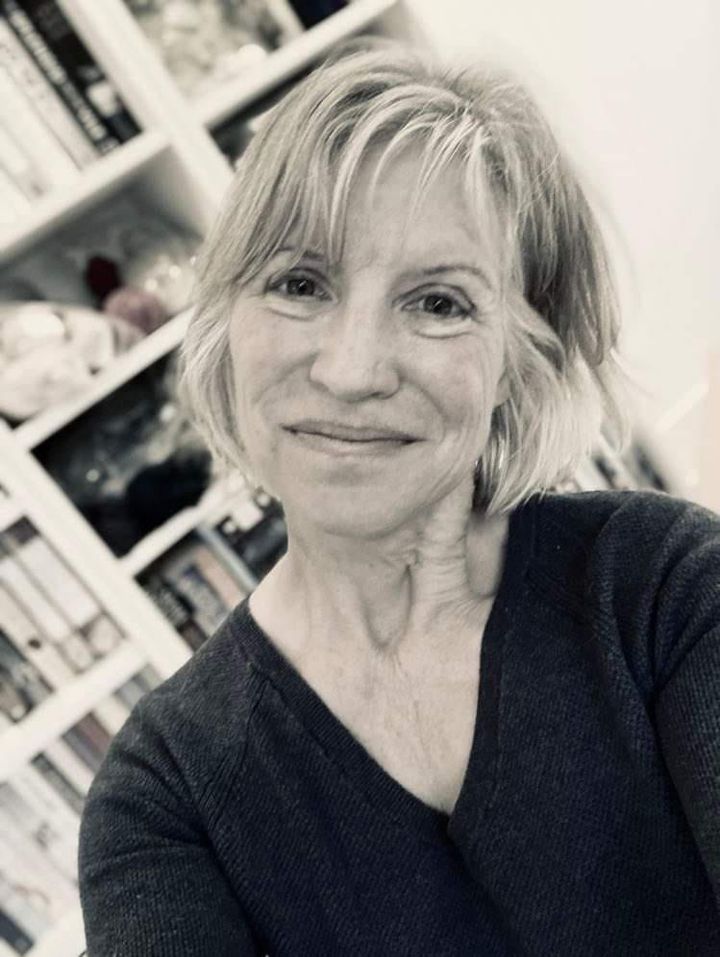
Mary-Jane Rubenstein: Pantheism and the Godness of Nature
For some people, the natural world isn’t just beautiful—it’s holy. Mary-Jane Rubenstein traces the history of pantheism and the deep roots of wonder.
0:00 / 0:00
18 Apr 2026
Mary-Jane Rubenstein: Pantheism and the Godness of Nature
For some people, the natural world isn’t just beautiful—it’s holy. Mary-Jane Rubenstein traces the history of pantheism and the deep roots of wonder.
ShareEpisode Notes
What if nature isn’t just alive—but divine? Pantheism, once branded heresy, is finding new adherents among those who don’t consider themselves religious but still sense something sacred and wondrous in the living world.
Mary-Jane Rubenstein, a scholar of philosophy and religion, traces the long, contested history of wonder—from medieval mystics to modern seekers. She reflects on the Overview Effect, that disorienting moment when astronauts gaze back at Earth and feel both its fragility and its radiance. And she talks about the obsession that tech titans like Jeff Bezos and Elon Musk have for space exploration, which may be the new frontier of awe—even a new religion.
But awe is never simple. It can be as unsettling as it is beautiful, as terrifying as it is astonishing. It breaks us open even as it draws us in—leaving us to reckon with a world that is stranger than we thought.
- Faculty profile
- "Astrotopia: The Dangerous Religion of the Corporate Space Race"
- "Pantheologies"
- "Strange Blood"
Transcript
Anne Strainchamps: Welcome to Wonder Cabinet. I'm Anne Strainchamps.
Steve Paulson: And I'm Steve Paulson.
Anne Strainchamps: How often do we, any of us, take the time to stop and look up at the cosmos? To just stand and stare at the moon or another planet, or even our own star, and think how lucky we are to exist on this tiny blue planet, floating in a sea of darkness.
Marcelo Gleiser: So here we are. And so the first thing we can do is we can close our eyes for a little bit. The air is phenomenal right now, so just bring it in.
Steve Paulson: It's an early spring morning, and physicist Marcelo Gleiser has assembled a group of friends for a bit of sun worship.
Marcelo Gleiser: And we're going to all turn towards the sun.
Anne Strainchamps: We're at the Island of Knowledge in Tuscany, a think tank where the purpose is to bring science and the sacred together, like this.
Marcelo Gleiser: Now, you know what's going on in the sun, right? The sun, for four and a half billion years, has been transforming the simplest chemical that exists, which is hydrogen, into the next simple one, which is helium, in this process called nuclear fusion. And as it does that, it releases all the energy that this planet uses in incredible ways to sustain all kinds of life here.
And we don't thank the sun enough. So now what we're going to do is point our hands towards the sun and feel the energy of the sun going down your arms into your heart. Try to imagine this heart filled with the sunlight glowing gold with the power of the sun. Between your stretched arms up there and the feet on the ground, you are truly a bridge of light that connects the sky to the earth. Heart, arms, sun, ground, together with the whole of the cosmos for this brief moment. Let's all take a bow of gratitude to the sun that allows us to be alive, literally.
Anne Strainchamps: And isn't that amazing? Marcelo Gleiser and his partners host three gatherings like this a year.
Steve Paulson: And the topic this time around was rational mysticism. Now, mystical experiences are supposed to be beyond the rational and outside science, but the more we find out about the natural world, the more miraculous it seems that life exists at all. And in some ways, maybe spiritual awe is the most logical response.
Anne Strainchamps: So there's an old philosophical idea that has been circling back around again these days that kind of expresses what we're getting at.
Steve Paulson: Pantheism. The idea that nature itself is God. That concept is actually pretty close to how many people today would describe their beliefs — even, or maybe especially, if they're not religious in any conventional sense.
Anne Strainchamps: Pantheism was one of the subjects that came up at this meeting in Italy. And among the people there was Mary-Jane Rubenstein.
Steve Paulson: Yeah, Mary-Jane - MJ - teaches philosophy and religion at Wesleyan University. And she wrote a great book called Pantheologies: Gods, Worlds, Monsters.
Anne Strainchamps: Love that title.
Steve Paulson: And she also writes more broadly about the history of awe and wonder. For instance, her recent book, Astrotopia, is about how people like Elon Musk and Jeff Bezos have come to see space exploration as a new kind of religion.
Anne Strainchamps: Okay, I want to hear that. Let's listen.
Steve Paulson: Mary-Jane, you have written on an incredibly wide range of subjects. I mean, you've written on everything from wonder to the multiverse to space travel. You've also written about pantheism, which I think has a lot of cachet these days. Can you put this idea in some context?
Mary-Jane Rubenstein: Sure. So pantheism is the idea that what we mean by God is the universe itself. So the material universe, the universe of ideas, the world around us — that's what God is, that is the source of all things and the life in all things and the source of regeneration in all things and the death or the end of all things. It's an idea that's had a sort of hilarious history in Western thought, at least, which basically invented the idea and then made fun of it for centuries and centuries.
Steve Paulson: Well, my very lay understanding of pantheism — it's sort of like God is nature. So people who are very in touch with the natural world, they don't have any sort of coherent religious view, but they just sort of feel like when they're out in the natural world, that is their experience of what you might call the divine. Am I getting that right?
Mary-Jane Rubenstein: Yeah, I think that's fair. And for some people, that nature is entirely material — it's the mountains and the trees and the skies and the microbes and the bacteria. For other people, it's that stuff and also idea, mind, consciousness. There are lots of varieties of pantheism.
Steve Paulson: Who might be some pantheists that we would recognize?
Mary-Jane Rubenstein: So the first person who wrote a coherent philosophy of pantheism within the modern West was Baruch Spinoza, who's a 17th-century philosopher who basically came from a Jewish refugee community in Amsterdam. And he had this idea that nature and God are the same thing, as you were just saying a moment ago. He used the term "God" or "nature" as though the two of them were interchangeable. He didn't publish the work in which he claimed that God and nature were the same thing until after he had died.
Steve Paulson: Was that because it was considered heretical?
Mary-Jane Rubenstein: It was entirely heretical. And in fact, even though he hadn't said it while he was alive, his Jewish community in Amsterdam knew that that's what he was getting at. And they excommunicated him for it because of his having circulated the idea that God had a body. And if there is one teaching you cannot profess in the Jewish tradition, it's that God has a body, that God is somehow material.
Steve Paulson: Okay. So who else have been notable pantheists?
Mary-Jane Rubenstein: Well, this is the problem. Spinoza publishes what he publishes, and a few decades after his death, authors start just making fun of the position. They coined the term pantheism — Spinoza didn't use it. It's a term that comes out of a guy named Toland who fuses these Greek roots together. "Pan" means all, and "theos" means God. So the idea of pantheism is that the whole thing is God, all of it is God. And he just makes fun of it as being an infantile position, as being a kind of position that only a woman would have. Like, you'd have to be a complete idiot not to understand that God would have to be other than the material world, different from the material world. God is the source of the material world. God isn't that world.
Mary-Jane Rubenstein: For a couple of centuries in German universities, you had to take an anti-pantheist test just to be able to teach there.
Steve Paulson: Wait, an anti-pantheist test? That's crazy.
Mary-Jane Rubenstein: Yeah, yeah, they had to just make sure that there were no pantheists. But wherever you find repression, there's a reason for that repression. So in German thought in particular, you have all of these philosophers who are tending toward something that you might want to call pantheism. Hegel in particular, Georg Hegel, who has this idea that what God is is the unfolding in space and time of a vast spirit that sort of projects the material world and then begins to reconcile it to itself. And the minute he starts teaching this, of course, his contemporaries are like, wait a minute, that sounds like pantheism. And rather than saying yes, it's pantheism, he says, no, it's absolutely not pantheism.
Mary-Jane Rubenstein: Schlegel says the same thing. Even Schleiermacher says the same. These are all teachers who, to my mind, are pantheists, and yet who deny it strenuously.
Steve Paulson: And what about today, or in recent decades? Are there notable thinkers who identify as pantheists?
Mary-Jane Rubenstein: No, not really. When I went to write this book about pantheism, all of my friends were like, why would you write a book on pantheism? Who would read it? Who would even want to be associated with such a thing? And I would say, look, I'm not saying that we should be pantheists. I'm not saying I am a pantheist. I just find the intellectual history really interesting. And also, I think that there is an ethical lesson to be learned from pantheism.
Steve Paulson: Tell me, what is the ethical lesson?
Mary-Jane Rubenstein: Well, the ethical lesson would be taking the creative integrity of the natural world seriously, period. The world shapes us, and we shape the world. We're all involved in this kind of interrelated dance of creativity and de-creativity, of making other beings, of sustaining them, of destroying them.
Steve Paulson: Can I just say, this sounds wonderful. I don't know how coherent this is, but it sounds — especially for our age today, when we've so degraded the natural world — this seems like a good philosophy to live by.
Mary-Jane Rubenstein: Yeah, honestly, when I've presented these ideas in any non-academic context — at bookstores, at festivals of arts and ideas, things like that — people are like, yep, sounds good. People don't seem to have a problem with it. The only people who have a problem with it really are trained philosophers and theologians who have been told that it's somehow anti-intellectual to identify the deity with the natural world itself.
Mary-Jane Rubenstein: It is a heresy. People — Giordano Bruno —
Steve Paulson: Who was burned at the stake.
Mary-Jane Rubenstein: Who was burned at the stake at the dawn of the 17th century for ideas. Again, we didn't have the term at that time, but these were pantheistic ideas about God being the universe itself. And for Bruno, it was fascinating. What Bruno said was that God doesn't so much create the universe as God unfolds as the universe. And so what the universe is is the incarnation of God, God's self. So the church got really upset because they were saying that Bruno denied the divinity of Christ. And his response was, I don't deny the divinity of Christ. I'm just saying that everything else is also divine. Like, the whole thing is the incarnation of God.
Steve Paulson: So what about you, personally? If you're open about talking about your own spiritual life or religious life, are these markers at all or traits that you identify with?
Mary-Jane Rubenstein: So, to my mind, there are two major strands of pantheism. There's one that says, look, the whole world is one thing — everything is one and the whole thing is divine and we're all part of it. There are other kinds of strands of pantheism that locate godness in the variety of the world and in the numerous interrelationships that parts of the world have with one another, but they don't try to tie it all up into one thing. I tend toward that second kind of view of the world as sort of bubbling over with sacredness, with something you could even call godness. When I talk about God, I tend to mean the source of life in all things, the source of creation in all things and the ultimate end of all things. That divinity tends to sort of hit for me in all kinds of ways.
Steve Paulson: Can you give me one or two examples of that, or sort of instances where you really feel that or think that?
Mary-Jane Rubenstein: Well, there's a hedge. There's a shrubbery on the way to a classroom where I teach on campus. And sometime in late October — it's usually like October 27th — there's one day where this green hedge, having become something on the order of like mustard and then having edged into a deeper orange, suddenly just out of nowhere becomes this deep russet red that is dark and bright at the same time. And that just seems like a total celebration, not just of what that hedge is, of what that shrub is, but of the blue sky that you can see behind it and of the minerals that are giving it life from the soil and of the sun that's reflecting on it and of the spider web that you can see on it and of the dew on it. And every time I see that damn hedge at the end of October, I think, my God — all of these elements are making one another what they are and are doing it with a kind of joy and just magnificence that I find totally overwhelming.
Steve Paulson: I have to say, I can totally relate to what you're saying. So I spend a lot of time in Vermont, and I go with my dog, go for walks up in the woods, and there's a particular tree that I just stop at over and over again. It's this old, ancient maple tree that's been struck by lightning. Most of it is on the ground — I'm sort of astonished that it's still living, even though like two-thirds of it are on the ground. And it's like this elder. It stands out from the other trees there. So I kind of know what you mean.
Steve Paulson: So this godness in the world — is that something that you carry with you throughout your life?
Mary-Jane Rubenstein: So I was raised a whole bunch of things. I was baptized Roman Catholic. My mom then changed churches — we were Lutheran for a spell, we were Presbyterian for a spell, became Episcopalian. My dad is Jewish in a kind of New York Jewish sort of ethical sensitivity way that isn't particularly devotional, but observes major holidays. My stepfather growing up was not just a yoga teacher, but the kind of yogi who had been formed in ashrams, in a very serious study of Sanskrit traditions. People would always say, like, how can you possibly be Christian and Jewish at the same time? Or how can you do this stuff and also take the yogic tradition seriously? And I don't know why, but it never felt contradictory to me, or like something that you couldn't — not necessarily reconcile. I didn't even feel the need to reconcile it. It's just like, I don't know, it's just the way that you eat pasta some days and you eat oatmeal other days. You take and gain nourishment from these traditions without having to determine whether your pasta or your oatmeal is better.
Mary-Jane Rubenstein: I remember being in a car once with my then three-year-old, and he was in the backseat. I was driving him to my mom's house, and Madonna's "Like a Prayer" was on the radio, and she sings, "Oh God, I think I'm falling out of the sky." And my three-year-old said, "God, who's God?"
Mary-Jane Rubenstein: I had a bunch of thoughts at the same time. My first thought was like, how the hell have I not mentioned the word God to this child?
Steve Paulson: Well, he is three years old.
Mary-Jane Rubenstein: He was — I know, but still, it was just absolutely baffling. We had talked about all sorts of other things. And the second thing was, do I tell him about the character in the Bible? But the third thing was, you're losing the light. This is a child. You have to say this very quickly. You have to come up with something immediately. And this is part of what I find so fascinating about living in relation to children — you have no time to think. You just need to say something true and understandable and fast. And I said, "God is the force that creates everything, the whole world." And my son said, "Ah, I don't like God."
Steve Paulson: You don't have much of a choice.
Mary-Jane Rubenstein: So I dropped him off and I was thinking — that's really interesting that when he asked me who God was, I didn't say, well, throughout the ages, people have taught that God is this paternal force in the sky who redeemed his people from Israel. I didn't go for the historical stuff. I didn't go for the narrative stuff or the character stuff or the personal relationship stuff. I went for the sort of source of creation of all things.
Steve Paulson: It sounds kind of pantheistic.
Mary-Jane Rubenstein: Well, this is just it. And so then I thought, huh, that's interesting. It seems like these ideas, as much as I kind of want to hold all of them at arm's length, do kind of form me. Not necessarily because I think it's true — I'm not really sure what it means to call some huge idea like that, that's unverifiable, true. But because I think it's instructive. I think that if we are going to talk about God, it's a useful way to talk about God. There are plenty of people who relate in a reverent and grateful way to the natural world without calling it God.
Steve Paulson: Hold that thought for a moment. When we come back, we'll talk about awe, wonder, and space exploration.
Anne Strainchamps: Hi, it's Anne. I am so glad you're joining us. We have some amazing guests lined up for the weeks ahead, and I'm really excited about them. And here's a tip — maybe you know this already, but if you follow Wonder Cabinet on Apple Podcasts, those new episodes will show up automatically, like a little weekly gift in your podcast feed. I hope you like it.
Steve Paulson: You're listening to Wonder Cabinet. I'm Steve Paulson. You know, the whole time I was working on this episode, I was taking breaks to watch the recent Artemis II mission around the moon. I kept thinking this entire mission felt like a giant blast of awe. You could hear it in the astronauts' voices. Here's Christina Koch at the astronauts' press conference the day after splashdown.
Christina Koch: So when we saw Tiny Earth, people asked our crew what impressions we had. And honestly, what struck me wasn't necessarily just Earth — it was all the blackness around it. Earth was just this lifeboat hanging undisturbingly in the universe.
Christina Koch: I may have not learned — I know I haven't learned — everything that this journey has yet to teach me. But there's one new thing I know, and that is: planet Earth, you are a crew.
Steve Paulson: There's actually a phrase that's been coined to describe this experience: the Overview Effect. I'm mentioning this because it's going to come up in a few minutes. So let's get back to my conversation with M.J. Rubenstein.
Steve Paulson: So let me throw in two other words that might help flesh out some of this discussion that we're having — awe and wonder. If people talk about closeness to the natural world, all the time you hear people who have experiences of awe and wonder. And I know you've written about this as well. First of all, do you use those words interchangeably, or do they mean different things?
Mary-Jane Rubenstein: For the most part, I use them interchangeably. When I'm trying to get really fine-tuned, I tend to use wonder as the blanket term for a whole cluster of related feelings and kind of overlapping feelings that include, in particular — you could think of them as like positive feelings and negative feelings.
Steve Paulson: Oh really, I think of wonder as almost uniformly positive.
Mary-Jane Rubenstein: I know. People do tend to think of wonder as uniformly positive. The English word wonder comes from a German word that means "wound." There's a kind of damage that wonder does to our sense of who we are or what we know. There's a destabilizing, a sense of uncertainty, of taking us out of a kind of comfort and bringing us into something else. So for me, wonder is a cluster of emotions, of reactions, some of which we would encode as positive — like awe, amazement, astonishment, and so on. And some of which we might think of as negative, like fear or horror or even terror. You know that the word awe can be used in a sense of being awesome or being awful.
Steve Paulson: I mean, awe can be overwhelming. And that can be terrifying, too. It can be astonishing, but it can be terrifying.
Mary-Jane Rubenstein: Well, right, exactly. And so I think that when I get excited about awe or I get excited about wonder, it is at that sort of limit moment. Part of the reason that being at the top of a mountain is so awe-inspiring is that it might be beautiful, magnificent, and also terrifying. You're at the top of a mountain. What happens if you fall? Also, who are you? Who are you to be at the top of that mountain? Does the universe care for you? Are you important at all? Are you this tiny? And there's a kind of concatenation of feeling.
Mary-Jane Rubenstein: This is so beautiful. I am so small. This is so magnificent. This is so terrifying. I am so amazed. I am kind of scared. That for me is when wonder gets interesting.
Steve Paulson: Aren't there lots of stories — if you go back in religious history, the history of the saints, for instance — I mean, there are these stories of saints who had these awesome experiences, experiences of awe, that reading today can seem kind of terrifying, even though it's like sort of this direct contact with the divine.
Mary-Jane Rubenstein: Well, absolutely. I mean, who wants direct contact with the divine? It's terrifying, especially that divinity. The divinity of the Hebrew Bible and of the New Testament is an awesome God, a totally overwhelming God. When Moses climbs Mount Sinai to receive the Ten Commandments, he's not just like walking up a mountain to have wine and cheese at the top. I mean, it's scary. And any kind of depiction we have of Moses on Sinai is of the wind blowing his hair and the thunder coming from the clouds.
Mary-Jane Rubenstein: The magnificence of this revelation calls forth this feeling that in Hebrew is called yirah, which is the fear of God. When people say, "We're going to put the fear of God in you," right, it's reverence, it's amazement, it's gratitude, and it's also total terror. It's abject terror. It's not cool to see the face of God. It's scary.
Steve Paulson: I mean, that's a really interesting and, I think, useful way to think about this, because I think most people would say, oh, you know, you connect directly with God — how wonderful that could be. But you're saying it's going to be way more complicated than that.
Mary-Jane Rubenstein: Sure. Look, I am in support and admiration of folks whose contact with what they understand to be reality or the source of things gives them a warm, glowing feeling. That's delightful, and I wouldn't want to change that for the world. But there are whole traditions that encode the experiences of people whose contact with reality or with divinity are so overwhelming that you can only talk about them in contradictory terms, right? I was amazed and astonished, and I was also terrified. I felt loved, and I felt tortured at the same time.
Mary-Jane Rubenstein: And certainly the Jewish and Christian mystics attest to this kind of combination of being totally loved and kind of torn apart at the same time. And our great mystics have said that that tearing apart is what helps rebuild you as something else.
Steve Paulson: Strips you down to something more essential.
Mary-Jane Rubenstein: Yes, exactly. So Meister Eckhart talked about being kind of burned away like a log in the fire. You're the log, and God is the fire. And the fire burns you away until you yourself are nothing but fire. And on the one hand, that's magnificent — you become the fire of God. On the other hand, you're being burned. Teresa of Avila would talk about it as being crucified with Christ. On the one hand, you're united to your Savior. On the other hand, you're crucified.
Mary-Jane Rubenstein: But I guess I try to hold onto this difficulty of spiritual experience in a kind of solidarity with people whose lives are not easy. And I don't just mean like internal lives or recreational lives when you're up on a mountain or you're meditating or contemplating, but just whose daily experience of being in the world is hard. It's not like they're missing something. You're not missing something if the whole of things or even little bits of things are too overwhelming for you. You might be in touch with things if the whole or shreds of things are too overwhelming for you.
Steve Paulson: There's a more specific experience of awe that you've written about and were just talking about yesterday at the meeting that we're at here at the Island of Knowledge. And that's what has been called the Overview Effect. I mean, this is the astronauts go out into space, they look back at Earth, and there can be this profound, transformative experience, and a number of astronauts have talked about that. Can you describe what the Overview Effect is?
Mary-Jane Rubenstein: Sure. So the Overview Effect is a term coined by a philosopher named Frank White, I believe in the 1980s, who had listened to the testimony of astronauts coming back to Earth, having been either in orbit or having momentarily left the atmosphere and come back down, of seeing Earth from space and feeling overwhelmed by that vision. And seeing the Earth from outside the Earth is said to produce a feeling of overwhelming connection between and among human beings.
Steve Paulson: Because you're suddenly seeing the planet as a whole — you're not just seeing one country or another or one sort of ethnic group or another. It's like we're all there together.
Mary-Jane Rubenstein: Right. That's the idea, that we are all there together, so that the differences among and between us are not important. What matters is our collective belonging to this same planet. Yeah, the first couple of people to get outside our atmosphere — so Yuri Gagarin, the Russian cosmonaut, said, from my spaceship, I saw the Earth fragile and entire. Like, people of the Earth, let's save the Earth. And Michael Collins said, I just wish we could get all the world leaders up into space so that they could realize that we're all in this together, and then maybe they'd be able to get along.
Steve Paulson: So I know you are rather skeptical — not of the experience of the Overview Effect itself, but sort of the wider benefits, that basically it's been oversold.
Mary-Jane Rubenstein: Well, I appreciate the way that you're asking the question. I do not at all doubt the experience of people who have attested to what Frank White calls the Overview Effect. It does seem to have been very personally transformative for them. They do seem to think that this kind of vision connects them to other human beings and to the Earth itself, and I'm sure that's true. I don't know that that means that the answer is to blast as many people as possible into space so that they can see the Earth and then come back transformed. I'm not sure that that's the way to world peace or to global reconciliation.
Steve Paulson: Although there are people who want to do that. Jeff Bezos, with his Blue Origin, his whole rocket program — he brought up his wife into space, this group of women recently. Katy Perry, the pop star, was there. She talked about it being a fantastic experience. What do you make of that?
Mary-Jane Rubenstein: Oh, it's hard. On the one hand, I'm really happy for Katy Perry. I'm really glad that she got to have this beautiful experience. Apparently when she got up there with Gayle King and a bunch of others on this all-woman space flight, she sang "What a Wonderful World." I mean, that's lovely. I don't deny her that experience at all. But the escalating space industry, which has become now a multi-trillion dollar industry, is on the one hand exacerbating the inequalities between and among human beings that kind of savage capitalism tends to exacerbate. And on the other hand, it does a ton of environmental damage. Launches put kerosene directly into the stratosphere. The pollutants remain in the stratosphere much longer than they do in the atmosphere. And we are launching more and more rocket ships every year.
Mary-Jane Rubenstein: We are producing them, ramping up mining, taking over land that used to belong to indigenous people in order to create spaceports, poisoning wetlands, poisoning the skies. I don't know that it's worth it. I don't know that the environmental calculus is worth it. To do all of this damage in order to get a couple of people into space to feel really good about the Earth doesn't make a ton of sense to me.
Steve Paulson: Well, you gave a talk yesterday where you also talked about another Jeff Bezos mission into space, and that was with William Shatner, Captain Kirk from Star Trek — and I guess Bezos is a big Star Trek fan. And Shatner, who was what, 90 years old when he went on this mission?
Mary-Jane Rubenstein: He had a very different experience. Or at least the way he talked about it was different. He got up into space — I think that these flights are about seven minutes. And he came back down and he was shaking and sort of struggling to explain what had happened to him. And he said, you know, you're sort of traveling, you're racing through, ripping — that was the word he used — ripping through the kind of blueness of Earth. And then you get outside the atmosphere, and he said it's like you're ripping the blanket off while you're sleeping. And suddenly this layer of protection we have, our atmosphere, is gone, and it's just you suspended in the nothingness, the vacuum — the absolute void of space.
Mary-Jane Rubenstein: And he says, you look back at the planet and you realize that's mother and that's Earth and that's life. And the thing that I am suspended in right now is death. And the line between life and death is so thin and so fragile. He was just sort of struggling to find words to explain it, but he kept pointing down to the Earth and saying, "This is life," and then pointing up at space and saying, "And that's death." He would go on in other interviews to say, we have to find a way to repair and heal this planet now because it's death out there. Like, there aren't other places for us to live. He was horrified — not by the vision of Earth, he was of course astonished and grateful for the vision of Earth — but horrified that this is all Earth is, that this is the only place that we can live and that it's in so much danger.
Steve Paulson: I mean, it's so interesting to hear that perspective because that is not the perspective of Jeff Bezos or of Elon Musk, who both have these space exploration companies. Because they think that the future of humanity is going to happen out in space, right? I mean, Earth is doomed, and our future is to colonize Mars or asteroids or whatever.
Mary-Jane Rubenstein: Yeah, so "Earth is doomed" is the Elon Musk perspective. Earth is doomed, therefore we should go live on Mars so that we can create a kind of backup colony for humanity. Because whatever it is that will eventually wipe out the Earth — that might be an asteroid, it might be AI, it could be nuclear war — whatever it is that's going to wipe out the Earth will wipe out all of humanity unless we have a backup planet for humanity. That's Mars. So let's get to Mars as quickly as possible so we can start to settle it and create a kind of backup hard drive for humanity.
Mary-Jane Rubenstein: Jeff Bezos is a little different. He's not so sure that Earth is doomed. He thinks that Earth is in a lot of trouble and needs help and needs restoration. And the way to do it is to relocate most of the human species, which does this polluting, destructive work, onto orbital space colonies that will be positioned between the Earth and the moon.
Steve Paulson: So not even a celestial body.
Mary-Jane Rubenstein: No, no. It's like shopping malls. And he thinks it's a much better option — Mars, he says, is just a terrible place. It's way too far from Earth, totally inhospitable. So he wants to create shopping malls between here and the moon. We'll live there instead. And when humanity is living on these space colonies, these fabricated space colonies between Earth and the moon, the Earth will have time to regenerate itself, to take a breath and to recover from having hosted humanity.
Steve Paulson: So I'm all for thinking about future visions and all that. But this frankly sounds — I want to say ridiculous. That's not even the right word — but so misguided, wrongheaded.
Mary-Jane Rubenstein: Yeah. Some people confronted with these ideas say, fantastic, I want to go. I'm happy to go live on Mars. I will do the hard work of colonizing Mars. I mean, hard work is a massive understatement. It's going to suck on Mars. Mars is not nice. Or, a climate-controlled rotating space colony sounds like a great idea. So some people get excited about it. Other people will say, this is ridiculous — this is just a kind of cover for making a lot of money while the planet burns. This is bad faith.
Mary-Jane Rubenstein: I think it's filled with a kind of hope and a kind of faith that things will work out if we work hard enough, that it is possible to have an infinite human future. It is possible to keep expanding, keep growing, keep using more resources, keep building more things, keep taking more from the universe.
Steve Paulson: And it's going to happen through advanced technology.
Mary-Jane Rubenstein: I do think that that's a kind of faith.
Steve Paulson: It's a different kind of religion.
Mary-Jane Rubenstein: Yeah, it is a different kind of religion. It's a kind of new religious movement. And I think it's misguided, but I don't necessarily think that even these billionaires are trying to deceive us. I think that they really think that this is possible. And this is the way. This is the way of the future.
Steve Paulson: Okay. One final question. Because Anne and I have this podcast called Wonder Cabinet — we're sort of playing with this idea of the cabinet of wonders. And one of the ideas we're playing with is that if you were to come up with an imaginary wonder cabinet, you could put anything in there. It could be an idea, it could be an experience, a concept, a thought experiment. What would you put in your wonder cabinet?
Mary-Jane Rubenstein: Wow, that's a really hard question. So the thing about a wonder cabinet is that the old wonder cabinets contain these magnificent objects, but of course the thing about wonder is the uncontainment that it prompts, right? The sense of unboundedness or vast interrelation and complications. So the trick of having a real wonder cabinet — a real wonder cabinet — would not just be to have like some really beautiful minerals or something in it, but somehow to break the bonds of the cabinet itself. How do you have a kind of collection that, by virtue of your contemplation of that collection, leads you beyond the collection? So that it's not just in a bookcase. It takes you through it.
Mary-Jane Rubenstein: There's a distinction in the world of religion scholars between idol and icon. The old theologians talk about an idol as making you wonder at that thing itself, as though that's the thing. Whereas an icon is something that amazes you by taking you beyond that thing, lifting you into something else. So I'd be looking for an icon — something that takes you beyond it.
Mary-Jane Rubenstein: And I know that this sounds schmaltzy, but honestly, any single experience I have with little kids is kind of iconic for me this way. And it's worth noting that I have a couple of relatively small kids. They're eight and six. So they're becoming themselves, they're becoming the people they are in the world. And if I stop too long to think about anything that we're talking about, it throws me completely off course and suddenly I can't get their shoes on because I'm just so astonished by the way that their minds work.
Mary-Jane Rubenstein: So I guess for me, I would put in it this 3D ultrasound image that I saw with my first child. It was late in pregnancy — they do this for old people. I was old when this guy was incubating. And so for old people, they want to have these very late-stage ultrasounds that are 3D to make sure that there's nothing going on with the little one that you might need to intervene with. So it's late stage, so you can really see shapes, and you can see features. I could see a nose, and just all of it was totally astonishing. And at one point, the ultrasound tech said, "Oh, and there's his spine." And I said, "He has a spine?"
Mary-Jane Rubenstein: And she looked at me and laughed and said, "Yeah, you wouldn't want him without a spine." But it floored me, because I thought, holy God — I forgot he needed a spine. I knew that he needed eyes and I knew that he needed hands and I knew that there would be feet, but like, oh yeah, a spine. And I realized, thank goodness that it's not the conscious part of me that is forming this child, because the conscious part of me would have brushed his teeth without giving him a spine.
Mary-Jane Rubenstein: Let me say as an aside: when people get really excited about the mystery of consciousness, I can't join them, because it seems to me that consciousness is one of our least powerful things. Left to their own devices, the bodies of many of us form spines, even though I had totally forgotten this kid would need a spine. And suddenly, all of these different forces of the universe, the kind of stardust that we are that could organize itself in such a way, despite my best efforts to mess it up, made a spine for this child — threw me into just total ravishment, astonishment, and terror. Because, again, it's this wonder at these processes, but also the horror that if I had been in charge of this process, which was presumably happening in my own body, I would have utterly screwed the whole thing up. How is it possible that this whole thing relies on this series of processes that's so contingent and so fragile?
Mary-Jane Rubenstein: So I think that's what it would be. It would be a 3D ultrasound photo.
Steve Paulson: Perfect. What a wonderful place to end. Thank you.
Mary-Jane Rubenstein: Thank you so much.
Steve Paulson: That's Mary-Jane Rubenstein. She teaches philosophy and religion at Wesleyan University and she's the author of many books, including "Astrotopia: The Dangerous Religion of the Corporate Space Race." We also talked about her earlier books, "Pantheologies: Gods, Worlds, Monsters," and "Strange Wonder: The Closure of Metaphysics and the Opening of Awe."
Anne Strainchamps: MJ was part of the gathering on rational mysticism at the Island of Knowledge Think Tank in Tuscany. We'll be sharing more of those conversations and discussions with you in the coming months.
Steve Paulson: Support for Wonder Cabinet's Island of Knowledge episodes comes from Dartmouth College and the John Templeton Foundation.
Anne Strainchamps: Thanks, as always, to our audio engineer, Steve Gotcher, and our digital producer, Mark Riechers. Wonder Cabinet is based in Madison, Wisconsin, and Vershire, Vermont. I'm Anne Strainchamps.
Steve Paulson: And I'm Steve Paulson. We'd love to hear from you. Send us your questions or comments at wondercabinetproductions.com and sign up for the newsletter while you're there.
Anne Strainchamps: Be well, and see you next time.
Subscribe to make sure you never miss an episode.