
09 Apr 2026
Poetry, Idleness and Praying for Wonders
Two gifted poets — Vermont's poet laureate and a former editor of Poetry magazine — use poetry to explore life's deeper questions, holding onto wonder even in the face of despair.
0:00 / 0:00
09 Apr 2026
Poetry, Idleness and Praying for Wonders
Two gifted poets — Vermont's poet laureate and a former editor of Poetry magazine — use poetry to explore life's deeper questions, holding onto wonder even in the face of despair.
ShareEpisode Notes
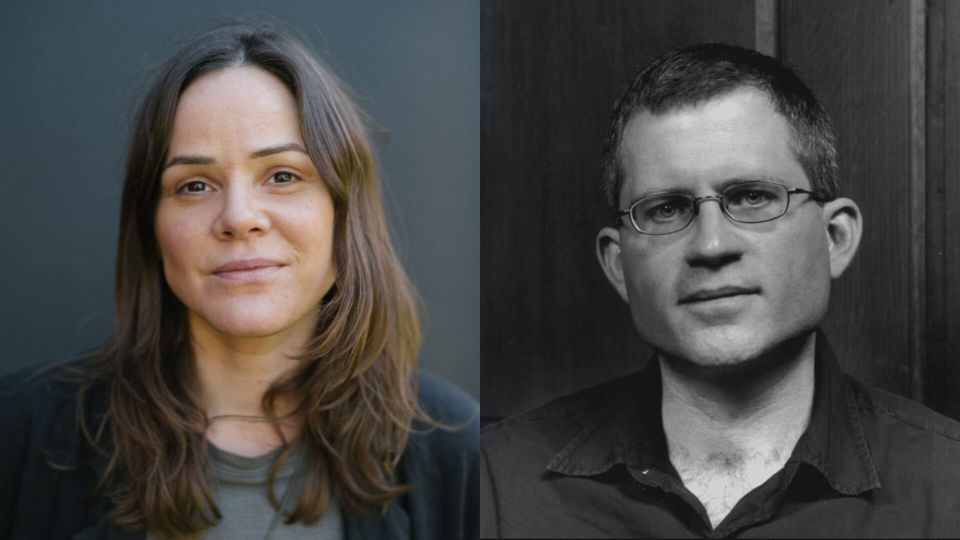
For the last few weeks, I’ve been immersed in the words of two gifted poets, Bianca Stone and Christian Wiman. You’ll hear both on upcoming episodes of Wonder Cabinet. (It’s National Poetry Month, after all.)
Both Stone and Wiman are serious philosophical thinkers who use poetry to explore life’s deeper questions. What strikes me most about their work is their ability to hold onto wonder even in the face of despair and angst. Each celebrates the miracle of existence — it bursts through their poems — but what I find most moving is the way each articulates the struggle to get there.
Bianca Stone is Vermont’s poet laureate. Some months ago, I heard her give a poetry reading, and was riveted. I loved the way she veered from high to low — from the heavenly world of Mary Magdalene and the Apocrypha to the quotidian details of shopping at Walmart. It was a primal poetic experience for me and I wanted to know more about where it all came from.
So I made the drive through the Green Mountains to talk with Bianca at the Ruth Stone House near Goshen. Ruth was Bianca’s grandmother, also a renowned poet and also — remarkably — poet laureate of Vermont. She had an outsized influence on Bianca. Growing up among writers, Bianca — unlike so many of us — never found anything intimidating about poetry. She went on to study with Sharon Olds in New York, was also mentored by John Ashberry and Anne Carson, and seemed headed for an academic career. Then her grandmother died, and Bianca moved back to Vermont to restore Ruth’s ramshackle farmhouse and turn it into a gathering place for writers.
Bianca says it’s hard for a poet to fit into academia. “There’s this need for idleness for the poet, which is misconstrued as a lack of work ethic,” she told me. “I mean, not doing anything - looking at the world around you and also inward.” But the questions that come out of that kind of deep contemplation aren’t easy to live with.
“Haven’t you had these moments in your mind — maybe it’s that little space between drifting off to sleep and waking up, or maybe you’re stoned — where you feel these paradoxes of truth? How to articulate these insights?”
In her new collection, The Near and Distant World, she writes about Greek myths, parenthood and her own struggles to carry on when she feels despondent. There’s one poem called “Rupture,” where she says, “God can warm his ass on Armageddon/I’m done.”
While Bianca seems to rage against the absence of God, Christian Wiman revels in his discovery of Christianity after years as an “ambivalent atheist.” But it’s a complicated faith. In his book Zero at the Bone: Fifty Entries Against Despair, he writes, “I have found faith to be not a comfort but a provocation to a life I never seem to live up to, an eruption of joy that evaporates the instant I recognize it as such, an agony of absence that assaults me like a psychic wound.” And he quotes the great Jewish theologian Abraham Joshua Heschel: “I prayed for wonders instead of happiness, and You gave them to me.”
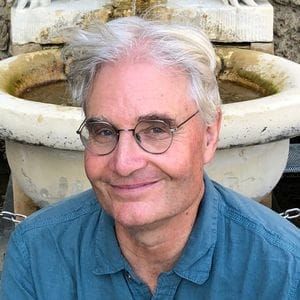
Christian is a prolific poet and essayist, and for a decade he was the editor of Poetry magazine. One distinguishing feature of his writing is how mortality haunts his poems. Some years ago, he was diagnosed with a rare, incurable form of lymphoma and told he only had a few years to live. But after repeated rounds of chemotherapy, a bone marrow transplant and a series of experimental drugs, he’s written half a dozen poetry books since his diagnosis, and he now teaches at Yale Divinity School.
Christian has a forthcoming poetry collection titled The Dance. In one poem, he remembers the “bright surprise” of a Christmas morning and writes about those unforgettable moments of grace – manifested in a “poem, prayer, piece of being, the tiny and entire story of the passionate transitory in which our lives are hung.”
Sometimes we need a poet to conjure up these moments of wonder for us. I treasure the writers who can evoke those feelings in me.
—Steve
Subscribe to make sure you never miss an episode.