

26 Mar 2026
Reading for Wonder: From the Glorians to the Stoned Ape Theory
Steve shares what he's been reading for moments of respite from the daily news cycle.
0:00 / 0:00
26 Mar 2026
Reading for Wonder: From the Glorians to the Stoned Ape Theory
Steve shares what he's been reading for moments of respite from the daily news cycle.
Episode Notes
If you’re a news junkie like me, it’s easy to get swallowed up in the endless stories about what’s wrong with the world. They can leave me feeling exhausted and alienated, so I seek out people who remind me of how much grace and mystery surrounds us. A good book is a reliable place to find this companionship.
I tend to gravitate to books with some literary flair that explore the scientific and philosophical subjects that interest me. Here are three new books I really liked.
“The Glorians: Visitations from the Holy Ordinary” by Terry Tempest Williams
This book is filled with unforgettable, often spellbinding vignettes. Terry Tempest Williams, author of such classics as “Refuge” and “When Women Were Birds,” lives in the red rock desert near Moab, Utah, where life gets scrubbed raw. But there are also moments of wonder, and Williams has a gift for describing them. One spring day, she sees a fierce wind blow coyote willow blossoms onto her patio. She goes outside to gather them, but the wind has blown them all away – except for one, which an ant is carrying in its mandibles.
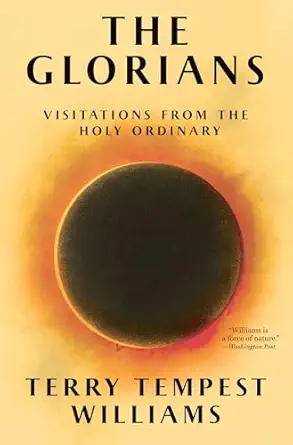
Williams watches, fascinated, for half an hour as the ant struggles to haul its big prize back to its colony. Every so often, a gust of wind threatens to blow away the flower, but each time several other ants suddenly appear to help secure it. Finally, the ant arrives at the colony and lays the blossom down at the entrance, where dozens of workers converge to cut the flower into pieces and carry them down into their chambers.
“The ant carrying the coyote blossom across the desert is a Glorian. A Glorian is an encounter,” Williams writes. “A Glorian is a moment of grace.”
“A World Appears: A Journey into Consciousness” by Michael Pollan
Exploring the mystery of consciousness is one of my longtime obsessions, and I’ve read dozens of books by neuroscientists, philosophers and spiritual seekers. The central mystery is how the immaterial world of thoughts and feelings can emerge from three pounds of spongy gray matter. No one really knows, though there are plenty of theories.
For such a big, baggy subject, I appreciated Michael Pollan’s concise account of the major scientists and philosophers who’ve shaped these debates. I’m guessing this book grew out of his earlier exploration of psychedelics which he described in his earlier — and much longer — book “How to Change Your Mind.”
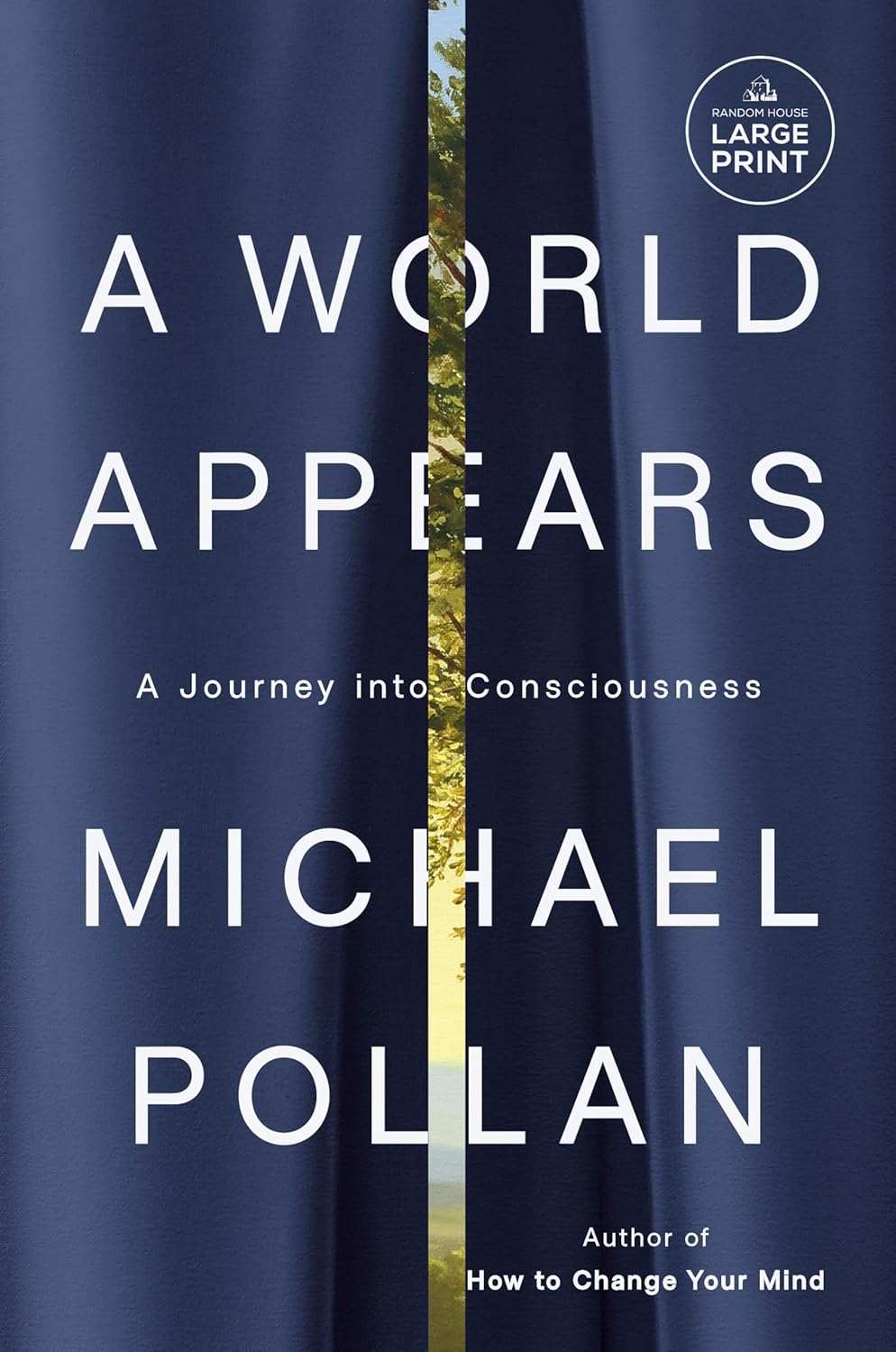
Pollan ends “A World Appears” by describing his experience meditating in a 12x15 foot cave, which is part of the Upaya Zen Center in Santa Fe. “I came to understand that Roshi Joan [Halifax] had sent me to the cave because there were no words or ideas she could offer that would teach me as much as simply being completely alone with myself, in the middle of these mountains, with no phone and no screens (and no toilet),” he writes. “For the first time, I could see – no, could feel – that the stars and I shared the same infinite space.”
“Strange Attractor: The Hallucinatory Life of Terence McKenna” by Graham St. John
Speaking of psychedelics, the definitive biography of ethnobotanist Terence McKenna (1947-2000) has just come out. He was a singular figure in the 1990s – the bridge between Timothy Leary and the contemporary psychedelic renaissance. A mesmerizing storyteller (you’ll find plenty of examples on YouTube), McKenna was a brilliant polymath but also a fabulator of far-fetched theories about how hallucinogens can open a portal into an interdimensional space with aliens. As Graham St. John writes, “With his intoxicating tales of DMT elves, Rosicrucian rebels, gnostic astronauts, heroic doses, and the Mighty Eschaton, Terence single-handedly weirded the times.”
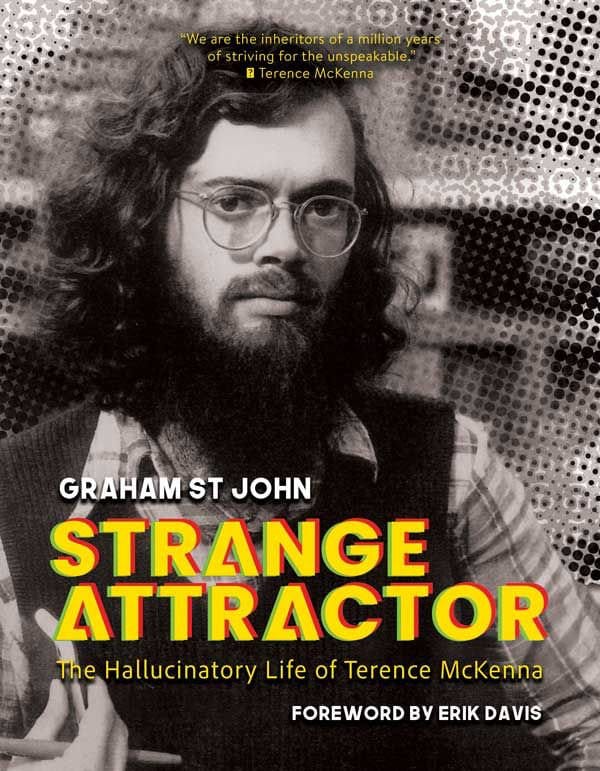
This book is a wild romp with one of the most entertaining figures in psychedelic history. My favorite McKenna theory? The Stoned Ape Hypothesis, which proposed that our ancestors’ consumption of magic mushrooms jump-started the evolution of human consciousness about 100,000 years ago, triggering the language-forming part of the brain and facilitating mystical experiences.
Some ideas are too tantalizing to dismiss out of hand.
— Steve
Subscribe to make sure you never miss an episode.