

04 Nov 2026
Spies and Santa's bones
Steve reviews what stuck with him from his summer reading list.
0:00 / 0:00
04 Nov 2026
Spies and Santa's bones
Steve reviews what stuck with him from his summer reading list.
ShareEpisode Notes
Anne and I recently returned to Madison after several months in rural Vermont, and it turned out to be a great summer for reading. With barely any TV channels at our Vermont house, books became our evening habit. I hadn’t read this much in years, and I’d even wondered whether I’d lost the attention span to get immersed in a book, so this was a minor revelation. Of course, having a book-heavy podcast and few distractions helped.
The books in the photo are what I’ve been reading the past few months. You’ve heard about some of them on Wonder Cabinet, and you’ll hear from more of these writers in the coming months. They include several books about the natural world, as well as a few that I would call “mind expanding.” I read mostly nonfiction, and I’m particularly drawn to books that have some mix of science, philosophy, history and memoir.
I liked all these books for different reasons, and there were a few that I found full of surprises.
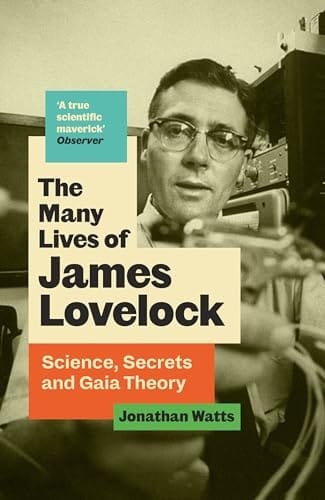
"The Many Lives of James Lovelock: Science, Secrets, Spycraft and Gaia Theory" by Jonathan Watts. Lovelock’s theory about the Earth as a self-sustaining system has become a cornerstone of environmental science. Years ago I interviewed Lovelock about his Gaia theory, but until I read this biography, I never knew he had a second career as a spy. For decades he worked for British intelligence as a bomb expert – defusing detonators and searching for the IRA’s hidden explosives with a device he invented to detect trace chemical elements. It’s also noteworthy that Lovelock’s most important scientific collaborators were two women. I was familiar with his long collaboration with Lynn Margulis but hadn’t known about his earlier partnership with Dian Hitchcock.
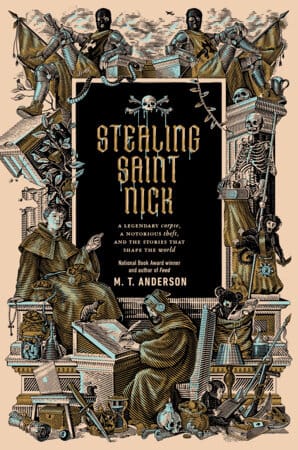
"Stealing Saint Nick: A Legendary Corpse, a Notorious Theft, and the Stories that Shape the World" by M.T. Anderson. This book traces the origins of St. Nicholas (aka Santa Claus) back to a 3rd century coastal town in what is now southern Turkey. The historical record is sketchy, but it appears that Nicholas was imprisoned during the persecution of Christians in the Roman Empire and later became a beloved bishop reputed to have miraculous powers, including bringing murdered boys back to life, ridding his town of demons, and saving shipwrecked sailors by calming a violent storm. After he died, his buried corpse was said to ooze a magical oil that would cure any disease. For centuries this crypt was a pilgrimage site, until 1087 when three ships of Italian pirates (including a few priests) sailed to Turkey to steal the bones of St. Nick. And today? His remains are buried in a basilica in Bari, Italy, where the magical ooze continues to heal pilgrims.
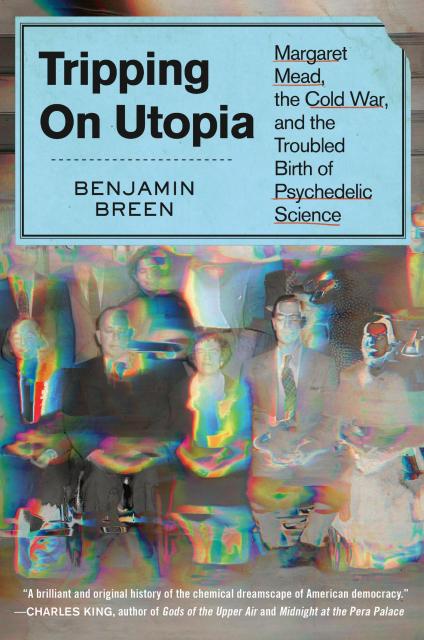
"Tripping on Utopia: Margaret Mead, the Cold War, and the Troubled Birth of Psychedelic Science" by Benjamin Breen. I’m fascinated by the lesser-known corners of psychedelia, so this history, which I found at a used book sale in Vermont, caught my eye. I hadn’t known that Margaret Mead, perhaps the 20th century’s most famous anthropologist, was an early proponent of psychedelics. Decades before Timothy Leary and the counterculture, she and her third husband, Gregory Bateson, believed LSD could revolutionize human consciousness. In fact, both worked for the OSS (the predecessor of the CIA) promoting hallucinogens. Bateson had a deeper involvement with the OSS, sneaking behind enemy lines in Southeast Asia in the 1940s to do covert “black propaganda.” Later, both Bateson and Mead turned against the government’s work on mind-control experiments, while the CIA found younger scientists to work on their secret studies of psychedelics.
One final note about our upcoming episodes: This weekend we’ll hear Anne’s conversation with Hannah Fries, author of "A Forest Language," and next week I’ll talk with Meghan O’Gieblyn about her memoir "Will and Attention."
— Steve
Subscribe to make sure you never miss an episode.