


04 Feb 2026
Yes, it’s called 'Wonder Cabinet,' and no, it’s not a piece of furniture.
Anne on podcast naming, the structure of scientific revolutions and Wunderkammern.
0:00 / 0:00
04 Feb 2026
Yes, it’s called 'Wonder Cabinet,' and no, it’s not a piece of furniture.
Anne on podcast naming, the structure of scientific revolutions and Wunderkammern.
Episode Notes
Hello and welcome to Wonder Cabinet – our new podcast! We’re happy to be back making audio and grateful to you for joining us. I’ve been thinking this week that launching a new show is like opening a door into the unknown – full of excitement, some trepidation, and a definite sense of wonder. Speaking of which, a word about the name Wonder Cabinet. Yes, it’s a teensy bit obscure. But it really comes alive when you know the history.
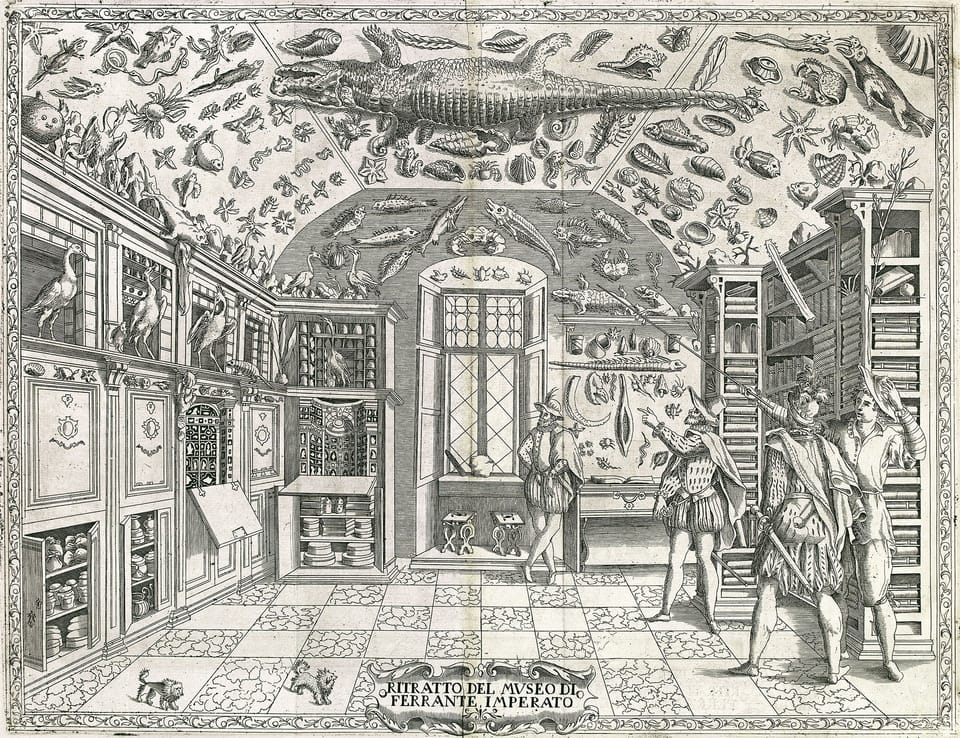
Wonder cabinets, also known as wonder-rooms (Wunderkammern) or cabinets of curiosities, were famous throughout Renaissance and Enlightenment Europe. They were private collections amassed by princes and scholars: elaborate and encyclopedic displays of shells, fossils, taxidermied animals, whale bones and mastodon teeth, set alongside mythical marvels like unicorn horns and saints’ relics — all equally mysterious and equally precious. What would it have been like, I wonder, to feel the same religious awe for a whale bone as for a preserved saint’s finger?
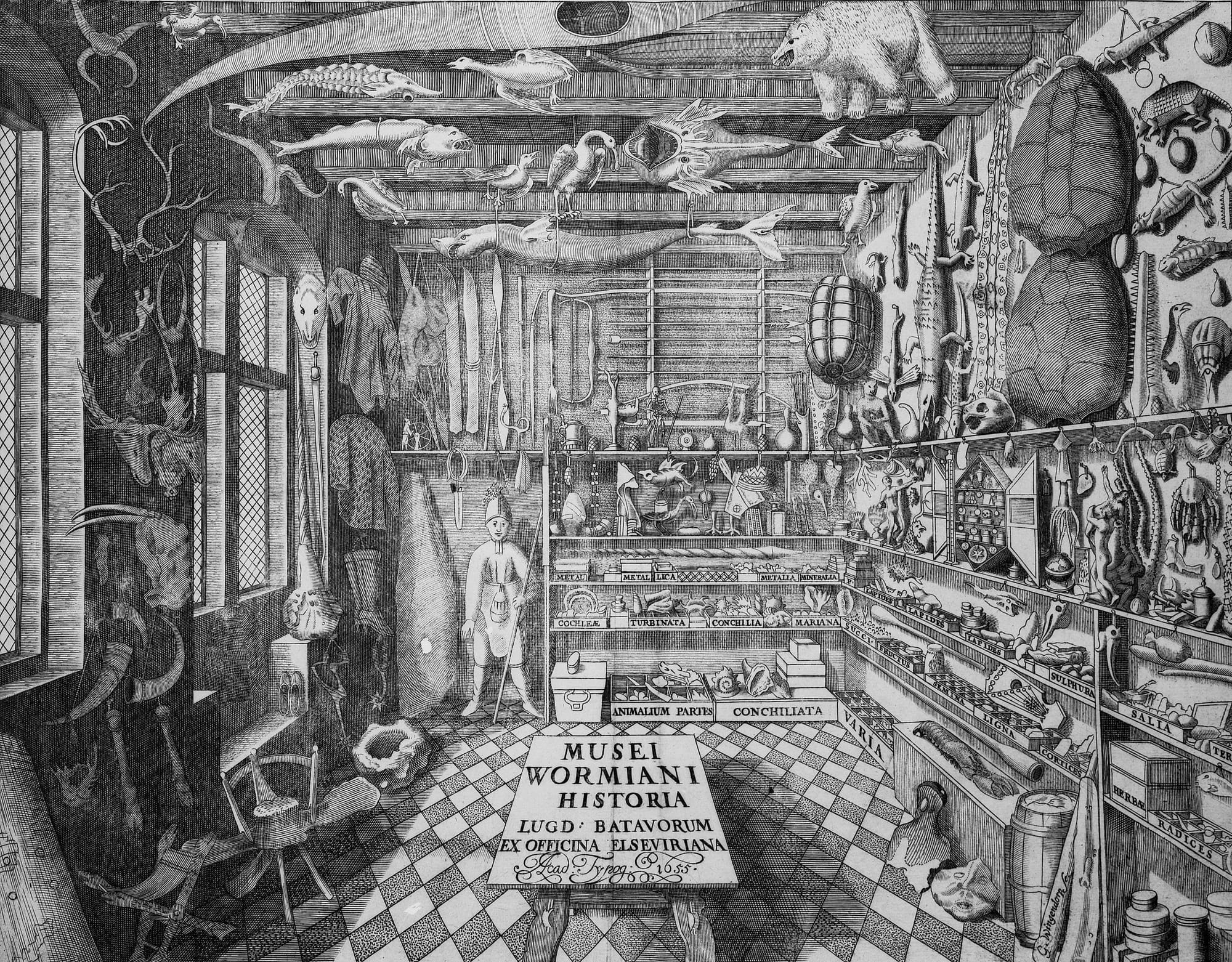
People didn’t make such hard distinctions then between science, art and magic. Wonder cabinets were full of early scientific instruments that were also works of art: astronomical models made of gold, silver and precious gems etched by master draftsmen; alchemical crucibles carved out of crystal; anatomical drawings by Europe’s finest artists. What must it have been like to see the pursuit of scientific truth as an expression of beauty?
Those early wonder cabinets sit at a moment in history when the dawning Scientific Revolution was still in conversation with an older magical worldview. Today, another revolution in thinking is taking shape, as mechanistic models of nature give way to more relational ways of seeing the world. And that’s where Wonder Cabinet comes in. It’s a collection, not of objects, but of conversations with scientists, artists and philosophers who are mining their own sense of wonder for the natural world to help shape a new narrative of life on a sentient planet. Some study black holes or quantum entanglement; others map mycelial networks or count ancient tree rings. And some write about imaginal ecology, exploring dream worlds, myths and fairy tales to revive ancient and animistic ways of knowing that challenge much of what we think we know about the nature of reality.
These are the kinds of interviews Steve and I have been most drawn to over the past few years. We brought them onto the larger stage of TTBOOK as often as we could. Wonder Cabinet will be a more intimate setting for deeper conversations about the implications of what we see as a new and emerging story about what it means to walk the surface of a living planet, awake to the collective intelligence that surrounds us, alive to its awe and mystery.
I’m so glad you’re joining us!
— Anne
Subscribe to make sure you never miss an episode.