
02 May 2026
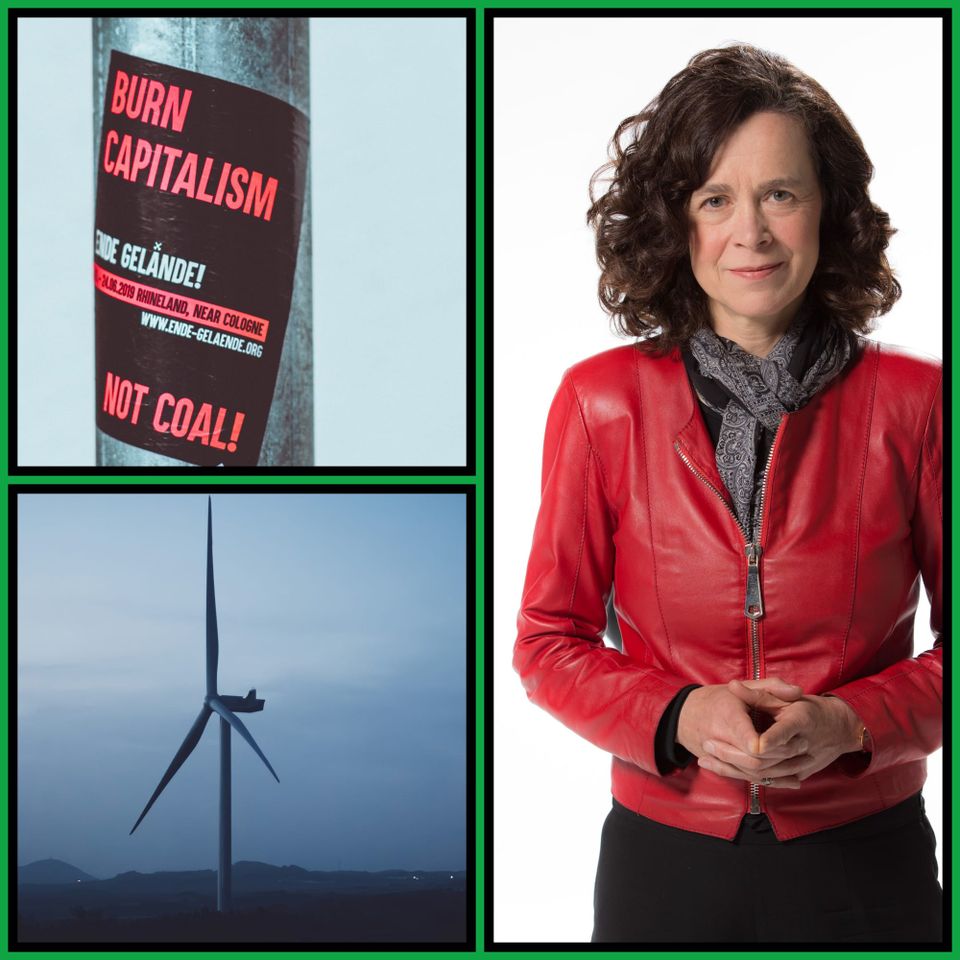
Rebecca Henderson: Can Capitalism Save the World It’s Destroying?
Can capitalism save the world it’s destroying? Harvard economist and climate activist Rebecca Henderson makes a surprising case for reforming it.
0:00 / 0:00
02 May 2026
Rebecca Henderson: Can Capitalism Save the World It’s Destroying?
Can capitalism save the world it’s destroying? Harvard economist and climate activist Rebecca Henderson makes a surprising case for reforming it.
ShareEpisode Notes
Can capitalism save the world it's destroying?
Rebecca Henderson thinks so. An economist at Harvard Business School and author of Reimagining Capitalism in a World on Fire, she has advised some of the world's biggest corporations and argues that capitalism itself — and what drives corporations — urgently needs to change.
She's clear-eyed about capitalism's failures — the inequality, the exploitation, the environmental destruction — which is precisely what drives her passion for reforming it from within. And as a climate activist, she's haunted by the consequences if we fail to act.
But this conversation goes deeper than economics. Henderson opens up about hitting a personal wall in her climate work — and the unexpected turn that brought wonder back into her life.
Transcript
Anne Strainchamps: Welcome to Wonder Cabinet. I'm Anne Strainchamps.
Steve Paulson: And I'm Steve Paulson.
Anne Strainchamps: There's a saying that it's easier to imagine the end of the world than the end of capitalism. After all, it's the only economic order you and I have ever known. And we all know how destructive capitalism can be — exploiting workers, clear-cutting forests, polluting entire ecosystems, all for profit. And how much inequality is baked in, especially today when the top 1% of U.S. households owns more than 30% of America's wealth, and the bottom 50% owns just 2.5%.
But does it have to be this way?
Rebecca Henderson: I remember when I was talking to the CEO of one of the biggest banks in the world, and this must have been back in about 1990, and he looked at me and said, "Rebecca, you know, I became a banker because I wanted to serve customers. I thought it was about getting money to the people who needed it. I did not realize it was about accumulating personal wealth on a global scale." This is relatively new, and we don't have to run capitalism this way. We really do not.
Anne Strainchamps: So what else could it look like? This is Rebecca Henderson, a star professor at the Harvard Business School, and she's consulted for some of the world's biggest corporations. She served on the boards of major companies. She's also a climate activist, so she knows exactly how devastating global warming is going to be, and she's got a pretty realistic view of why business as usual has been so hard to change. Which led her to write a book called Reimagining Capitalism in a World on Fire. And I have to say, it made me question some of my basic assumptions.
Steve Paulson: I don't know. I think we're a little different here. I am skeptical about compassionate capitalism. I mean, that was a phrase that was popular 20 years ago, and I don't think anybody would say it produced a more compassionate economy. Plus, as we now know, the major oil companies systematically and knowingly tried to discredit climate science for decades. So I don't see corporate America being part of the solution — but I would love to be proved wrong.
Anne Strainchamps: Well, this is why I really wanted to hear the argument for why business may actually be the one viable system for helping us get through this environmental crisis. And I also really wanted to know what a reform to capitalism would look like. And does it have anything to do with wonder? Because if there are two words I would not put together, they are capitalism and wonder.
But there's a reason you wanted to talk with Rebecca for this podcast. It really goes back to the first time I met Rebecca more than a year ago, when she told me about a personal crisis that she had fallen into. She'd been doing all of this work, sounding an alarm about the climate crisis and talking to lots of CEOs, but it wasn't going anywhere. And she hit a wall, which led her into a lot of soul searching — and what she ended up doing is a really fascinating story, which has everything to do with wonder. And that's what I wanted to talk about, and we'll get into that later in the conversation.
Okay, let's listen.
Steve Paulson: One of the great questions of the age right now, I think, is whether capitalism is inherently destructive or whether it can be a force for good. And I know you have all kinds of criticisms about free market ideology, but you also say business could help save the world. Very provocative statement. So, in a nutshell — we'll kind of unpack this — but what's the case for why capitalism can be a force for good, maybe our salvation?
Rebecca Henderson: I do believe capitalism can be a force for good. I also believe there are many different kinds of capitalism, and the sort of red meat extractive capitalism we're living through now in the States is a dangerous menace. So I'm talking about a particular kind of capitalism.
Steve Paulson: Unpack it for me.
Rebecca Henderson: I mean a capitalism in balance. I teach at the Harvard Business School, and I've been studying business all my life because I think firms are important and free markets are important. I don't want to live in a planned economy. I think large private organizations and small ones are an amazing way of getting things done. I think competition and the search for new ideas and new products and new ways of doing things is extraordinary. So there are aspects of capitalism that I think are just fabulous.
And so when I think of a reimagined capitalism, I think of a world in which firms focus not on profit as the be-all and end-all of what they're doing, but as a means to an end — producing great products, employing people that they trust and respect and treat with dignity, and operating within the bounds of the law, which is what capitalism can do at its best.
Steve Paulson: Obviously, there are many people who say capitalism is inherently extractive, inherently exploitative, especially when it comes to some of the big pressing issues of our time. Climate change, the obvious example. How do you respond?
Rebecca Henderson: Well, firms are inherently extractive and exploitative if they are not controlled. It's like having a very powerful dog. And if you don't keep the dog on a lead, it's going to go anywhere and eat anything. In this case, if you tell the managers of firms that all they need to care about is maximizing money in the short term, they will do dreadful things. We only have to look at what's happening in private equity and health care for examples, or, in my own case, what privatizing the water system in England has done to the rivers of Britain — flooded them with sewage.
It's unregulated, uncontrolled capitalism that is the problem. This is not a new idea. The whole history of capitalism in Europe and the U.S. and in Japan and in Scandinavia has been about how do we get the good bits of the competitive market and make sure that when we tell firms "make money," they don't hear "at any cost and right now."
Steve Paulson: So the key is ramping up the regulatory system?
Rebecca Henderson: Not only regulatory, but yes, the first tool is regulation and taxation. The second tool is — this sounds so nebulous, but it's so important — changing the mindset. We used to have a world, and again, we've never had utopia, but if you go back to different communities, different times and places, business people assumed that they needed to act morally. The idea that it would be hugely profitable just to pump the sewage directly into the river and there doesn't seem to be anyone really stopping us, so let's just do it — in some communities and some times, that would have been an unthinkable thought. Just as now, it's not okay to say, "Let's employ small children because, hey, that would be really profitable." Some things are out of bounds.
And one of the things that's happened — well, two big things have happened. One, we've had a systematic assault on the regulatory state. Over the years, we've had a very well-funded, heavily backed-by-business effort to destroy control of corporations. That's a huge problem. But the other huge problem we've had is the development of a kind of moral regime that says morals are all very well, but they're really for women and schoolteachers and for me when I'm at home. Business is for real. If it's not illegal, let's go ahead and do it. And if it is illegal, let's see if we can change the law.
So one of the reasons we've had trouble dealing with climate change is there's been a well-funded effort to ensure we don't have climate regulation and heavy investments in disinformation. This is not intrinsic to capitalism. For a long time, I taught the required course in ethics and leadership at the Harvard Business School. And we would always have a session on political engagement by corporations. When I would explain the current American rules to foreign students — Citizens United, unlimited money into politics — they'd look at me and go, "But that's corruption." The kinds of rules we have in the U.S. are unthinkable even now in many parts of the world.
Steve Paulson: So let's take a concrete example of capitalism doing good things. You write about one case in Norway — a CEO who took what I think was the country's biggest waste disposal company. Will you explain what happened there?
Rebecca Henderson: The company in question was a company called Norsk Gjenvinning. And the hero of my story is a man called Erik Osmundsen. He was in private equity, and he ran across this company because the firm he was working for bought it. He was in charge of doing due diligence and trying to find a CEO, and he was learning all about this company, which was a mess and was bleeding money and really in trouble. But, you know, that's an opportunity sometimes for good management.
He came home to his wife and he said, "I'm bored of just making money and pushing the numbers around. I think I could do this job and I'm going to put my name in." And so he became the CEO. The first thing he found out — the second week on the job, because he started riding along with all the employees — is that the whole industry was deeply corrupt. People were throwing hazardous waste into holes in the ground or shipping it overseas mislabeled. They were literally pumping toxic chemicals into the fjord off Oslo. And it was the whole industry.
Steve Paulson: It's also cheaper to send your hazardous wastes to Asia, for instance. You could make a lot more money for your corporation doing that.
Rebecca Henderson: Absolutely, rather than treating the waste. Much easier to pump it into the fjord rather than treat it properly. So it's a classic example of under-regulated extractive capitalism and bad morals across the whole industry.
Because what happens with the bad morals — and what happened to Erik — is he went to his people and said, "Well, this is a bad idea." And they said, "Well, this is what everybody does. It's not that bad, don't get all upset, it's fine." He said, "It is not fine. And we are going to make money by changing it and being the first firm to change it." He's an extraordinary person, and he'd be the first to say it wasn't just him — he had an incredible team. But let me say, he fired half of the senior management and systematically started to clean up the firm.
Steve Paulson: To follow up on this — it sounds like this is going to be a lot more expensive to do it the right way.
Rebecca Henderson: Well, that's where I'm going. It's going to be a lot more expensive. So what do you do? You start putting pressure on your competitors. How do you do that? You tell your customers that the industry is corrupt and that they face regulatory risk. You go to the regulators and tell them what is really happening and ask for better regulation. And the third thing you do is turn to your workforce and say, "We're going to run this firm properly. Do you want to be part of something that is part of the future, that could make a real difference in the structure of the world?"
Because properly running waste management could have a huge impact — not only on climate change by reducing global emissions, but also because if you think of the waste stream as a source of materials rather than just something you throw into a hole, it reduces mining, it reduces extraction. It's huge.
You said to the employees, are you in? A bunch left. But what happened — and I've seen this again and again, and my own belief is the research on this is very cast iron — is when you tell people they are working for something more than just a paycheck. Everybody needs a paycheck. Every firm needs profits to survive. But the paycheck and the profits are not the goal. The goal is joy and growth and connection. And when you start building a firm where the people who work for you can see that's what you're really about — and everyone could see Erik was for real — he was getting death threats. He had to get police guards for his children.
Steve Paulson: Death threats from whom?
Rebecca Henderson: From the people who were benefiting from the corruption. They wanted him to be quiet. They threatened him and his family. This is not just "oh, let's be nice here." In many countries, the waste business is run by the local mob. He had to have guards for his kids. There were times when he and his wife were like, "Oh my God, what have we gotten ourselves into?"
But what that is is a very credible signal that you believe what you're saying. And when people see that — not everyone, and of course the people who don't care will leave — you will attract people who work for love, who work for meaning, who work for purpose.
Steve Paulson: Just to reiterate this point — you're saying you can work for love, you can work for purpose, and you can make money doing that.
Rebecca Henderson: Oh, well, yes. Let me give you my favorite statistic, which is in the average industry, the 10% most productive firms are about twice as productive as the 10% least productive firms. That means the top 10% are taking the same inputs and making twice as much output with the same stuff as the bottom 10%.
Now, when that result first emerged in the literature — about 25 years ago — I was part of the crowd. I was sitting in the rooms where we were reading the papers and talking about it. None of us believed it. I mean, I spent 10 years of my life in windowless conference rooms trying to make it go away. We thought, well, it must be mismeasurement, or they're really different inputs, or maybe the workforce is more skilled. Those are all real effects, but they turn out to be very small.
The real effect is if you can run your workforce with so-called high-performance work practices — nothing magic: high levels of communication, distributing power, trusting people to make the right decisions, treating people with dignity and respect, promoting the people who do good work, not because they kiss up — you can double the performance of the firm.
Steve Paulson: Wow, that's so inspiring. It just gives me hope.
Rebecca Henderson: Well, it's true. Now, to your point about making money — I am not telling you that you will make more money than your competition, because doing the right thing is expensive. Really transforming a firm in the way that Erik did, putting purpose at the heart, transforming the entire industry — which he went on to do — that's expensive, at least in the short term. Not now. Now he's got it up and running. He's the largest waste company in Norway and spreading all over Europe. It's a great success story.
Steve Paulson: So I'm wondering — it's a wonderful story, obviously, Erik in Norway. How rare is he?
Rebecca Henderson: In the sweep of history, he's not rare at all. I think, for example, in the '50s, '60s, and '70s, most firms in the U.S. and Europe were run this way. There was a tighter regulatory regime, and so it was less tempting to be corrupt and extractive. That's one of the things — the morals and the regulation go hand in hand. That's why Erik tried to improve the regulation to shift the whole industry.
I mean, I worked in tech for a long time, teaching technology strategy at MIT. The big tech firms were founded by people who were in love with their products, who thought computers would change the world. The money was a byproduct, a necessary condition. And now we idolize the billionaires. This is all relatively new.
Well, it's cyclical, right? If we look back, one of the things that drove the Great Depression was the kind of massive acceleration in inequality we're seeing now, the valorization of money at any cost. And when it's money at any cost, increasingly, if I promise my investors a 20% rate of return, what I have to do to get that 20% gets iffier and iffier. That's what gets the sewage pumped into the water. This is relatively new, and we don't have to run capitalism this way. We really do not.
Steve Paulson: Okay, this is fascinating. And we're going to come back to this — we could spend three hours obviously talking about everything. I'd love to talk about the details and how you really do it. But now I want to talk about you.
So by any standard, you have been incredibly successful. I mean, you are one of, what, 25 university professors at Harvard — the highest rank designation you can have of any professor there. You have consulted for multibillion-dollar corporations. You've written books. I mean, you have it all. And yet I know, because we had a conversation some months ago, that something went sour for you. You hit a wall, right? Like a few years ago?
Rebecca Henderson: It is. And everyone has a different kind of wall. But something really happened in my life, and I took two years off. I was teaching a course based on these ideas at the business school — it was called Reimagining Capitalism, Business and the Big Problems — and it was a huge success. Fastest-growing elective at Harvard Business School in the last 10 years, something like that. And I wrote a book. And the book was called Reimagining Capitalism in a World on Fire, and it was published in April of 2020 — which was, for those who have forgotten, right at the beginning of the pandemic.
Steve Paulson: Right, right.
Rebecca Henderson: And we were all at home, and I thought my book was going to disappear without a trace. But everybody was home. Everybody wanted to hear about reimagining capitalism in a world on fire. So in my small world, the book was quite a big hit. It went into seven languages. I ended up giving hundreds of talks to thousands of people.
And what happened is it became quite clear to me that they weren't going to do anything — "they" being the business people I was talking to. I was talking to senior teams at very large multinational corporations, to gatherings of senior business people all across the world. And what would happen is you could see them in the Zoom. They'd look at me and go, "Very interesting, Professor Henderson. Very, very interesting."
Steve Paulson: Why were they even there? Why were they listening to your talks?
Rebecca Henderson: Because — and this is what it took me a while to work out — it made them feel better. It made them feel better to think that business could save the world, that there was a way out. But the idea that actually on Monday morning I should go and do what Erik did — well, you know, I'm busy, I've got lots going on.
It became clear to me — and I knew this before — that business people are caught in a web. It is a web of short-term expectations, low regulation, and a social circle where not making as much money as possible at any cost is just not okay. I had naively, narcissistically, lunatically thought that, well, here's the book, it lays out the process, it shows you you can make money — five easy steps to changing the world — everyone would go, "Oh yeah, let's just do it." And I had a consulting firm lined up to help. And no, it just wasn't going to happen. It was too hard. And I got very depressed.
Because the work I do means I'm very current with modern climate science. I know what's happening across the world, and I got very depressed.
Steve Paulson: Can you tell me more about that? When you say you got very depressed, what do you mean? What happened?
Rebecca Henderson: Well, 25 years ago when I started this work, I thought, this isn't that hard. It's 2% or 3% of GDP, we can make money on a lot of it, we can build a decarbonized world. It will be cleaner, it will be richer, it won't be burning. Of course people will do that. No-brainer. And I think lots of us in climate thought that.
And what happened is it became clear to me that the whole way we structure our lives, our firms, our politics — how we think about who we are and what matters, our focus on ourselves, on our own well-being at almost any cost — and when I say "we," I mean the educated classes in the global north. In the global south, and people at the edge, they know what's happening. They've known it for a long time. I'm talking about the people living in the beautiful manicured houses in suburbia like me.
Steve Paulson: I want to take you back to that. You said for two years you basically dropped out.
Rebecca Henderson: You know, it hits everyone differently. I would go out into the garden, and I would look at the trees and I would go, "You're all going to burn. I'm sorry. I'm really sorry. We really screwed up and we've been too greedy and we're too comfortable and we're not going to change, and I'm really sorry." And I have friends who live in the Philippines or in Bangladesh — it's real there, right? It's going to feel as if we're living in a war zone. It's going to feel as it has been feeling for many people not in the global north for many years. I could feel the waves of suffering.
Steve Paulson: So this is a really dire scenario that you're painting. And you have not backed off from that, but you somehow got to another side here.
Rebecca Henderson: Well, firstly, it was my husband. He said, "You need to take two years off." And I started to go on retreat. I'd always been the Buddhist equivalent of a Christmas Christian — someone who kind of reads the occasional book and does the occasional meditation. But I started doing a week of meditation a month. I needed to find a way to hold all that was happening and not shut down. I needed to be able to look at what was coming and function. And there are many ways to do that, but for me, that was meditation.
And I will say, I remember my first retreat so well. It was a 10-day retreat. It was amazing. And at the end of it, I stood up and I thought, "Amazing technology. Impossible to scale." A technology that goes back 2,500 years.
Steve Paulson: Yeah, it goes back 2,500 years. It's a technology.
Rebecca Henderson: This is what I love about Buddhism — my understanding, at least, is no required existential beliefs. When the Buddha was asked, "Is there a second life?" or something, he said it's a completely useless question. That's not the question. The question is reducing suffering now, and I have tools and techniques to help you to do that. And he was absolutely right, at least in my case. The techniques are fabulous — not for everyone, but for some people, and certainly for me — so helpful, and they've really worked.
Steve Paulson: Why did that — I mean, I can understand at a personal level you were feeling hopeless, which is probably the right word. You were giving all of these talks and it didn't seem like it was making any difference. And so somehow these meditation retreats, this contemplative practice, give you some sense of equanimity. But it doesn't seem like that would necessarily deal with this larger sense of futility.
Rebecca Henderson: Well, here's the thing. I went on a retreat in the first place because we can change the world — we have the technology and the resources. We just don't want to. We need to want to. And where is the technology in our civilization that has been holding for thousands of years the idea that humans should focus on the long term and care about each other? It's the great faiths.
The great faiths have always been — and of course there are all kinds of problems with them, I hold no brief for institutionalized religion and some of what's happened — but at the core of all the great faiths is the idea that there is more than status, money, and power. That just focusing on yourself is a disaster. That the way to create a thriving society is through love and compassion. That's not a revolutionary idea to the human race. There have been societies built entirely around those ideas.
And so I went on retreat because I thought it is the only way through. We have to find a way to help people understand that this is a dead end, that the only way through is to focus on the long term and each other — to rediscover those capacities for a deep relationship with yourself. We just have to look at the billionaires right now to see that they don't appear to be very happy at all. Total focus on yourself is deeply unskillful. We need to rebuild relationships with ourselves, with each other, and with the natural world.
And if we could do that — the politics, the economics, we know what to do. I have a book that says here's what to do in business. There are many others. I have friends who know exactly what to do in economics, in housing, in inequality, in taxation policy. That's not the issue. The issue is not getting the right policies. The issue is wanting the right policies. The issue is moving away from the fear and hatred and tension that is created by this extractive capitalism. How do the rich stay in power? By pitting poor white people against poor black people. That's what's happening.
But I say, you know, you've got a better plan, you go do the better plan. Here's what I'm trying: we need a spiritual revolution. And I don't mean the whole world is going to sing Kumbaya. I mean, we need to learn to wake up to these basic truths of what makes us happy, of the world we want for our children. And that will mean — and everybody is different — getting in touch with our inner core.
Steve Paulson: Can I just say — to hear you, this renowned professor at Harvard Business School, saying we need a spiritual revolution, that's the thing that's going to save us, that's going to help us navigate this next period of our history dealing with this major problem. I mean, that is kind of amazing, actually, to hear you say that.
Rebecca Henderson: But it's so distressing that it's amazing. Because what I mean by spiritual — it's not spirits and woo-woo and all that stuff. I mean thinking about the purpose of life. I mean thinking about what we really value. I mean really being engaged in this world, full on, for good. That's what I mean.
Anne Strainchamps: Okay, hold that thought for a moment while we take a short break. And when we come back, we'll hear how Rebecca took these personal discoveries back into the classroom.
Anne Strainchamps: Hi, it's Anne. I am so glad you're joining us. We have some amazing guests lined up for the weeks ahead, and I'm really excited about them. And here's a tip — maybe you know this already, but if you follow Wonder Cabinet on Apple Podcasts, those new episodes will show up automatically, like a little weekly gift in your podcast feed. I hope you like it.
Steve Paulson: This is Wonder Cabinet. I'm Steve Paulson. My guest is Rebecca Henderson, the author of Reimagining Capitalism in a World on Fire. And she was just saying what we really need is a spiritual revolution. What did you do with this? You said you took two years off from teaching, then you went back to Harvard Business School.
Rebecca Henderson: So I took two years off from teaching and read and read and read and talked and met all these cool people that I would never have met otherwise. And I came back and I said to the dean, "I want to teach a course on — really, a spiritual revolution? Like what?" And I want to teach it to students from right across Harvard, not just business school, because this is not just a business issue. And so now I teach a course, 75 people, asking this question: What does it mean to turn in? And then, if you turn in, what's next?
Steve Paulson: I want to talk to you a little bit more about this class. I've read your syllabus — it's called Reweaving Ourselves — and you have a fabulous reading list. I know a lot of the people you assign, everyone from the science fiction writer Kim Stanley Robinson to the indigenous plant biologist Robin Wall Kimmerer, to — I love this — the risk report of the World Economic Forum.
Rebecca Henderson: Of course.
Steve Paulson: Sort of putting it all together. What do these readings have in common?
Rebecca Henderson: The intellectual project here is threefold, or maybe manyfold. One is, what does it mean for humans to behave in a different way? What do we know about that historically? What do we know about the tools and techniques? And what do we know about how that's been enacted in ordinary life? What does that look like politically? What does that look like if you're building a firm? What does it look like if you're an economist or designing an accounting system?
The project is a deliberate attempt to not turn our back on what one might call modernism or current civilization, which has many, many strengths. I don't want to go back to an era before penicillin. I've already said I don't want to live in a planned economy where someone makes all my choices. There are all kinds of things that we need to celebrate and build on in the existing way of doing things, but we need to use them from a different place.
What does it look like to run a firm this way? What does it look like to run a city this way? What would it look like to run a society this way? And then, what do we know about those moments in human history where there has been something like a spiritual or cultural revolution?
Steve Paulson: Do you have an example of that historically — one of these turning points?
Rebecca Henderson: There are many. And again, one can't expect that on the other side was utopia. But let me point to a couple. Firstly, just a very small one — it happened in Mauritius in 1968. Mauritius was mostly slave plantations at the time, with about eight or ten official languages — French aristocracy who owned the sugar plantations, mostly the descendants of Black slaves who worked the plantations, but also Chinese and African. And the British left and said, "Okay, it's up to you now. You rule the island."
There were two political parties — one the Landowners' Party and one a popular party. Right before the elections, there were serious riots. It looked like the whole society might break down. But what happened is the leader of the Populist Party reached out to the leader of the Landowner Party and said, "What would happen if we ran Mauritius as if the most important thing was creating good jobs and decent living standards rather than growing the GDP and making ourselves rich?" And they did. They worked together. Mauritius is not paradise, but it scores very highly on all measures of well-being.
And let me give you another example that's so close to home we forget, but I think it's worth thinking about — the ruins of Europe after World War II. There's a very famous intellectual called Stefan Zweig who killed himself in 1943. He was Jewish and he thought, "This is hell and there is no way out." The idea that World War II would lead to the kinds of societies that the Europeans built — healthcare for everyone, education for everyone, prosperity for everyone — that would be possible, that they would do that, was almost unthinkable in '43 or '44.
Steve Paulson: You know, it's so interesting to hear you use that example, because I've thought about that myself in terms of right now, in this new Trump administration, it seems impossible to see the other side. Where are the leaders that we need?
Rebecca Henderson: Exactly. You can't see the leaders, you can't see it. And that's the other reason I talk about this example — I hate to say this, but I think things are going to get worse. And one of the reasons we need to turn inside and learn to reground and rebuild our communities is because we do a lot of work in the class on: okay, it's you. Now you need a group of people to keep you honest. And we can call it different things — you could call it a church or a sangha or a reading group or a mentoring circle. I don't care what you call it. But you need a group of people around you who are also trying to do the right thing, to keep each other honest, to hold each other in bad times.
I mean, again, this is not news. If you're a Black American activist, you've been working this for hundreds of years. Situation impossible, you need to turn inside, and you need your friends, and you need the joy, and you need to be right here in the moment. But you also need some sense of hope.
Steve Paulson: So I want to ask how you do that. I was fascinated reading your syllabus for this course — you talk about the experiential component, things like the value of holding grief or deep listening. I want to know how you do that, what you do when you bring these people together. Probably most of them don't know each other, and you're basically asking them to expose themselves, to be vulnerable.
Rebecca Henderson: Well, we know a lot about how to help people be vulnerable, how to help people connect, how to help people go, "Oh, there's another way to do life." You begin with deep listening.
Steve Paulson: What do you mean by deep listening?
Rebecca Henderson: Suppose that I said to you, "Okay, Steve, tell me about a place you really love and why you love it and why you're afraid for it, given all that's happening. And I'm going to sit here for five minutes and I'm going to listen really carefully. I am not going to think about what I'm going to say next or what I can do to show you that I'm smart. I'm just going to listen to you. And I'm going to hold everything you say in confidence, and I'm not going to give you advice. Just five minutes." People cry, really, because we're not in the habit of doing it. We're not in the habit of really listening to each other. It's the most simple exercise and it's the one I come back to again and again.
And they get to know each other. It's a cross-university group — all kinds of things happen when you put divinity school students and law students and history students and business school students in the same room.
Steve Paulson: And it sounds like we're also not just talking about 18 to 22-year-olds here.
Rebecca Henderson: No, no, no. These are all graduate professionals — 27, 28. And they're climate activists. This is a climate cause. We're not going to be debating whether climate change is real. You agree with that premise, and we're starting from there. And you think it's hopeless, and I'm tempted to think it's hopeless. And we're going to talk about: is this a path? Is there a way through? That's the goal of the course.
And the reason I do the experiential stuff — the deep listening, we close every class reading a poem in circle together. Everyone reads a line of the poem. We go around the circle. We do social presencing theater, which is when you express what you're feeling through your body, not through words. All of them are ways of, instead of being in your chattering, thinking, "how smart I am" mind — which all the students are superb at, these are all Harvard students — getting you into your body and your heart. It's getting you embodied.
So many of us — the pampered, privileged, educated, small segment of the global north — we're in our heads. Our bodies are sticks, and our heads are just machines for walking our heads around. When you get into your body and you allow yourself to think about what's happening and how you feel, a lot of stuff comes up. But if you're with a group where you can see the caring and the reflection and the holding, and then we try to give people the long-term tools to hold it and move with it as they go out into the world — amazing stuff happens.
Steve Paulson: What are you hoping happens once they go out into the world?
Rebecca Henderson: This is a difficult moment, and it's super difficult. We talk a lot about alternative theories of change and what you can do with your life. Do you try and change the existing infrastructure? One student from the class went to work for one of the Federal Reserve Banks because he thought fiscal and financial policy was really important. He's pulled together a group at that bank and he's trying to think about what they can do that might be helpful. Or you can go completely the other way and start a cooperative farm and try to build strong local community out somewhere in the country and really model what a different way of living might look like. Or you can start a small firm or go into media.
Steve Paulson: But it also sounds like you are finding and sometimes creating groups of people that are to some degree like-minded — or maybe you bring them along — to make real change. And there are lots of examples of this: people, small groups, nonprofits, institutes doing wonderful things. Everywhere — thousands of them. It seems like the issue is how do you scale this up to actually make a difference in the larger society.
Rebecca Henderson: And I think none of us know. I'm doing what I know how to do, which is teaching. One of the striking things I've noticed — I've been trying to track major social transformation, political upheaval across history — is in nearly every case, and the Mauritius example is an example, things went well when there was a segment of the ruling elite that said, "You know, things look really bad, but rather than doubling down on the secret police and putting the troops in the streets, why don't we try something different? Why don't we try the middle way? Why don't we see if we can really rebuild our democracy? Wouldn't that be better?"
So it's a kind of dual-pronged strategy: try to reach the people who are in those rooms — and we know their names — who might be open to having these conversations, giving them the experiential practices and the peer group that could support. It's super hard to do this on your own. You need people around you who are encouraging and supporting, and create groups within that 0.01%. Just as with the educational structure, we're trying to build what's sometimes called these islands of coherence, where we're demonstrating that there's a different way to do things.
Steve Paulson: Well, another point that you're making — I think I'm reading you correctly here — is that you want to work within existing institutions. You're not saying, "Throw out the whole system and we're going to start from scratch and do it better."
Rebecca Henderson: I mean, no. There are these existing institutions — powerful institutions, governmental institutions — and we need to reform them or remake them, radicalize them maybe.
Steve Paulson: So you're an incrementalist?
Rebecca Henderson: I'm an incrementalist, yes. I think it's all about reform. But I have huge support and cheers for people who say, "Rebecca, you've got to be kidding. We need to start over. Reimagining capitalism — let's throw it out the window." To which I always answer, well, show me. Show me the better system. All the historical examples I know, they didn't work. We need better capitalism. We need Japanese capitalism at its best or Scandinavian capitalism at its best or American capitalism at its best. We need to get back there.
I spent 20 years studying innovation — that was my early training — and what I learned is if you're really going to transform an industry, you need people out there in the front trying new things, radical new ideas. But you also need to change the big institutions because they have the money and the power. And it's that integration that you need. No one knows what the future is going to look like. I think it's going to look like some version of transformed capitalism. I might well be wrong, but we need multiple experiments in different countries, in different institutions. And we need the out-there experiments because they might be right. Things might get so bad that we need the out-there stuff.
Steve Paulson: Where do you personally — coming back to your own story — where do you find sustenance? You've already said meditation retreats, but what else?
Rebecca Henderson: I've always loved being outside. That's why I became a climate activist. But mostly what is new is — I can't do this all the time — but I can be in a room and I can look at people and I can see them shining. All the striving and the suffering and the pushing and the shoving, and I can see the beauty.
There's a phrase I say to myself, which I really believe is true — which I certainly didn't believe five years ago — which is: we are all doing the best we can. That's really true. It's true of the fossil fuel executives, too. I have a friend who runs a major fossil fuel company. He's doing the best he can. And I can see the amazing thing that is the human spirit. It's extraordinary.
And people say, "What gives you hope?" We have no idea what's going to happen next. We have no idea what our species is capable of. We know that when push comes to shove, humans have done some amazing things. And push is going to come to shove. But mostly it's about right now. Mostly it's about right now.
Steve Paulson: So I could leave it there, but I have one final question that's going to seem like it's coming out of left field, because you've been talking about the importance of doing inner work. I've just recently started trying to pay more attention to my dreams, which I did this morning at 4 o'clock. I'm going to tell you sort of the end of this dream that I just had, and I don't know what to make of it. There was a person — I don't think it was me — who had a cell phone and made a call, and it rang in some other dimension, some other time, and someone else picked it up and was waiting for that call. This other person in the future is clearly waiting for this call. And then I woke up, thinking, maybe my unconscious knew that I was about to talk with you and we were going to talk about the future and when things are sort of really hopeless. Does that resonate with you in any way?
Rebecca Henderson: Part of me is just thinking, well, what does this mean for you?
Steve Paulson: Believe me, I'm wondering that myself. And maybe it's just about me.
Rebecca Henderson: No, no. But you know, we're all about everything. That's the thing. I love that phrase: we are not a drop in the universe, we are the universe in a drop.
One of the exercises we do is called moral imagination. Moral imagination is all about putting yourself in the shoes of not only people in the future, but the insects and the birds and the trees and the children. Can we really extend ourselves beyond this narrow self, both now and into the future, to feel the consequences of our actions, to really understand what's happening and what we're doing? And so what comes up for me is: there's someone in the future waiting for the call. They want the call that says, "I hear you. I'm moving. I take it seriously. I'll change my life."
Steve Paulson: And for me, as I was thinking about this dream — it's both the now trying to imagine someone in the future, and then that person in the future responding to people who are reaching out from the past. It gave me hope. And actually, when I got up and was writing this down, I was tingling all over about that. I just thought — because I knew that we were going to talk about difficult stuff and it can seem really hopeless right now — how do we imagine something better?
Rebecca Henderson: It helps to have taught technology at MIT for 20 years — we really do have the technology and the resources to fix the problems we face. We have enough resources to give everyone on the planet a secure place to live, decent education, and real health care. Yes, it's bad, there's going to be a lot of suffering. But there's a huge difference between total collapse — which I actually think is quite unlikely, although possible — and taking what we have and rebuilding. We could rebuild a much better society. I think it would be poorer. I think there would be fewer [luxury goods] and snow resorts in Saudi Arabia. But if we could build a world where we were partners with the natural world, where everyone had enough to eat, where everyone felt included and respected and there was work for all — that would be a very beautiful world. And I think it's very possible. I do believe it. Absolutely we could do it.
If we put the planet on a war footing — just do the thought experiment, put it on a war footing with a unified goal: no child left behind. For me, that would be the way I would do it. No child, no place. We'll keep the beautiful places, and every child will have enough to eat, decent education, real health care, and a chance at a job. And you do it village by village, city by city, country by country. It'd be completely different.
Steve Paulson: Anyway, we're going to leave it there. Thank you so much.
Rebecca Henderson: Oh, my pleasure. My pleasure.
Anne Strainchamps: That's Rebecca Henderson. She teaches at the Harvard Business School, and her book is called Reimagining Capitalism in a World on Fire. Steve, I think her point about the moral teachings of the world's faith traditions is actually really interesting. I know a lot has been written recently about the resurgence of interest in traditional religions like Catholicism, especially among young people. So I think there really is a sense of spiritual longing that is not just individual, but collective. I know that's something we'll talk about in future episodes.
Wonder Cabinet comes to you from Madison, Wisconsin and Vershire, Vermont. Our audio engineer is Steve Gotcher. Our digital producer is Mark Riechers. I'm Anne Strainchamps. And I'm Steve Paulson. If you haven't yet, sign up for our newsletter so you get updates about new episodes. You'll find it at wondercabinetproductions.com. This is a brand new podcast, and we could use your help spreading the word. Thanks for joining us. Until next week.
Subscribe to make sure you never miss an episode.