
14 Feb 2026
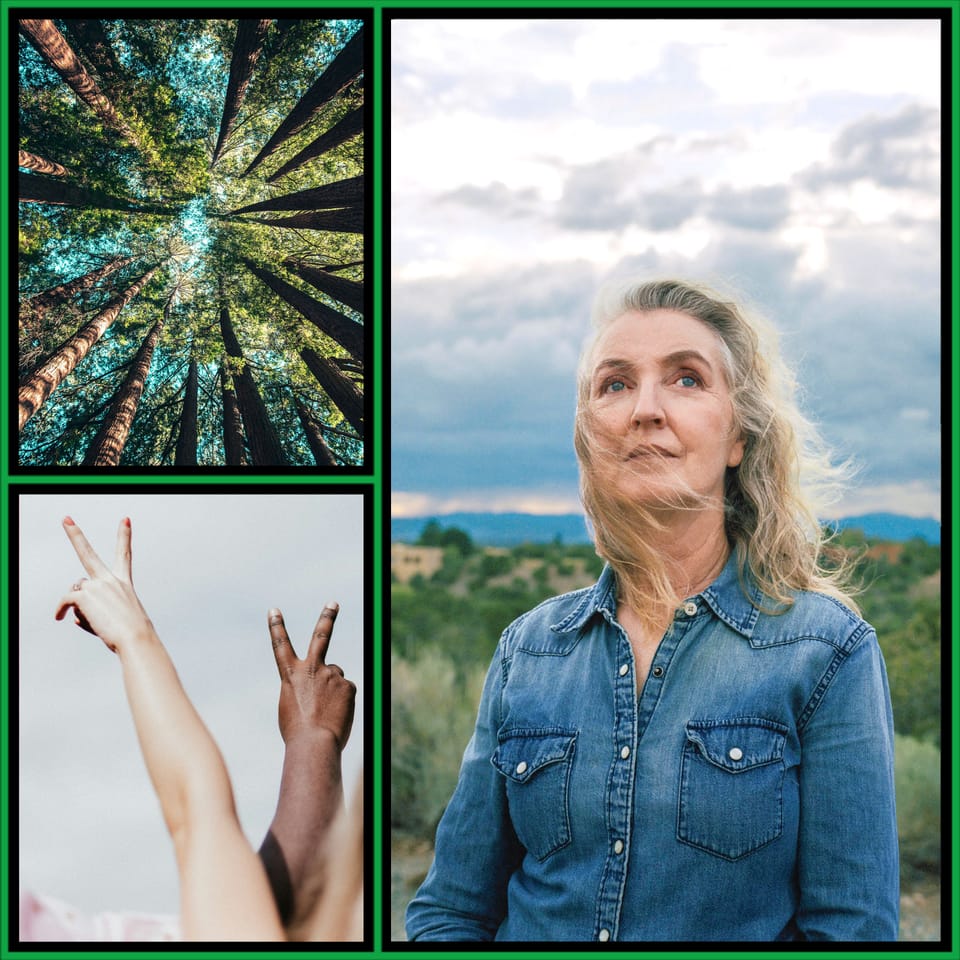
Rebecca Solnit: Hope After the End
As institutions unravel, Rebecca Solnit argues despair is a mistake—and that a more compassionate, just world is already being born.
0:00 / 0:00
14 Feb 2026
Rebecca Solnit: Hope After the End
As institutions unravel, Rebecca Solnit argues despair is a mistake—and that a more compassionate, just world is already being born.
Episode Notes
How do you deal with the emotional toll of living in a time of dissolution? Social scientists use the term "polycrisis" to describe the kind of cascading, overlapping failures that can lead to systemic collapse, and it’s hard not to see the symptoms of a dying world order in events unfolding around us. But maybe what we’re witnessing is actually grounds for hope. In a forthcoming book "The Beginning Comes After the End," writer and activist Rebecca Solnit makes the case that something is dying, all right — because something better is being born. A rising worldview that embraces antiracism, feminism, environmental thinking, Indigenous and non-Western ideas, and a vision of a more interconnected, compassionate world.
Solnit is an engaged writer and intellectual in the tradition of Barbara Ehrenreich, Susan Sontag and George Orwell. Her new book picks up where her earlier bestseller “Hope in the Dark” left off — with an argument against despair and historical amnesia. In this conversation, we explore the extraordinary scale of progressive social, political, scientific and cultural change over the past century, the roots of Solnit’s stance of “pragmatic, embodied hope,” her thoughts on “moral wonder, “ and her years in San Francisco’s underground punk rock scene. She also tells us what she’d put in our own wonder cabinet: an AIDS Memorial Quilt square sewn by Rosa Parks.
- To The Best Of Our Knowledge: Tending a wartime garden: what Orwell’s fascination with roses tells us about the human need for beauty
- Rebecca Solnit’s newsletter
- Pre-order “The Beginning Comes After the End”, due out March 3, 2026.
Transcript
Anne Strainchamps: Welcome to Wonder Cabinet. I'm Anne Strainchamps.
Steve Paulson: And I'm Steve Paulson.
Anne Strainchamps: Where do you turn when wonder feels out of reach? When your country's at war with itself?
Steve Paulson: When American cities look like they are under siege, and you feel helpless even while you're glued to the news.
Anne Strainchamps: At times like these, wonder can seem like a trivial emotion, irrelevant, even escapist.
Steve Paulson: But maybe it can also be a doorway to a better future.
Anne Strainchamps: Today, writer and activist Rebecca Solnit joins us to talk about the moral value of wonder and a long arc of progress.
Rebecca Solnit: You know, we had a profound cultural change which was so slow and incremental, it often feels like nobody really noticed. And I feel like the opposite of a Paul Revere, not running around saying something just happened, but saying something has been slowly happening, and this moment is radically different than 30 or 50 or 100 years ago.
Steve Paulson: Okay, let's pause for a sec. We should remind people who Rebecca Solnit is.
Anne Strainchamps: Right. She's a writer and public intellectual and activist who has been involved in environmental and human rights issues for more than three decades. I'd say she's one of the most influential writers on the left. She's written more than 20 books. Some of them are famous: Hope in the Dark, The Field Guide to Getting Lost, Men Explain Things to Me. She writes about feminism, popular protest, walking and wandering, the history of the American West.
I mean, I know her books, but you follow her online, I think.
Steve Paulson: I do, especially at times like this, when I'm really looking for a critical analysis of what our government is doing. She's one of the people I turn to, and Solnit has this really uncanny ability to bring together what I would call up-to-the-minute journalism with this broader historical view. And there's a distinguished tradition of people who write like this. Barbara Ehrenreich was one, and one of her own personal heroes, George Orwell.
But you really pushed to have her on Wonder Cabinet. Why was that so important to you?
Anne Strainchamps: Two things. Because we live, you and I, five hours from Minneapolis. And those videos of masked federal agents kitted out as if they're going into battle in Fallujah, smashing windshields and breaking down doors, that has all been happening on streets that look like ours. And I know that the shock and the horror is intentional, that the terror is the point, but it has really felt like beauty and decency and the ability even to have a sense of wonder is under attack.
And then here's the second reason that I wanted to talk to Rebecca Solnit. I keep remembering this conversation we had about her last book, Orwell's Roses. And this is the book in which she talks about beauty and gardens and roses and all those small everyday joys as a form of resistance, as fundamentally anti-totalitarian. And so I wanted to know how that idea would hold up today, if it would.
And it turns out she has a book coming out in March that is absolutely of this moment and yet profoundly hopeful.
Steve Paulson: Really hopeful? You'd think it would be anything but.
Anne Strainchamps: Well, it's a nuanced hope.
Steve Paulson: Okay.
Anne Strainchamps: Okay. But the clue is in the title: The Beginning Comes After the End.
Steve Paulson: Okay. So I know there is that old line from Antonio Gramsci's prison notebooks where he says that “the old world is dying and the new world struggles to be born.” That's the reference?
Anne Strainchamps: That's the reference. And she is using it to reframe America's authoritarian turn as the last gasp of a dying worldview. You know, so she's writing against the tone of apocalyptic dread that suffuses so much commentary today and in a voice of hope and wonder.
Steve Paulson: Okay, let’s listen.
Anne Strainchamps: I thought we could start with the story you tell at the beginning of the book just because I love the scene. It was this October morning, 2024. You're on a California hill looking over the ocean. Could you take us there and paint that picture and then tell me why you wanted to begin the book there?
Rebecca Solnit: Yeah. It was a really windy day which made it hard to hear anybody. The landscape felt almost scorched from the dry summer as California does before the rains come back, and it wasn't a dramatically glamorous place. It wasn't the top of Half Dome or giant redwood trees or what the same place might look like in spring, but it was a miraculous place because I was at a Land Back ceremony for a tribe that didn't have federal recognition until the year 2000. And so a number of miraculous things had to happen that put us in a place that was unimaginable before.
I grew up very near this place at the northernmost tip of Marin County, and when I grew up in that place, people had nothing to say about Native Californians, ignored them altogether or asserted that they were all gone. And something that I think is really remarkable is that people who were told that they were over, they were anachronistic, they were extinct, have become in many ways the visions and the voices leading us into a sustainable, viable future. So everything has changed, and it's changed in complex ways, subtle ways, slow ways, incremental ways that so often haven't been recognized, which made me feel like I needed to write a book just describing the change.
Anne Strainchamps: What you're saying is so welcome and also such a contrast to the mood right now. I mean, we are talking the same week when Renee Goode was shot and killed by ICE. To say that many of us feel completely overwhelmed is an understatement. And in the face of this, you're writing very intentionally against despair, and I wonder why is that despair story so sticky?
Rebecca Solnit: I totally understand and share some of the feeling of horror that people have in this moment and fear. But I think the big story, and this is really a story that the right is telling us if we listen carefully enough, what I hear the right saying is you all are very powerful. You have changed the world profoundly. All this stuff you have done, whether it's marriage equality or women's rights or environmental protection or telling the real history of this country are all connected. We hate it, we want to reverse it, we want to hit rewind on the VCR.
And something that I believe is true is you can change laws, but you can't change beliefs as readily. You can take away reproductive rights, but you can't take away the belief that we deserve reproductive rights. And wanting people to just take more nuanced, complex and patient views rather than being the people I so often run into who are like we had a protest on Tuesday and the government didn't drop to its knees and hand us everything on Wednesday so nothing happened. You get this impatience, this oversimplification, this inability to see change itself that I think really feeds the defeatism. And I'm here to feed the hope, realistic hope, pragmatic hope, engaged hope, because we live in a world that has changed in ways that we now barely see but that's actually really awesome.
Anne Strainchamps: While you were talking I was remembering something that British activist and song collector Sam Lee likes to say: culture eats politics for breakfast.
Rebecca Solnit: I think of politics as like this kind of scum on top of the deep strata that our culture. Culture shapes politics, it reshapes politics. Ideas really matter. And we're often told that artists, musicians, writers, educators, historians are somehow lightweight, trivial, insignificant people. But when you change the story, everything changes. They're trying to change the story, which they're not very good at. They're not going to make people believe slavery was a good thing, especially Black people.
Things mostly change incrementally, and the Berlin Wall falls, but there's a buildup to it. Marriage equality comes about 11 years ago, but there's a long campaign of changing the way the rest of us think about queer people, about rights, and about the institution of marriage that makes this sudden thing possible. I was actually thinking this morning about how when I was a kid, a huge number of Americans believed that they didn't know anybody gay or lesbian.
Anne Strainchamps: Yeah.
Rebecca Solnit: Which when you add it all up I think is 10% of the population. And I don't think we'll ever live in a world where people think they don't know anybody queer anymore. And it does feel like that long view is a bit countercultural in the sense that so many of the stories that we are surrounded by are so now, what just happened today, this hour, yesterday. So trying to hold on to that bigger picture gets harder and harder for a reason.
Anne Strainchamps: Yeah.
Rebecca Solnit: And it's actually really handicapped us when it comes to understanding a lot of incremental change for the better or worse. Climate change has been really hard for people to wrap their minds around because it's a very incremental global process with many causes and many solutions.
But to your larger point, I wrote a piece for The Guardian a few years ago whose opening line I'm very fond of. I said I often feel like a tortoise at a mayfly party. Tortoises can live for 170 years. Mayflies actually live a long time in their larval stage, but in their adult stage live for a day or two. And I move around feeling like I understand how successful feminism has been because I remember how grim and repressive and unequal the status of women was, including my own mother in the world I was born into 64 years ago. And so yeah, we've lost some things in recent years, but it sure as hell isn't 1961 again, and I don't think it ever will be.
Anne Strainchamps: I remember saying something to some young woman saying, well of course I didn't play sports when I was growing up, and they said oh why not? And I said well everything changed after Title IX, and they said what was Title IX? So it's like we just forget.
Rebecca Solnit: Yeah, people forget all that stuff. There's a wonderful sentence or pair of sentences by the theologian Walter Brueggemann where he says amnesia breeds despair the way that memory breeds hope. And people think hope is about the future, but the future is unknown, it doesn't exist, we're making it in the present, which is actually a really hopeful reality. People pretend we know the future, which is usually what I call upper middle class peasant fatalism: it will never work, I know exactly what will happen. It's this bizarre way people allocate themselves a power they don't have to know the future to abandon the power they do have, which is also a responsibility to make the future.
But the past is what gives us the templates, the examples, the understanding of the trajectories, the forces. If you know the past, you can see change. And often that requires being slow.
Anne Strainchamps: And it's not just, do we know and value history. Some of these changes happen off camera in a way. You've got a lovely section on the move to renewable energy, which I confess I did not know until I read that section in your book, just the extraordinary strides that have been made in the last 10 years.
Rebecca Solnit: Renewables, well, to frame it for this show, fill me with wonder. And it really took me reading a book about the history of coal written at the end of the 20th century to realize, wow, when this book was written we really did not have an alternative to fossil fuel because wind and solar were primitive, expensive, utterly inadequate technologies. And then to realize, oh my god, we've had an energy revolution. And then it took a few more years to realize like no, we're actually in the early stages of an energy revolution: wind, sun, batteries, maybe tidal power. What else is coming? And that changes everything.
And there's a mindset very stuck in the kind of Al Gore Prius compact fluorescent lightbulb era that thinks that it's all got to be a kind of thrift, conservation, austerity. And so we live in a completely different set of possibilities than we did even 10 or 15 years ago. And every prediction about the price of solar and its proliferation has been an underestimate because any accurate estimate would have seemed insane at the time it was made, and then it became reality.
And this is part of what people don't remember: before the Berlin Wall falls, before marriage equality, before California becomes a place that's dropped its use of natural gas by 40% because of renewables, these things seem inconceivable, impossible. And so I want people to see that as equipment to face an absolutely difficult and scary present, but to face it with a kind of resoluteness and confidence in our own power.
Anne Strainchamps: We've been talking about hope, making the case for this very realistic, pragmatic hope. But I want to shift and ask you about a related emotion, at least which I think is related: wonder. And when Steve and I started this podcast, I was worried that wonder might seem kind of like a recipe for irrelevance. Like hope, it is not a very prevalent emotion right now in the zeitgeist. And I was a little worried that this would come across as escapist or elitist. But I have this stubborn view that having a sense of wonder does matter, not just spiritually but politically, morally. And I hope you'd help us think about that.
Rebecca Solnit: I take it you've read Dacher Keltner's book Awe, which is basically another word for wonder. I really thought it was going to be kind of about aesthetic epiphanies, which I have all the time in the natural world. But his first category is moral beauty: being deeply moved by people doing things exactly like the people of Minneapolis are doing in the streets to stand up for their immigrant and refugee and brown and Black neighbors. And of course those people are standing up for themselves as well.
I think wonder is very woven into our lives in a lot of important ways. I think recognizing that even our species is small in the cosmic scheme of things. I think pleasure and joy are important emotions for keeping your bearings and not becoming grim from thinking about nothing but what's bad and wrong.
And I wrote the book Orwell's Roses because it was so exciting to recognize that George Orwell, the 20th century's most prominent anti-fascist, somebody who faced unpleasant facts, actually took a bullet through the neck fighting fascism with a rifle on the front in Spain, also spent a lot of time cultivating a garden, taking pleasure in roses and the natural world and everyday things like a good cup of tea or a good mug of beer. I think we anchor ourselves in pleasure, in joy, in friendship, in love. So yeah, I think wonder is important. And I think part of what keeps me, what would you call it, relatively cheerful in the face of all this is just like I am a tortoise at the mayfly party with a long sense of time and change.
So I retain wonder about the miraculous things that happened. And one of the great influences on my life was the way Eastern Europe liberated itself in the fall of 1989, something nobody, including the Western European or Eastern European regimes, really anticipated how magically it would happen. How half a dozen countries that have been totalitarian since the Second World War would through largely nonviolent means change themselves. So you have to trace the threads, and the threads are long threads, but when you do, you see the tapestry, and it can be quite exciting and back to your frame, fill you with wonder. And so I think I go around in a state of wonder a lot of the time.
Anne Strainchamps: Well, the other thing that I hear you pointing to that I think is related to wonder is mystery, these moments where like nobody could have predicted or we didn't know how this would go. So it's holding on to this potency of the unknown.
Rebecca Solnit: Against our own potency which people pretend to have when they make these pseudo-authoritative proclamations about what can and can't, will and won't happen. Albert Einstein really kind of got stuck after the theory of relativity, if I remember my physics history right. And when quantum physics came along he said God does not play dice. And one of my favorite physicists, Niels Bohr, who was Danish, part Jewish, a hero of the resistance, a remarkable man in many ways with a kind of poetic soul, said it is not for us to tell God what he may or may not do.
But yeah, I think that there's something essentially mysterious, and that's actually beautiful, and that's also the terrain of possibility, of recognizing we don't know what will happen because we're deciding it in the present. And I also thought in 1989 Nelson Mandela would spend his whole life in jail, and I didn't have any estimate that apartheid would be disbanded, the regime would end, and Mandela rather than spending his life on Robben Island would become president of a new South Africa. And we're close to a cure for AIDS, speaking of who thought that was going to happen.
Anne Strainchamps: Maybe there's a connection thinking about that darkness, the mystery that we were alluding to. And if you bear with me, this isn't really well thought out, but the new book is at least being talked about as a sequel to one of your best loved books, Hope in the Dark. And that title to me always meant hope in terrible times. But I heard a conversation with you recently that made me realize that is a misreading of what you meant, and you were actually writing to reframe not only hope but also darkness. Am I right?
Rebecca Solnit: You are totally right. And we use this good versus evil horrible binary of light equals good. And anybody who's, picture an interrogation chamber with the thousand watt bulbs shining in your eyes, the prisoners who aren't allowed any darkness, light is not all good. And a summer in Iceland made me fall in love with night in a new way, the sensuality of the way your other senses wake up because your vision doesn't work so well. And now I crave the deep darkness where you see the Milky Way.
But I also found the equation of dark with bad things only too readily takes on racial overtones that I am not interested in participating in. But for me, hope in the dark partly comes from a wonderful line of Virginia Woolf's: the future is dark, which is on the whole the best thing it can be, I think. And of course it's in her diary not long after one of her breakdowns during the First World War, not an easy or great time for her.
But I feel like in its essence it invites us to know that we don't know. Knowing you don't know is the real beginning of wisdom. And we can equate that unknowing to darkness but also see that it's erotic, it's fruitful, it's generative.
Anne Strainchamps: Well, yeah, I'm also thinking about how often experiences of disaster, when we think it's the worst thing possible and there's nothing to do but run into it and help other people, those are often some of the most beautiful experiences of humanity. I mean, like you, I like history. So when things get bad, I go back to read about London during the Blitz. I just find it very comforting. But I could just as well say remember New York after 9/11. Where I live in Madison, Wisconsin, I knew people who packed their cars and drove to New York to help. So that's another way of thinking about what shadow experiences bring out.
Rebecca Solnit: You probably know I wrote a whole book that has the Blitz, 9/11, Hurricane Katrina and some other disasters in it, A Paradise Built in Hell, where I was interested in the way people not just rise to the occasion, not just are heroic and generous and altruistic and brave and all that good stuff as they take care of each other in an emergency, but what was remarkable to me when I wrote that book, when I read all those firsthand accounts for older disasters, when I talked to people who had been in the great Mexico City earthquake of '85, in Katrina, in 9/11, they lit up. They found a joy and a meaning and a purpose and a connection that was missing from everyday life.
In some ways everyday life under capitalism produces a lot of anomie and isolation, a kind of lack of agency, connection, meaning. And in those moments of disaster, people often find them, which is so meaningful, so important to them that even their own house has collapsed or burned down, everything is uncertain, death is all around, they often live more vividly and find something remarkable in it.
And again it goes to something about this political crisis we are. We're not who we're told we are. It is useful for consumerism, capitalism, authoritarianism, elites to say that ordinary people are selfish, greedy and cowardly. And in Minneapolis, a woman just got shot three times in the face, and under that theory about cowardly and selfish, everyone should be staying home for self-preservation. But the amazing people of Minneapolis and surroundings are still showing up, and a lot of them are not people like Renee Goode who are themselves under threat from ICE. They're people standing up for other people.
We've been talking about other things, but we could have had a whole conversation about these versions of human nature. And I think those have actually changed a lot in our lifetime from the kind of selfish individualism, the social Darwinism, to recognizing a world that is more collaborative, symbiotic, relational, more full of mutual aid and connection than we used to recognize.
Anne Strainchamps: I'm talking with writer and activist Rebecca Solnit. And so what is the future she thinks is being born right now? That's my next question right after this break.
Steve Paulson: Hey, it's Steve. I want to invite you to visit our Wonder Cabinet website where you will find more information about the show, and Anne and me. And I really hope you'll subscribe to our newsletter. We'll tell you the story behind the name of this podcast and some of the amazing guests we'll be talking with in future episodes. You can find us at wondercabinetproductions.com. And please, tell your friends about Wonder Cabinet. This is a brand new podcast, and we'd love your help in getting the word out.
Anne Strainchamps: This is Wonder Cabinet, and we're talking with Rebecca Solnit about her new book due out in March called The Beginning Comes After the End. You like that quotation from Antonio Gramsci, the old world is dying and the new has not yet been born. And something I've noticed, and I think you pulled this together, is the beginning of this new narrative that was coming out of the sciences. I mean, my kind of shorthand for it is Gaia 2.0, but it's the idea that the earth systems and species are all completely interconnected at every level, that our lives are interwoven with the lives of insects and plants and the microbiome. And what you do that I like so much is say no, it's not just in the sciences. This is the new paradigm that is becoming. Can you say a little more about that, sketch it a little bit?
Rebecca Solnit: Yeah, I think the life sciences have been extraordinary in their transformative vision, recognizing that nature is far more symbiotic, interconnected, systemic than the previous versions. And one of the great test cases is reintroducing wolves to Yellowstone, which chased elk, which kept the elk from chewing down all the saplings by the waterways, which allowed beavers to return and build ponds and riparian habitat to grow richer, and the whole ecology to get richer. Which when all that happened was kind of a hot, controversial new idea in the '90s. My great-niece got taught it in fifth grade because now it's just accepted how things work.
But the sciences have really shifted at every level. You can talk about that our own body is seen as full of non-human DNA of all those microbes in your intestines and elsewhere necessary to your survival. So you're really kind of a lurching pile of plurality, not a single individual. You can look at maybe the most famous of all these, Suzanne Simard, and a lot of the brilliant thinkers have been women, recognizing that a forest is a community. And I juxtapose Margaret Thatcher's famous "there is no such thing as society" against Suzanne Simard recognizing that even without human beings there's society because a forest is a society. Or you can throw in Jane Goodall, who broke down the divide that biologists, zoologists wanted there to be between the human and the non-human.
Anne Strainchamps: And so going back to that idea that culture changes long before politics does, so we're talking about the culture of science and this new scientific story infiltrating the culture. What do you think, what kind of changes would you predict are going to come from that in other spheres, in the political sphere, for instance?
Rebecca Solnit: Well, I'm being long-winded, but something I think is essential is all these new ideas actually align really beautifully with what a lot of Indigenous people, certainly many that we know in North America, have been telling us, which is seeing a world of deep relationship and interconnection is true and necessary and important for acting meaningfully and sustainably in the world. And so I find it also very exciting that these new scientific ideas actually line up with the oldest ideas.
Anne Strainchamps: Wow. So maybe there's a future in which Western industrialized capitalism was a blip.
Rebecca Solnit: That's something I propose in the book because we grew up with the idea that sort of Eurocentric, industrialized, capitalist culture was the true, right, smart, white guy way to do everything. And now I think we're going to look at it as kind of a detour, a certain part of humanity made from the really old ways, and whilst others never forgot them, never stopped practicing them.
Anne Strainchamps: It's so much fun to talk about these big sweeping ideas with you, but I'm curious about you and your own personal experience. You've written about being raised in difficult circumstances. You've said you had a kind of inside out childhood in the sense that outdoors was safer than inside your home. What would you say are the experiences that pulled you outside that small self and into wonder or mystery or hope?
Rebecca Solnit: Well, in many ways I'm living a life better than anybody told me I was ever going to have. Lots of different people told me to have very low expectations for myself, and there were low expectations for girls. I have more friends and better friends, and this writing thing has turned out pretty well for me, which also lots of people told me was not really going to work out for me. And I live in a world that's just a much better world to be a woman in. Marriage and children is not the only form of relationality or love out there.
I've been hugely shaped by growing up really since I was 18 in San Francisco, surrounded by gay men and queer culture. And a lot of it, I think, is intellectual excitement and adventure. I was part of the Western Shoshone Defense Project. I've slept on the sands of the Arctic Ocean. I floated down rivers. I've gotten to see transformation itself. And that's what I think the long view lets you see: you can see change.
And to see something like the arrival of Buddhism in the West and its transformative possibility is so exciting. And so the personal and the public are not that separate for me. But even as a kid, I had a kind of bleak childhood in terms of violence and a pretty cold home, but I also was in love with books and stories and the natural world around me. And I took refuge in them.
And I'm also an ex-punk rocker, which was very helpful in that difficult youth of mine. And there's a certain never-surrender defiance about that. Our enemies would love us to surrender. They'd love us to say we have no power and they won and we're giving up. And why the hell would I ever give them the satisfaction, even if I thought it was true? And it's not true. So if you can't be an angel of hope, just be a punk rocker. And actually, I think there's a great mashup of that in hope punk right now.
Anne Strainchamps: Oh, I don't even know about hope punk.
Rebecca Solnit: Oh yeah, there's this great hope punk thing which I think is about being hopeful without being sappy, wishy-washy.
Anne Strainchamps: Oh, I love it.
Rebecca Solnit: Being fiercely hopeful, defiantly hopeful, hopeful with an attitude.
Anne Strainchamps: That also sounds very much like you.
Rebecca Solnit: Yeah. And here I sit before you, not that the listeners will see me. I've been joking lately that I've made a graceful transition from punk rock black to Buddhist black with a slight sprinkling of Sicilian widow. And yeah, no, punk rock was huge for me too.
Anne Strainchamps: Did you have a favorite song or favorite band?
Rebecca Solnit: I didn't really like Black Flag because all these jock-like Southern California hardcore bands came in. And for all us nerdy people, suddenly what had been slam dancing became thrash and the mosh pit, and it became too violent for scrawny people like me. But I will say Black Flag's Rise Above is one of the great anthems.
Anne Strainchamps: What do you listen to today?
Rebecca Solnit: Things with cellos in them. Music played on instruments made by my friend Hans Johansson. He's a master instrument maker in Reykjavik. He just posted a video of somebody playing 50 minutes of music in a cathedral on one of his violins. And I listen to lots of different things. I still love roots and country music and Emmylou Harris and Patti Smith and this and that. It's fairly random.
Anne Strainchamps: Okay, so I've got just two last questions. I know I'm keeping you.
Rebecca Solnit: No worries.
Anne Strainchamps: So one is we've been talking about this long view that we often don't see because we're so mired in the moment. Can you paint a long view picture of the future? Doesn't mean it's going to happen, but there's a lot of value in imagining future possibilities.
Rebecca Solnit: Actually, I can't because I really don't do that. But something I'm really excited about is Afrofuturism, Latino futurism, Indigenous futurism. There's a new kind of utopianism that's not everything will be hunky-dory and all our problems will be over and we'll arrive in some sort of future so perfect that we'll just have to impose authoritarianism to maintain it in exactly that way forever, which is what utopias often look like from Thomas More's Utopia on.
But what they see, and I think also Cory Doctorow in science fiction sees this, well, we could solve a lot of the problems we have in the present or move beyond a lot of the problems we have in the present, and then we'll have new and interesting problems. We will always be, to some degree, in struggle. We will always be in problems. But no, I think there's so many different possible futures, and my version of imagining one would make me feel like I had dismissed all the others as though I knew which seeds we planted would bear fruit. And we just have to keep planting seeds and know that we don't know which ones will bear fruit, who will harvest them, and what they'll do with that fruit. More fun to see what's going to come out of that fertile, rich darkness.
Anne Strainchamps: So last question. If we were going to create a new wonder cabinet for the modern age and you could put anything in it, what would you like to add to it?
Rebecca Solnit: The videotape of Alexandria Ocasio-Cortez's expression when she realized she won the primary, a chunk of the Berlin Wall, maybe something about Nelson Mandela's presidential election, the marriage equality decision in the Supreme Court in 2015.
Anne Strainchamps: Oh my god, we're going to give you your own drawer. It's the Rebecca Solnit drawer you could pull out.
Rebecca Solnit: Yeah. Here's something that would be wonderful in a wonder cabinet. I only realized writing for World AIDS Day that not only was Rosa Parks the instigator of the Montgomery bus boycott that got the Civil Rights movement going, but she was a brilliant seamstress, and she actually sewed squares for the AIDS quilt. And I loved seeing that her commitment to liberation didn't stop with Black liberation or racial justice. That as an older woman in the '80s or the '90s who had sewn quilts for people she cared about as well as sewing for a living when she was younger, she made patches for people who died of AIDS for the AIDS quilt. That single act of care, of love, of craft connected to very different movements in ways I hadn't imagined. Let's talk about indirect consequences.
Anne Strainchamps: Wow. Yeah. Oh, thank you so much. This was a beautiful conversation. It was a pleasure talking with you.
Rebecca Solnit: The same. Hope, courage, generosity are contagious. And I love that you've decided to make wonder contagious, the best contagions, even as we face the worst.
Anne Strainchamps: That's Rebecca Solnit, writer, activist, and voice of conscience. She's written more than 20 books, and she has a new one due out in March called The Beginning Comes After the End. I'm Anne Strainchamps.
Steve Paulson: And I'm Steve Paulson. On our next episode, I'll talk with novelist George Saunders about creating imaginative worlds filled with ghosts and angels and why dying may be the ultimate experience of wonder.
Anne Strainchamps: Thanks to our audio engineer, Steve Gotcher, and to digital producer, Mark Rickers. I hope you'll join Wonder Cabinet on your podcast platform of choice and sign up for the newsletter so you never miss an episode. You'll find it all at wondercabinetproductions.com.
Steve Paulson: Until next time.
Subscribe to make sure you never miss an episode.