
07 Mar 2026
Robert Macfarlane: The Soul of Rivers and the Rights of Nature
What if a river is alive–and we’ve forgotten how to recognize it? Robert Macfarlane explores animism and the global “rights of nature” movement.
0:00 / 0:00
07 Mar 2026
Robert Macfarlane: The Soul of Rivers and the Rights of Nature
What if a river is alive–and we’ve forgotten how to recognize it? Robert Macfarlane explores animism and the global “rights of nature” movement.
Episode Notes
What if a river is alive–but we’ve forgotten how to recognize it?
This is the radical idea at the heart of the global “rights of nature” movement, which seeks to grant rivers, forests and ecosystems legal standing. Rooted in ancient traditions and emerging in modern law, it challenges the notion of nature as property and a resource to be exploited.
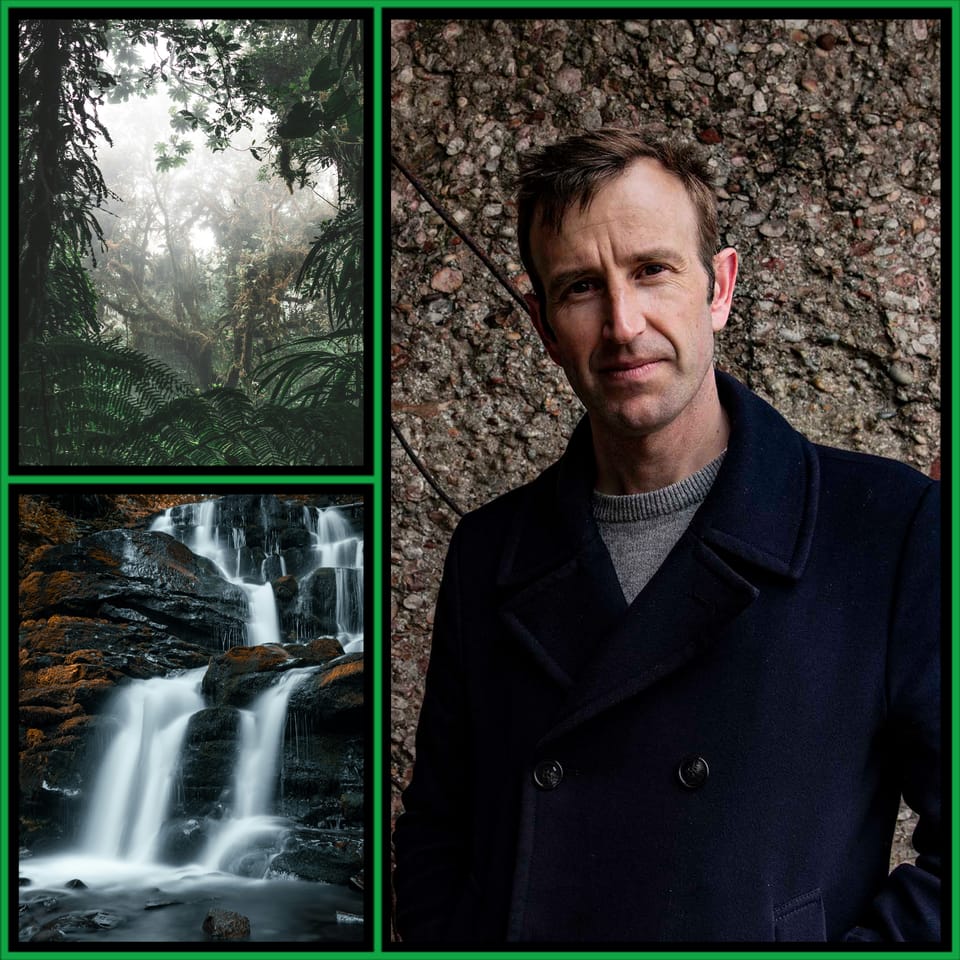
In “Is a River Alive?”, acclaimed writer and explorer Robert Macfarlane travels to remote waterways in Ecuador, India and Canada, meeting mycologists, Indigenous river-keepers, and activists who see the natural world as animate and ensouled. Known for celebrated books like “Underland,” “The Old Ways,” and “Mountains of the Mind,” Macfarlane blends storytelling, natural history and philosophy in an invitation to reimagine our relationship with the living Earth.
If rivers have rights—and perhaps even a kind of consciousness—how would that change the way we see the world?
- To the Best of Our Knowledge – Macfarlane describes the allure and our fascination with the underground world of caves, mines, catacombs and glacial shafts beneath the earth's surface.
- To the Best of Our Knowledge - Macfarlane offers a book recommendation: “The Living Mountain” by the Scottish poet and writer Nan Shepherd.
- University of Cambridge – Robert Macfarlane’s faculty page
Transcript
Anne Strainchamps: Welcome to Wonder Cabinet. I'm Anne Strainchamps.
Steve Paulson: And I'm Steve Paulson. Have you ever stood beside a river and felt it was alive? Not just water flowing somewhere, but a presence, maybe even a being of some kind.
Anne Strainchamps: How do we draw the line between life and non-life, especially when it comes to something like a river? We have a hard time imagining awareness on the scale of a forest, or a mountain, or water. But it's one of the most ancient ways of understanding the world.
Robert Macfarlane: The book is a question. It's not a declaration. Its title ends in a question mark. Is a river alive? And in a sense, it's an invitation to see what happens when we reimagine rivers, not as stuff, not as brute matter, but as presences, let's say, with lives and with deaths and even with rights.
Anne Strainchamps: This is Robert McFarlane, a celebrated nature writer and explorer, the author of some best-selling and prize-winning books, including Mountains of the Mind and Underland. We both love his writing. I'm partial to the books about ancient landscapes. But Steve, how would you describe this one?
Steve Paulson: Well, this is, I think, really the first time he's tackled head on the concept of animism, the idea that all of nature is alive. And we're talking about plants and mountains and rivers, that they possess some sort of spirit or consciousness. And that's a common belief in a lot of indigenous cultures. And it's the basis of the emerging rights of nature movement. Though to most scientists, that's just a lot of mumbo jumbo.
Steve Paulson: But if you take this idea seriously, I think everything changes about our relationship with the natural world. I'm curious, was that true for you? And we were in Vermont this summer when you were reading the book, and you go for a long walk up in the woods pretty much every day. Did anything shift for you?
Anne Strainchamps: I don't know. I'm not sure. I tend to have a very rational, you might say, left-brained way of seeing the world. But every so often when I'm in those woods, I can slip out of that mindset and feel a kind of life force. And sometimes I will close my eyes and put my arms around certain favorite trees.
Steve Paulson: I didn't know you did that.
Anne Strainchamps: Oh, yeah. I'll press my hands into the bark, and it can feel like there's some sort of communication with a tree. I mean, it could all be in my imagination, but I would like to cultivate that sensibility. It's really hard for me. It does not come naturally.
Steve Paulson: And so I am especially fascinated by the people who grew up in our world of modern science but have found ways to take animism seriously. And Robert McFarlane is one of those people.
Anne Strainchamps: He's an adventurer, right, as well as a writer. How far did he go for this book about rivers?
Steve Paulson: He went all around the world. He spent a lot of time in several different river ecosystems. There was an Ecuadorian cloud forest, a dying river system in India, and a boreal forest in eastern Canada. And he had some amazing experiences that really stretched his understanding of how the world works. And so we had a really interesting conversation.
Anne Strainchamps: I'm excited to hear this one.
Steve Paulson: So your first books were about mountains, drawing on your own experiences as a climber. Later, you wrote about underground environments. And now you've written about rivers. And not just rivers as a different feature of the landscape, but really the question of whether rivers are alive. What led you to that question?
Robert Macfarlane: Well, I've been, I think, moving in that direction over 21 years, I suppose. And this is the sharpest confrontation of the question of life, which is really the spring source of all of this, all of these questions. I think I was first moved in that direction by the question of rights.
Robert Macfarlane: In 2017, the Whanganui River in Aotearoa, New Zealand, was recognized as a living being, a spiritual and physical entity, to use the phrase from the Parliamentary Act.
Steve Paulson: And when you say recognized, you're talking about you're recognized in a legal sense.
Robert Macfarlane: Yeah, this is a parliamentary act passed in Wellington in Parliament House there. And it recognized the Whanganui River as a spiritual and physical entity, a living being, and as a rights-bearing being. So this was a kind of global gong strike, and it certainly caught my ears.
Steve Paulson: So where do you go with that? I mean, how do you sort of explore that question?
Robert Macfarlane: Well, in my country, the question of whether rivers are alive is very urgent because many of our rivers are dying. Dying in part because of a failure of imagination as well as legislation. So we have told one story about our rivers really successfully, which is that they are a kind of matter to be used. Their inanimate brute matter is Isaac Newton's phrase from a late 17th century letter.
Robert Macfarlane: And so, you know, they fill our glasses, they take our waste away. We can move them around, we can dam them, we can forget about them broadly as long as they provide our ecosystem services. But there are other ways of imagining rivers, of relating to rivers. And I was interested in traveling to places where rivers are being imagined radically and in some way bringing back that old story to my landscape.
Steve Paulson: So you, as you say, you travel around the world and talk to a lot of people who live very close to the natural world and you say they had a recurring question, what is the river saying?
Robert Macfarlane: Yeah, yeah.
Steve Paulson: Which is such a provocative question to ask.
Robert Macfarlane: It is a, well, so I would ask that because I really wanted to know the answer. And there is no one answer. No river speaks with a single voice. A river is a gathering. It's a braiding of tributaries. A river is a watershed as well as that main channel. So every river had a different answer. Every community had a different answer. Yeah, I traveled with people. I traveled with rivers for four years or so.
Steve Paulson: And so, I mean, in modern Western culture, we have a very sharp distinction between life and non-life. I mean, animals are alive, plants are alive, but water would seem to be inanimate. So what's a different way of thinking about a river?
Robert Macfarlane: Well, I think really we have to think what we mean by life and what we mean by living. And for some of the people I spent time with, let's take the example of this extraordinary Inuit poet and activist, Rita Mastakosho up in northeastern Quebec, or Natasnan, as she would call it. To her, life is lived fully in relation with the life of rivers. Rivers have flowed through the life of her and her people for the best part of 8,000 years. They are highway, larder, pharmacy, laboratory, schoolroom. They are all of these things. Life is unimaginable without rivers.
Robert Macfarlane: And that makes intuitive sense to me. My own life has been lived in relation with rivers. I think with them. I remember with them. When I grieve, I go to the banks of the little spring near my house. I lost a friend two weeks ago really fast. And I wanted to be with the water and think about him there. So, to me, that definition of life, of life-giving, of life-making, of life-shaping, is a form of aliveness.
Steve Paulson: But my sense is you're not just talking about the water itself. You're talking about the whole piece of the – I mean, the plants living around it, the animals that come to visit the river, the people who come there. I mean, that's all the river in a way.
Robert Macfarlane: Yeah, it is. Yeah, exactly. River is a great group noun, let's say, a beautiful group noun. We in English I realized with a dull moment we have no verb to river really. We don't use river as a verb. In the end I do use it in the book and as a verb because what could be more of a verb than a river. But we, it, our rivers we that and which are rivers. But in the, I began to think of rivers who flow and rivers who reach the sea. And I just began in small and large and acute and chronic ways to try to fall into a neighborliness with rivers.
Steve Paulson: You said to be able to really dive into the subject, to write this book, there was a lot of unlearning that you had to do, a lot of unlearning of your assumptions, I guess, sort of this divide between life and non-life. What did you have to unlearn?
Robert Macfarlane: Well, the rationalist definition of a river is H2O plus gravity, which I think is for many of us what it is. I had to think about what agency is, what will might mean. In the little springs I live near here on the 99 million year old chalk of South Cambridge, they have exerted an extraordinary agency and will on life around themselves. There is Mesolithic flint scatters from 8,000 years ago found by these springs, Neolithic, Iron Age, Bronze Age, Roman, all the way through to my city of Cambridge, which was in effect irrigated and nourished and kept alive during the early modern period by this flowing fresh water.
Steve Paulson: But most people would say that you know, what you're describing are the people who lived along that river for, you know, over the millennia, not the river itself. It's a different frame of reference.
Robert Macfarlane: It is a different frame of reference. And I suppose what I'm doing there is trying to think about the ways in which grammatically and conceptually we have rendered rivers as passive presences. I mean, we now have such control over rivers. We can pick up whole watersheds and reorganize them. We have impounded so much water in the Three Gorges Dam project that we've measurably slowed the rotation of the earth. So water has, river has become stuff. It has become thing to be organized.
Robert Macfarlane: And that organization has brought incredible flourishing, incredible human benefits, but it has become a form of story about water which removes its life, its life-giving powers, its life force, its agency, its will, depending on how you want to use these words. So, yeah, I wanted to turn all of these words around and see what happened when we look through them from different angles.
Steve Paulson: So we should talk about some of your travels. I mean, you've constructed your book around three big trips, and the first one you write about is down to Ecuador, to the Ecuadorian cloud forest.
Robert Macfarlane: Yes.
Steve Paulson: Why did you decide to go there?
Robert Macfarlane: Oh, well, because in 2008, Ecuador revised, reimagined its constitution after the election of Rafael Correa there. And into that new constitution, it inserted these four astonishing articles, which are now generally known as the Rights of Nature articles. And in so doing, it became the first modern democracy, nation, state to recognize the rights of nature.
Robert Macfarlane: And just to be clear about what that means, the first of those articles recognized nature, rivers, mountains, cloud forests, as having the right to exist, to flourish and to persist. It also recognized the respect, what we might know from human rights, as dignity of and for nature. And in the final article, it made the state the guarantor of those rights. And this is pretty extraordinary.
Steve Paulson: We're used to thinking of human rights, but yeah, in the Constitution, man.
Anne Strainchamps: So did that make a difference? Did anything change because of that?
Robert Macfarlane: Yeah, such a good question. And for a long time, I mean, for a long time, relatively little did. But then in 2017, a mining concession was granted, a gold mining concession was granted for this extraordinary area of cloud forest called Los Cedros, the cedar forest. And this is a place of staggering abundance, diversity, and domesticity of life. Would have been completely eliminated by open pit gold mining.
Robert Macfarlane: And a case was brought. The case asked the court system to recognize that gold mining would violate the rights of the river and the forest. And that case escalated up the court system and finally reached the constitutional court at the height of the pandemic in 20 to 2021. And at the end of 21, this incredible ruling came down and it asserted the rights of the forest and the rivers to exist, to flourish and to persist. And it caused the state mining company and Canadian mining company to be banished from the area and save the forest. Simple as that.
Anne Strainchamps: Astonishing.
Robert Macfarlane: The mining company's still circle, I should say. It's not like a happy ending forever after. But it was another of these gong strike moments in what might be called legal moral imagination around particularly rivers.
Steve Paulson: So you went there. I mean, you went to this cloud forest, the Cedar Forest. And first of all, what is a cloud forest? Like what's the difference between a cloud forest and a rain forest?
Robert Macfarlane: Yeah, higher. So they're higher altitude. They tend to be on steeper ground. They form on mountains. So they have faster flowing rivers. And they are river makers. River and forest live in this beautiful mutualism in a cloud forest.
Robert Macfarlane: So in this case, heavy moisture-laden air comes in off the Pacific, rises. And as it rises, of course, the moisture condenses into the form of mist. So it has a heavy kind of year-round mist. And that mist moves through the forest. When you walk in a cloud forest, you're in this kind of socket of mist the whole time.
Robert Macfarlane: But it also condenses on the immense surface area of this epiphytic forest and then rolls off in this beautiful process known as continuous fog drop to drip from the end of millions and millions of leaves. And that water combined with rain gathers and gathers and gathers in these many watersheds to create rivers.
Steve Paulson: And that's just astonishing that actually, like, dripping water from leaves can create a river. I mean, I just sort of like, wow, I didn't know that was possible.
Robert Macfarlane: Yeah, yeah, in that volume. And it does rain there, but it is more cloud than rain. I mean, that's one of the differences to the rainforest is a rainfall count.
Steve Paulson: So you traveled with also some people who live very close to the natural world, and they see things, they notice things that I would never notice. And I mean, I was particularly struck by a mycologist named Juliana, who talks about not just seeing mushrooms, but hearing mushrooms, you know, feeling when they're nearby. And I'm just trying to think about what that's like. I mean, what was it like to travel with her?
Robert Macfarlane: It was wild, Steve. It was truly wild. And I just before anyone thinks I'm, I mean, she is a hardcore field mycologist. She's the author of the two definitive volumes of Chilean mycology. So she's serious. But whether we see this as a kind of internalized knowledge that takes the form of instinct, but we were looking, she was looking for two species of fungi, tiny brown psilocybe species that had had one collection there many years before. And the finding of those would fortify the protection of the forest so there was a very this was a purposeful journey.
Robert Macfarlane: But she would say the two times she found them, she found both them, she would say and this is after days, she would say, oh they're near now I can hear them. She calls it a fuzz in the matrix. I love that phrase.
Steve Paulson: Yes, me too. I want it on a t-shirt.
Robert Macfarlane: Because I don't know what that means to experience but boy was she right. We would go around two corners, she would suddenly fall to the ground as though she'd been shot. I thought you know a sniper, a howler monkey dropped a nut on her head, flopped down onto her belly, woohoo! And there was this tiny brown mushroom in this vast brown forest floor.
Steve Paulson: So the mushrooms, these specific mushrooms, these individual mushrooms were calling to her in some way.
Robert Macfarlane: In some way. I just said, don't try and explain to me how you do this. Just tell me what it feels like. And actually, that's the same answer. Yeah. So yeah, the fuzz in the matrix.
Steve Paulson: What was most surprising to you about these weeks in the cloud forest in Ecuador? Did any of your sort of basic assumptions about how the world works change because of that experience?
Robert Macfarlane: Well, I think I saw what happens when a society at least attempts to organize some of its moral imagination along ecocentric lines, let's say. That was fascinating. And then also I just began to understand and that then intensified with the other journeys, just the sheer courage and determination that is necessary to protect places like that in the face of the demands of, let us at best say, global capital.
Robert Macfarlane: I mean, the spot price of a troy ounce of gold back then was $1,517. It's way beyond that now. For many reasons, economic volatility, at times of volatility, money flees to safe places and gold is the safest place of all. So the pressure on that remarkable forest to be cracked open, to have the marrow, the gold slurped out of its innards by capital, by us, is immense. But in that valley, the Integg Valley, they have 30 continuous years of holding mining companies at bay.
Anne Strainchamps: And it's not glamorous work. It's hard.
Steve Paulson: And my sense from the way you write about this is it's often – it's a few individuals. I mean, it's not like the national government is deploying an army to, you know, stave off the mining company. It's like it's a few activists who've devoted their lives and, you know, who live there year after year as the guardians of the forest.
Robert Macfarlane: That's right. Yeah. So the Cedar Forest has this mythic counterpart in the Epic of Gilgamesh, the oldest written work of world literature we have, at the heart of which is a sacred cedar forest. This is about 4,400 years old in the Sumerian form, and that story ends with the sacred cedar forest being destroyed by, in effect, extractivist forces. Gilgamesh and Enkidu turn up, they cut down the forest, they take all the timber and they slaughter Humbaba, the guardian of the forest, and take his head out on the raft on the Euphrates. But here in Ecuador, another story is being told about another sacred cedar forest. But this one so far ends with the forest's salvation.
Anne Strainchamps: So I want to pause here for a short break. And when we come back, Rob will tell us about an ancient river city in India and a truly wild kayaking experience in Canada.
Anne Strainchamps: Hi, it's Anne. I am so glad you're joining us. We have some amazing guests lined up for the weeks ahead, and I'm really excited about them. And here's a tip. Maybe you know this already, but if you follow Wonder Cabinet on Apple Podcasts, those new episodes will show up automatically, like a little weekly gift in your podcast feed. I hope you like it.
Steve Paulson: This is Wonder Cabinet. I'm Steve Paulson. Let's get back to my conversation with Robert McFarlane about his book Is a River Alive. So the next big trip that you took was to India to the city of Chennai where the river is dead. I think it's legally been declared dead, right?
Robert Macfarlane: Yeah, well in the press, yeah. There's three rivers, three main rivers, the Kostha Stelaya, the Kum and the Adyar, they run in through Chennai. Yeah, and for parts of the year, much of those rivers, for the length of their city stretches, are functionally dead, biologically dead.
Steve Paulson: So why did you go there?
Robert Macfarlane: Well, the chapter's called Ghosts, Monsters, and Angels. And the ghosts are the kind of suppressed and dying and vanished rivers of that region. Chennai was a water city. You know, the British who began, I think, some poor hydrological literacy in the region, let's say, kind of dreamed of it as a Venice of India. So there's a sort of romance of water to its past, but actually the whole city now has been built on marsh over river. And so the rivers have become ghosts.
Robert Macfarlane: But during the monsoon and particularly during the cyclone season, which hit every three or four years, they come back as monsters because rivers remember. That's one thing I learned there, rivers remember.
Steve Paulson: What do you mean, rivers remember?
Robert Macfarlane: Well, they remember where they once were. Where they once ran, so where they have been built over, where they have been culverted, where they have been subdued, they roar back into their memorialist places and reoccupy them and they flood the city catastrophically very often. And so Chennai lives in this double life of drought and flood pretty much every year. And that alone made it fascinating.
Robert Macfarlane: But I went because I have a long-standing friendship with a remarkable young Indian Tamil activist there called Yuvan Aves, who is a sort of river healer, river dreamer, and who himself has been healed by rivers as well.
Steve Paulson: How is he healed by rivers?
Robert Macfarlane: Well, I mean, when you write a book over many years, you'll know this, Steve, but you set out with all manner of intentions and ideas, and then places and people surprise you profoundly. And one of the, I think, central surprises of this book for me was that each place I went, I found and traveled closely with somebody who had suffered death, who had lost someone.
Robert Macfarlane: Juliana lost her father in terrible circumstances shortly before we went to the forest. Yuvan was brought up in a very physically abusive household, was beaten pretty much daily by his stepfather for years. He ran away from home. He lost his younger sister, Jolini, to illness very suddenly. You know, he has suffered a great deal in his young life, and he really remade himself out of that oppressive, violent place.
Robert Macfarlane: He moved to a school that was set in marshland and water and he crystallized himself there. And the creaturely life, the people, the books, the land, the water there taught him a different way of being to the one he had been brutalized into by his stepfather. So I mean rivers for some people I mean they truly are life-giving. I mean they don't just give life to the animals and the plants that live nearby, to the people, and restore purpose, why we want to live.
Steve Paulson: Totally, totally. There's a line by Czeslaw Milos, the Nobel Prize-winning poet, I think he says, sometimes when it hurts, we return to the banks of certain rivers. In a way, the book is nothing a Buddhist couldn't tell you before breakfast. It's a theorization of something that is in many ways intuitive that water is life, rivers are life givers. Juliana, you know, watching her heal within the embrace of the cloud forest and the waters, watching her powers of fungal perception come back to her was a second order miracle really.
Robert Macfarlane: So Yuvan, he now works as a river activist and he's dealing with some of the deadest stretches of water that I've ever seen. I mean, you can barely, we can't breathe through your nose around them and you don't want to touch them. Water is certainly undrinkable, certainly unswimmable, almost untouchable. So but he's trying to imagine a just future for rivers and all those who live with and on and around rivers very moving.
Steve Paulson: The last river you went to to spend time on is in eastern Canada, near the border of Quebec and Labrador. Tell me about that place.
Robert Macfarlane: Oh, wow. I have known some rivers in my time, but I've never known one like this one. That section's called the Living River. And yeah, so its name in Inu is the Mutesha Kaushipu. And that translates as the river who flows between square blocky cliffs. And that gives you some idea, right? It's a wild, wild river. And we were dropped by float plane about 100, 120 miles up the system. And then we had to paddle out in kayaks over the best part of a couple of weeks.
Robert Macfarlane: And it buried me. It pummeled me. It scared the hell out of me. It thrilled me. It made me cry. It was running big. It was about 275 cubic meters a second at a time of year when the average is more like 120.
Steve Paulson: We're talking major rapids here.
Robert Macfarlane: Well, to me, absolutely. I mean, six-foot standing wave was the biggest we ran, and that buried me good and proper. But I should just explain that the reason I was drawn there is because the Mudtesha Kershibu became, again in 2021, the first river in Canada to have its rights declared. And that happened in this beautiful so-called Mirror Resolution between a regional council and the Innu community at the little township of Equanishd, led by this extraordinary poet called Rita Mestakosho, who I have become friends with and who really primes me for that.
Robert Macfarlane: I went to see her basically to say, can I have your permission to travel down the river? And she just laughed at me and she said, yeah, you don't need my permission. You need the river's permission.
Steve Paulson: I was like, how do I get that?
Robert Macfarlane: Do I apply in triplicate? She said, you'll know, you'll know. So she set me off on that river journey with a series of very clear instructions. And she told me I had one question I could ask the river, one. And if it was the right one, the river would answer. And boy did it.
Steve Paulson: What were the instructions she gave you?
Robert Macfarlane: Well, so she's very decisive and forceful. She looked me up and down when we first met before I went on the river. She was like, you, you look too much with your eyes. You live too much in your head. You don't feel enough with your heart. When you're on the river, she wanted me to collect water from a place where one of her family members had hunted and he'd recently died, William.
Robert Macfarlane: I had to gather Labrador tea for her at another place. I had to always pitch my tent facing east so I greeted the sun each morning. I had to keep my eyes peeled for a sacred tree. She was like you'll you'll you'll see it there'll be one in the forest you'll know it when you meet it. It absolutely knew it when I met it. It was only six inches high but it was a tree, it was a tree.
Robert Macfarlane: So she was amazing. And then just this real existential challenge or epistemological challenge about the river knowing something about me that I did not know about myself, but that it would declare to me if I read the river open-hearted. Steve, she told me one other, she gave me one other instruction that chilled me to the bone as well: leave your notebooks behind.
Steve Paulson: Oh for a writer.
Robert Macfarlane: Yeah, how would you feel about that if you were told leave my recorder behind. It struck to the heart. We came to a negotiated settlement, which was that I could take the notebooks, but I was not to write in them when I was actually on the water. I could write when I was on land. So fair enough.
Steve Paulson: Well, you have some wonderful descriptions in your book of the river as alive, I would say. And part of it is because it's like, it sounds really dangerous, some of your days on the river kayaking. And I'd love to have you read one passage that just really brought it to life to me, and that's the passage that starts at the bottom of page 257.
Robert Macfarlane: Yeah, I'd love to. Yeah, okay. So one thing that happens over the course of the book is that language begins to liquefy. The language gets rivered, so you'll hear a little bit of that here.
Robert Macfarlane: And then I'm into the rapid, hard into it, the water now vinyl-tight under my boat, and I'm accelerating as the river enters the channel before the block. The golden rocks on the bed of the river are fleeting beneath me, and time is stretching in the way it does at certain moments of terror and exhilaration, so that in the thirty or so century-long seconds it takes to run the rapid, I can see in isolated and shining detail each water droplet and boiling pool.
Robert Macfarlane: And I slip nose-first over the sill and skim like a ball bearing on a metal slide down the slope of the tongue and bang, straight into that big polar bearish standing wave. And the nose of my craft crashes into its snowy front face, which fills it and me with river. And I must surely be flipped or buried by the wave. But somehow, perhaps because I've hit it so straight, the nose of the kayak shakes itself free of the impact.
Robert Macfarlane: And the boat bucks beneath me and begins to rise right up and over, first the point, then the ridge of the big wave. And surely I must fall backwards out of the boat or be flipped. And then I am punched full in the face by a fist of water but it is the standing wave's valediction and I'm through and upright and the elastic curve of the current pulls me around a hundred and fifty degree bend and I can hear Danny yelling something behind me and Wayne is whooping great belts of sound that rise over the roars of the rapid.
Robert Macfarlane: And I'm thumping over the smaller green cream bronze waves and then I'm under the flat-faced rock wall. God damn it but this last wave isn't going to flip me if the biggest one didn't. And I plant the paddle as Danny told me and I pull on it like I'm trying to uproot an iron fence post and the pull boosts me into the last standing wave, the sneak wave right under the rock wall. But I don't hit it at the perpendicular as I had the biggest one and so it shrugs me off its right hand slope and the boat cants sideways and my stomach lurches and I call out and begin to roll sideways.
Robert Macfarlane: But some amygdala part of my brain tells me to lean uphill not down and I rewrite and I'm over the blast wall and into the long black pool below the rapid where the boss and the bear already wait, grins on their faces and shouts of congratulations. And Wayne is through it too without flipping and the salmon swims up to us and my heart is piston block pumping. And Wayne says something like living right my friend living right with a manic smile on his face, shocked and exhilarated and enlivened. We flow on.
Steve Paulson: That is so beautiful and we flow on. I mean that's what rivers do. They have a purpose and they flow from one place to another. And to sort of bring this back to the political piece of this story or maybe the economic piece is there are groups that want to dam the river and it's really complicated in an ethical sense. I mean, you know, there are definite benefits that come from damming. I mean, they supply hydroelectric power. They give jobs to local people. How do you sort of weigh that with the wildness of the river?
Robert Macfarlane: Yeah, it's, no, dam is a simple question, I think. And Hydro-Quebec, the state, the regional hydro company, state-owned really enterprise, has converted the majority or much of Quebec, huge land mass into a machine for the generation and the storage and the transmission of electricity. And that has brought, as you say, vast, vast benefits, but it has also drowned rivers. And you can drown a river if you build a dam wall big enough. A reservoir is the thing that can drown a river.
Robert Macfarlane: So the Romaine River, which was the next vast river to the east, had a multi-dam project on it. And now I think eyes, well, eyes did turn to the Mutesha Kaushipu. And that began this resistance campaign, which was a campaign of the imagination. And here's where we sort of eddy back to the question of life, because the rights declaration recognized the river as a living entity and as a rights bearing entity the right to flow.
Robert Macfarlane: So you know, I'm a storyteller, I'm a writer, I'm a as it were a reporter at some level. So I don't judge in this chapter but I am fascinated by the way imagination, legislation and river all tangle in that place.
Steve Paulson: So what is the legal status then of this river? I mean there are these at least on the books these protections but is that enough to keep the river wild?
Robert Macfarlane: No, very fragile, very fragile. I mean, we've talked about the two jurisdictions where the protection, a rights-based, life-based protection for rivers is powerful. And that's Aotearoa, New Zealand and Ecuador. But this declaration is in many ways a beautiful metaphysical fiction, as it were, in the sense that it has no real force and consequence within existing legislation.
Robert Macfarlane: And I think what it does is throw an imaginative force field around the river. So if Hydra-Quebec does come for the Muteshikar ship, they will have to get through this imagining. And the imagination can be a very, very powerful force and barrier, as we know. So I know that I will join Rita and join her community in the defense of that river if the power company comes.
Steve Paulson: There's a quote you have in the book, and I'm not sure who you were quoting, but I sort of love this, where the person said, the river is like a person in between who makes connections in time and space.
Robert Macfarlane: Oh, yeah. That's Lydia, Lydia Mastikosho Paradis, who is Rita's niece, another member of the Inuit community. Yeah. I mean, so what that evoked for me is, I mean, the river is movement and, you know, and life is movement. And I mean, in some sense, we're constantly moving between past and present and that, you know, in both the literal sense, I mean, the physical sense of what the natural world does, but also in the, as you would put it, in our imaginations too. I mean, that's how we construct our own lives is we also move between past and present.
Robert Macfarlane: Yeah yeah. Rivers relate. That's what they do. They tell and they join. And the metaphor of river as life, life as river is the oldest. I think the second oldest is probably life as path but life as river is about the oldest. And I think one of the things that happened to me over the years of river travel and river thinking is that I came to understand myself as always in the flow, that time was not something I spectated notebook in hand dry footed on the bank, which is perhaps how one especially when a little younger you think that time has no claim on you.
Robert Macfarlane: Right. And I'm pushing 50 now and my bones are older, they get colder. The river beat me up hard. And, yeah, I think time has changed forever for me now. It's been rivered.
Steve Paulson: One final question. You've been talking about kind of the emergence of this rights of nature movement. I mean, it's really trying to make this a legal movement. Are we still in the early stages of this movement? Or, I mean, do you think there's more to happen? Will more countries take on this kind of legislation?
Robert Macfarlane: Oh, I mean, every year we see more and more examples of this. The momentum is growing. The ubiquity is growing. Here in England, we've just had the first district council champion the charter, a charter for the rights of the River Ouse in the south of England, all across North America. I mean, North America is an absolute ferment of this stuff. It's really, really interesting.
Robert Macfarlane: So, yeah, I think what we are seeing are necessary challenges to fundamentally anthropocentric ways of organizing the planet. And they have brought us to the brink of disaster. And the book is a love letter to rivers, but it's also a celebration of people who are trying to imagine otherwise.
Steve Paulson: It is a beautiful book. Thank you, Rob. Thank you for this conversation.
Robert Macfarlane: Thanks, Steve. Thanks so much.
Steve Paulson: That's Robert McFarlane speaking to us from his home in Cambridge, England. His book is called Is a River Alive?
Anne Strainchamps: Wonder Cabinet is produced in Madison, Wisconsin, and Versher, Vermont. Our audio engineer is Steve Gotcher. Our digital producer is Mark Rickers. I'm Anne Strainchamps.
Steve Paulson: And I'm Steve Paulson. We would love to hear from you. Send your questions and comments and sign up for our newsletter at wondercabinetproductions.com. You can subscribe to the show there or wherever you get your podcasts.
Steve Paulson: And a quick word about what's ahead. Wonder Cabinet will take a short break for the next couple of weeks so we can go record more interviews at the Island of Knowledge think tank in Italy. The topic this time is rational mysticism, which sounds very exciting. So you can look forward to those conversations in the coming months. Until then, be well and thanks for listening.
Subscribe to make sure you never miss an episode.