
26 Sep 2026
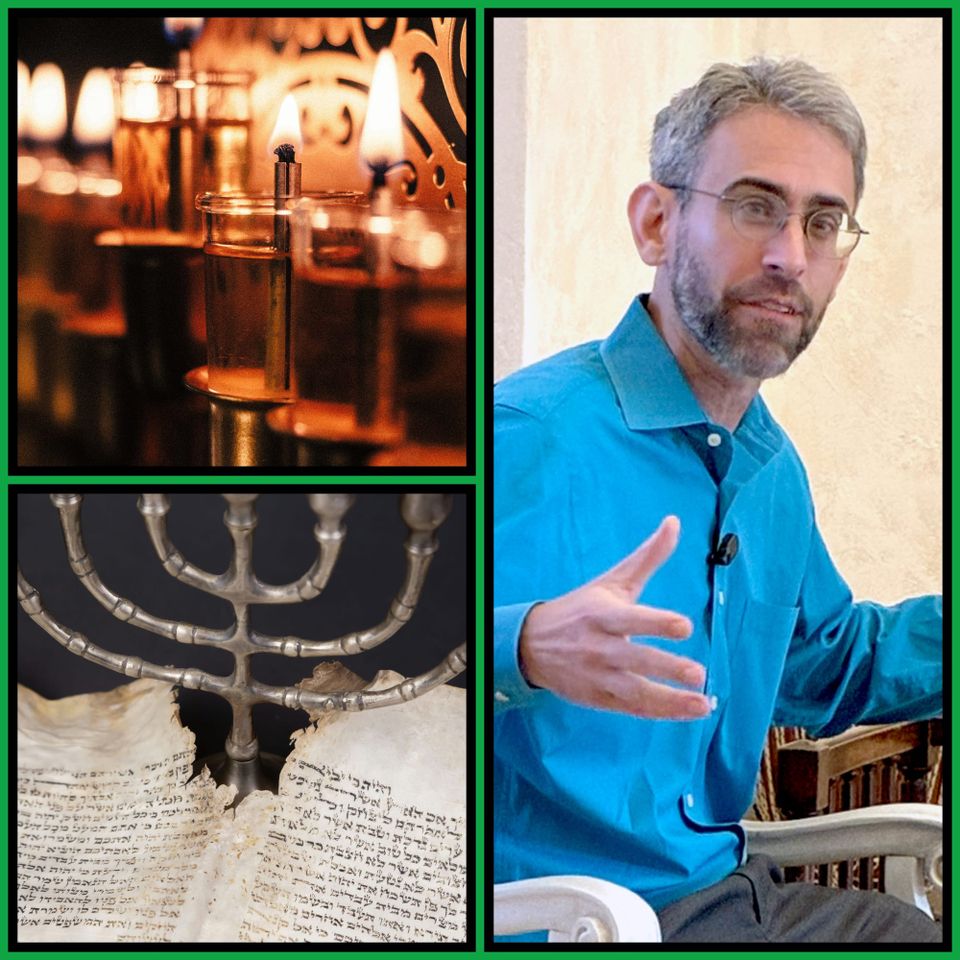
The Power of Ritual with Rabbi Geoff Mitelman
“Religious but not spiritual" — Rabbi Geoff Mitelman on the poetry of the Torah, the dialogue between science and Judaism, and the power of ritual.
0:00 / 0:00
26 Sep 2026
The Power of Ritual with Rabbi Geoff Mitelman
“Religious but not spiritual" — Rabbi Geoff Mitelman on the poetry of the Torah, the dialogue between science and Judaism, and the power of ritual.
ShareEpisode Notes
What kind of truth can a sacred text offer about the world? Rabbi Geoff Mitelman reads the Torah as poetry — open to multiple interpretations and evoking a sense of transcendence, even magic.
Mitelman is a Reform rabbi and the founding director of Sinai and Synapses, an organization building bridges between science and religion, particularly Judaism. He reads the creation story in Genesis as a profoundly mysterious text — complementary to the scientific account of the Big Bang.
Mitelman doesn’t dwell on big metaphysical questions such as the nature of God or ultimate reality. Instead, he turns toward age-old rituals — the songs, stories and ceremonies that have been practiced within Jewish communities for centuries. Why do we return to these rituals year after year?
At a time when many people have abandoned organized religion, often describing themselves as “spiritual but not religious,” Mitelman says Judaism is more akin to being “religious but not spiritual.” In this conversation, we explore the power of ritual — and how shared practices can create meaning and build community.
This interview was recorded at the Island of Knowledge think tank in Tuscany, a project supported by Dartmouth College and the John Templeton Foundation.
Transcript
Anne Strainchamps: Welcome to Wonder Cabinet. I'm Anne Strainchamps.
Steve Paulson: And I'm Steve Paulson. There are certain times of the year when it feels so good, so nourishing, to lean into old rituals.
Anne Strainchamps: Like carving pumpkins and lighting candles to celebrate Halloween and the Day of the Dead, or bringing the whole family together at Thanksgiving.
Steve Paulson: This past week marked the end of the Jewish High Holy Days, so it's a good time to reflect on the value of religious rituals like Shabbat.
Geoff Mitelman: So thank you, Marcelo, for inviting us here for your Shabbat dinner. This is wonderful. Shabbat is, Rabbi Abraham Joshua Heschel talks about Shabbat, that it's a day when we don't try to engage in commerce and we don't try to use technology to conquer things. And it's turning from the results of creation to the mystery of creation. And that's what Shabbat aims to be able to do each week that comes in. So, Marcelo, I don't know if you want to light the Shabbat candles.
Anne Strainchamps: This is Rabbi Geoff Mitelman leading an informal Shabbat observance at the Island of Knowledge in Tuscany.
Geoff Mitelman: Yeah, so we'll light and then if people are willing, I want to try doing a couple of, in Hebrew, a nigun, which is a prayer that has no words. I'll add some words in there, but I'll teach this and you can pick up as we go. Yai, nai, nai, yai, nai, nai. So it goes like that.
Steve Paulson: We're here at this small think tank in the hills of Tuscany where scientists, philosophers, and spiritual leaders gather to talk about ways to re-enchant the world.
Anne Strainchamps: We've been recording conversations here for the past couple of years, and this time, the organizing question for the meeting, is there purpose in the cosmos?
Steve Paulson: Most of the people here are scientists - cosmologists, physicists, neuroscientists. There are also a couple of philosophers of science. And Geoff Mitelman? He's a Reform rabbi and the founding director of a group called Sinai and Synapses.
Geoff Mitelman: It's nice to be with you all. I feel a little bit intimidated by how many PhDs are here and I'm approaching this from a little bit of a different perspective, obviously from a Jewish perspective, and looking at the work that I do with Sinai and Synapses of bridging the worlds of religion and science and how do we think about Judaism and science as a whole. And form and content is how I want to frame these questions of how do we read texts, not as a scientific argument, but as poetry. A lot of reading Torah is not just what is said, but the ritual element of it. And my cousin actually, Matthew Zapruder, who, by the way, yes, is the grandson of Abraham Zapruder, if you know the famous Zapruder film from the Kennedy assassination. His grandson, Matthew, is my cousin.
Geoff Mitelman: He was a poetry editor at the New York Times. He wrote a wonderful book called Why Poetry? And he says, to read poetry is to look for the transcendence poetry can give, the way it can bring us out of our ordinary experiences into different levels of understanding or more exciting, even magical realms.
Anne Strainchamps: So how do you find transcendence in a sacred text like the Torah? And how do you read the creation story in the book of Genesis if you believe in the Big Bang?
Steve Paulson: For Geoff Mitelman, these are urgent questions, and they're part of a larger project to reconcile two very different ways of understanding our place in the universe.
Anne Strainchamps: A subject you've also spent a lot of time thinking and writing about.
Steve Paulson: Yeah, but he comes at these questions from a very different perspective. I mean, the debates about science and religion that I tend to follow are really about the nature of consciousness and whether there's a dimension of the mind that goes beyond our individual brains and opens up into some sort of cosmic consciousness. But Geoff's questions are not actually metaphysical. He's not searching for ultimate reality. He approaches religion as poetry, as ritual, which he thinks matters just as much, if not more, than any kind of personal transcendent experience.
Anne Strainchamps: Let's listen.
Steve Paulson: So Geoff, most debates that we hear about science and religion, you know, the question of whether they are compatible or not, are really questions about Christianity. You started an organization called Sinai and Synapses, so kind of talking about Judaism and science. How do the questions change when we're talking about Judaism?
Geoff Mitelman: Judaism as a religion is actually not biblical. It's rabbinic. So Judaism as it's practiced today is based on a collection of texts called the Talmud that also got expanded on over hundreds of years. So the Bible is the start, but it is definitely not the end of the discussion. The rabbis often say, here's this interpretation, and here's this interpretation, here's this interpretation, and this interpretation. And then I read it as a modern person thinking about it as a predominantly poetic text.
Steve Paulson: So there's a lot of wrestling with the text based on, for instance, what modern science says.
Geoff Mitelman: Right, right. So Genesis is not a science textbook. And I mean that in different ways. Genesis is a cosmology. The Torah is a cosmology. It is an explanation of who we are as a universe, as a world, as a people. There is an origin story that comes in, but the authors of the Torah didn't have the James Webb telescope. They didn't have an understanding of quantum mechanics. They were trying to understand... who we were and how we relate to the universe here as well. So Genesis is not meant to be read as a peer-reviewed scientific journal.
Geoff Mitelman: And on the flip side, if you read a peer-reviewed scientific journal, it is not going to make your soul sing in the way you hear Genesis is read, whether that's actually read in English, and if you read it... it reads very poetically. We're actually recording this in the weekly Torah portion of the Torah portion when you read Genesis. It is a year to the Hebrew date of when my daughter is going to become bat mitzvahed. She's going to be reading that, so it's incredibly meaningful. I'm going to hear her sing those words from the bimah, and I'm going to be...the Yiddish word is I'm going to be kvelling. I'm going to be so proud. Because there's a tradition of however many thousands of years of people reading and chanting those words over and over and over and over again and finding new interpretations, new ways of looking at these texts.
Steve Paulson: So that's sort of everything for you, right? I mean, that tradition going back a couple thousand years to read these texts. And you and your daughter will be following in the tradition. You're reinterpreting. I mean, that's all part of what makes this so wonderful for you.
Geoff Mitelman: And one of the wonderful things about Torah study for me is you find something new each time you read it. There's something that comes across or this, boy, this speaks to what's going on in my life right now or world right now. I've been told about the Talmud. You can talk about it as the Torah as you want where someone says, I want to become a rabbi. I've gone through the Talmud three times. And the rabbi says, that's great. How many times has it gone through you? The text doesn't change year to year. We do.
Geoff Mitelman: And I think that's an important element. And when we're studying Torah, I lead Torah study at a synagogue once a month, and one of the things that we do is we start by going around and everyone reads about a verse or two out loud. Because one of the things that happens is when you hear something, it comes across. You're not actually listening, trying to read it to get all the content there, but you're thinking about, well, that's an interesting word choice. That makes me think of this other verse that I thought about here. And Talmud study, for example, Talmud study, if you go to a yeshiva, if you go to a place where there is a tremendous amount of text study, it is going to be cacophony because everyone is arguing. And Steve, you're probably saying, I'm using my hands left and right.
Steve Paulson: You gesture a lot with your hands.
Geoff Mitelman: Right. I'm very animated because that's how we talk about these questions. So when we're thinking about science, science is a human endeavor, but it's often very intellectual. And so trying to think of something that is very intellectual, which needs to be a lived experience, how does this impact who I am? The key words of the opening verses of Genesis, for example, and God saw it was good.
Geoff Mitelman: That's not a scientific statement - is the world good or not. That's not a provable statement. That's a value statement. And that then impacts how I treat this planet, how I treat the other people around me, how I treat the people who are not around me. If everything is good, that entails a level of responsibility. That's how I read that text.
Steve Paulson: So I'm going to ask you how you read the Book of Genesis, because you gave a talk the other day. I mean, I should say that we're at a science and philosophy conference right now in Italy, in Tuscany, and we are at this very moment sitting above this old, I think it's a 16th century Christian chapel. And you walked us through the first few verses of the Book of Genesis, the creation story. And we're also sitting here with a bunch of physicists who have their own version of the creation story in physics. So how do you approach the story of creation from your perspective?
Geoff Mitelman: So first, by taking the words seriously, and again, using the word poetry, not necessarily as fiction, but as poetry, as the words on the page matter. How you say it is as important as what is said. If you read poetry... you wonder, why did the author choose that word and not this word? Because they want evocations of other emotional elements or referencing other texts. So there are a couple of different ways in which reading the opening verses of Genesis through the lens of poetry speak very deeply to me.
Steve Paulson: I don't know if you have memorized those opening words, but can you walk us through some of this?
Geoff Mitelman: Yeah, so I mean, so the opening words in Hebrew are... So it's a question of, is it in the beginning? Is it at the beginning of God's creating the heavens and the earth? The Torah starts with the letter Bet, which is the second letter of the Hebrew alphabet. Aleph is the first. Aleph bet sounds very similar to alphabet because they both came from the Phoenician alphabet.
Geoff Mitelman: But there's a discussion that the rabbis talk about, which is why does the Torah start with a letter bet? Right.
Steve Paulson: Why doesn't it start with the first letter?
Geoff Mitelman: Right. So with an aleph, you would start with that. You can start with it. Why does it start with a bet? And the rabbis give all sorts of different explanations. One of them is... the letter Bet means that there's something before what you can know. There's always something that we're never going to be able to know. That Bet starts with, okay, I'm starting here. The Aleph is the unknown and maybe even the unknowable.
Geoff Mitelman: And in fact, in Big Bang cosmology, I think a lot of people are asking, how did the universe begin? But from what I understand, and if they're astrophysicists, they can tell me if I'm wrong on this, they always look at it immediately after the Big Bang.
Steve Paulson: Right, right.
Geoff Mitelman: All we can know is what happened after the Big Bang.
Steve Paulson: Right, because no one can even get to that fraction of a second of the first bit of the Big Bang. I mean, it's a total mystery.
Geoff Mitelman: Right. All we can know is what has existed in this world.
Steve Paulson: So you're saying that this lines up with the Jewish interpretation?
Geoff Mitelman: Yes. I would say it is a reading of Genesis that is consistent with Big Bang cosmology. Again, I don't think the authors of the Torah knew necessarily how old the universe was or how we were going to discover that. But to me, again, that's a meaningful way to read the text. There's always more that we will never be able to know. The rabbis also say that if you look at the six days of creation, days two through six always say, which are the second day, the third day, the fourth day, the fifth day, the sixth day.
Geoff Mitelman: And so you would assume that the first day would be on the first day, but it's not. It's day one. Or one day, so there is a conception that maybe you could conceive that there were other worlds before this one.
Steve Paulson: Oh, that's fascinating.
Geoff Mitelman: Yeah. Right?
Steve Paulson: And going back to cosmology, there is this theory among astrophysicists that there might've been an earlier universe. This universe might've popped out of an earlier universe. I mean, no one knows. There's no experimental proof of that, but it is a theory.
Geoff Mitelman: Right. And you can't say, you can't necessarily say this is the first day. You can say this is the day one that we know of this world from coming forward. So that's a way in which I at least reconcile Genesis and Big Bang cosmology. And the other way that I also think about, and again, this is all based on the poetry of the language. It's playing on words a little bit, but in Judaism, you can play with the words - the rabbis will often say, don't read this Hebrew word, read this other word that's very similar.
Steve Paulson: So there's a lot of debate about which translation you're going to use, which words you're going to use, and obviously how you interpret those words.
Geoff Mitelman: Exactly. Exactly. And again, coming like the end of each day ends in Hebrew, there was evening, there was morning. Again, if you want to talk about it as like why these words and not those words, there are a couple of different questions that you can ask. Like, well, first of all, starting with evening and morning, that's a little bit the opposite as to how we live our lives.
Geoff Mitelman: Normally, we start with the morning and then the evening. Why does it start with an evening and then a morning? That's one question. By the way, that's also why all Jewish holidays start in the evening, because it says there was evening, there was morning. So another question is, why doesn't it say there was night, there was day?
Geoff Mitelman: It's evening, there was morning. So the words, Hebrew words, Erev and Boker, are meaningful. There's evocation there.
Steve Paulson: So tell me, why does that matter for you, evening and morning versus day and night?
Geoff Mitelman: So because the word Erev is also used in another text in Exodus of an Erev, a mixed multitude came up, Erev Rav. Erev could potentially mean or links to or evokes a word of chaos. And Boker Maybe, could be, at least again, could evoke a word of levaker, meaning to distinguish. So you could read the text to say at the end of the six days of creation, there was chaos, there was order, day one. There was chaos, there was order, which also is a little bit ridiculous because the world's natural tendency, the universe's natural tendency is to go from order to chaos.
Geoff Mitelman: But each of the six days goes from chaos to order. Well, how does that happen? How do we do that? Well, ask scientists on this, ask astrophysicists. The only way that you can take chaos and make it order is to invest time and energy into the system, increase a level of complexity that's there.
Geoff Mitelman: And so maybe the idea of what the text says, God's role is taking a world that is chaotic and making it a little bit more orderly. And I take that to mean, well, that's part of my human responsibility. Our world is chaotic. The natural world is to move to chaos. Our political system is designed, it's moving to chaos.
Geoff Mitelman: How do we put the energy that's required to make the world good, to make it more orderly? Again, that's a way in which I can still accept the universe is 13.8 billion years old. Humans evolved by natural selection, right? That's how I think the world happened. What I'm claiming are not scientific statements about Genesis. They're religious statements. They're about how I lead my life and how I look at the world and how I need to treat people.
Steve Paulson: And what does this mean about how to live?
Geoff Mitelman: Right, right. And because we are people who need community, I think we need levels of ritual. I think we need structure. And the goal of religion is not to be religious. The goal of religion is to help us become better human beings.
Geoff Mitelman: You know, an analogy that I tend to like is religion is kind of like language, right? Everyone needs language. But the purpose of language is not to develop language. The purpose of language is to communicate. But different languages have different ways in which they speak about that. And they may be contradictory, they may be mutually incomprehensible, but they're all trying to achieve the same thing. So how do we translate from one language to another in the same way that religion is the way in which we look at, or at least for me, how to look at and live in this world? Everyone's trying to make the world better, at least I think they are. Everyone's trying to find meaning. Everyone's trying to go about their day-to-day lives. What's going to be the orientation through which that's going to be the most meaningful?
Steve Paulson: I mean, the other thing that I would say, though, is that just hearing you talk about this, you take such delight. I mean, you do. You really do.You're sort of gesturing and you're like, I mean, it's getting off on this incredible piece of poetry. And when you actually go back and read the first few verses of Genesis, there aren't that many words there.
Geoff Mitelman: Exactly. And again, how do you keep coming back to it? I've taught an entire class on just the first 30 or so verses of Genesis. And then, boy, we can do a whole conversation about Genesis 2, which is an entirely different creation story. And how do we reconcile those and what is the cosmic story versus the human story?
Geoff Mitelman: It's not only my favorite Torah portion, favorite thing to talk about because it thinks about all these questions of Judaism and science, but my wife became bat mitzvahed on Parashat Bereshit, I'm looking at this text. My daughter, as I said, in about a year, and then my son a couple of years from now. And so there's this connection of not just these wonderful heady ideas, but like, that makes me emotional thinking about that.
Steve Paulson: Okay, hold that thought for a moment. And when we come back, we'll talk about God, ritual, and why Geoff says Judaism is really about being religious, but not spiritual.
Anne Strainchamps: Hi, it's Anne. I am so glad you're joining us. We have some amazing guests lined up for the weeks ahead. I'm really excited about them. And here's a tip. Maybe you know this already, but if you follow Wonder Cabinet on Apple Podcasts, those new episodes will show up automatically, like a little weekly gift in your podcast feed. I hope you like it.
Steve Paulson: This is Wonder Cabinet. I'm Steve Paulson. My guest is Rabbi Geoff Mitelman, the founding director of Sinai and Synapses.
Steve Paulson: You know, the other thing that really strikes me is we've barely mentioned God.
Geoff Mitelman: Right.
Steve Paulson: Don't we have to talk about God if we're talking about the creation story? And, you know, who is God and what's God's role in all of this?
Geoff Mitelman: Yeah. And I think, again, drawing the distinction between God versus religion, I'll quote, again, I see all these in names of other people, but Rabbi Laura Geller is the one who I first ever read this, who said, "All theology is really autobiography." What we say about God has much more to say about ourselves than it says about God. At least my theology, and this, again, comes up in the text in a variety of different ways, which is that I think asking the question, do you believe in God? Who is God? What is God? Those are not great questions because those are, again, binary answers.
Steve Paulson: Aren't those kind of important questions?
Geoff Mitelman: So they are important questions. But if I were to say to you, do you believe in God? In many ways, that's kind of a leading question, right? If I come to you, do you believe in God? I'm asking that question with an expectation that you're going to answer in a certain way. And if you answer wrong, I'm going to be upset, whether you're a religious person or an atheist. And it also answers a question like yes or no. But if I were to ask you a question of what do you believe about God? How do you think God works in this world? Or tell me about a moment when you felt connected with the divine, that opens up that conversation, right?
Geoff Mitelman: That's a question where I can learn a little bit more about you, you can learn a little bit more about me. We are finite human beings who use limited language to talk about God. My theology is very much that God is in process. I think all language that we talk about God is metaphor.
Steve Paulson: And it's worth pointing out that in the Jewish tradition, there's this whole question of what's God's name, which is hugely complicated.
Geoff Mitelman: Right. And in fact, the text says, I will tell you what God's name, Moses says, tell me your name. And God says what God's name is. And God says God's name is in Hebrew, Eieh Asher Eieh. Which is really hard to translate, but people say, I am what I am, but it's maybe more accurate to say, I will be what I will be. I am what I will be. I will be what I am. It's a process. It's a dynamic conversation.
Steve Paulson: So God is not an entity.
Geoff Mitelman: Right. There's a relationship that comes in. When we pray, there's a prayer that's said traditionally three times a day, but it's often said of our God, God of our ancestors, God of Abraham, God of Isaac, God of Jacob. At least modern rabbis talk about this, there's actually four different elements of this, or maybe even talk about five, but it was our God. By the way, not my God, our God.
Geoff Mitelman: So there is an element of, it's not just about me, but that it's not the God of Abraham, Isaac, and Jacob, but the God of Abraham, the God of Isaac, and the God of Jacob. That God has a different relationship with Abraham than God has with Isaac than God has with Jacob, in the same way that my relationship with God is different than your relationship with God, as I actually don't know what your relationship with God is, and I'd be interested to hear about that as well. But that doesn't mean that it's a different God, in the same way that who I am or who you are.
Geoff Mitelman: You're Steve, right? You are a person, but you're a different person when you are watching the Milwaukee Brewers versus when you're with your family versus when you're on a hike versus when you're doing an interview, right? You are still the same person, but your relationship changes. That's kind of how I view God. God is the same God, but relates to each person, each entity in different kinds of ways, right?
Steve Paulson: So in your talk the other day, you said something that I found really fascinating. You said you don't really think about God philosophically. I mean, these questions of the existence of God, who God is, that doesn't really do much for you, which is really interesting, I have to say. Why don't you think about God philosophically?
Geoff Mitelman: Because I think it's much more about the lived experience. It's much more important to me as to how I lead my life. What kind of example am I showing to others? Am I doing the right thing?
Geoff Mitelman: As a Jew, I have a lot of anxiety about that in a lot of ways. And so that's how I strive to bring more of God's presence into the world, but thinking about who or what God is is less important to me than who I am and how I act either brings more or less of God into this world.
Steve Paulson: Now, the other thing that's really interesting is you're not really talking about the spiritual experience of God. And of course, there is this whole mystical tradition within Judaism, the people who really studied the Kabbalah. You don't really go there, do you?
Geoff Mitelman: No. And it's interesting what spirituality looks like and I'm very much in favor of when people find spiritual experiences. I think those are wonderful elements. And there's a lot of people who are spiritual but not religious.
Geoff Mitelman: And on some level, Judaism is about being religious and not spiritual, or at least it's more important to be religious than it is to be spiritual. Let me explain what I mean by that. Because religion, at least the Latin root is religio, like to bind somebody that's there. So I go to Shabbat services almost every week with our family and I find it kind of boring. I go, and I love it, and I'm bored.
Steve Paulson: Wait, why do you love it if it's boring?
Geoff Mitelman: That's a good question, right? Like, that's insane. Because part of that is my obligation. Like, I need to be there. And there's something that is really powerful of being there after services. We have what's called the Kiddush, which depends on what's there, but there's some egg salad and sometimes there's French toast and there's bagels. And we're at services for maybe an hour, hour and a half.
Geoff Mitelman: And then we're at Kiddush for another hour, hour and a half or so. And that's where so much of the conversation happens. What we've lost a lot in our society is being able to see the people that we don't necessarily see all the time, interact with them, and then find out, oh my God, your mother's not doing well. How is she doing?
Steve Paulson: So it's the community that matters, but the community is brought together through these rituals, which is through the tradition.
Geoff Mitelman: Right, through the tradition and knowing it each time and seeing my kids know these prayers. And there's something that is, there are certain prayers that are said each year and sometimes each week, sometimes each month, but there are a couple of prayers that I don't want to miss. I will not leave the sanctuary because I don't want to miss that prayer.
Geoff Mitelman: That is a spiritual experience. I think so much of spirituality, we're searching for a high in a lot of ways in spirituality. And first of all, you can't live your life on the spiritual high all the time.
Steve Paulson: Or, people would say you're looking for some direct experience of the divine.
Geoff Mitelman: Right. But you can't necessarily plan for it.
Steve Paulson: No, right, right.
Geoff Mitelman: And so some of it is giving yourself as many opportunities as possible to have that spiritual experience. So when I go to services, I'm there maybe 40 to 50 times a year, something like that, in services in some way. Let's say we have a spiritual experience. Let's be generous. You have a spiritual experience one out of every hundred times you're doing something.
Geoff Mitelman: I'm giving myself an average of one every two years, but if I show up at something, how often are we able to go to the Tuscan Hills? How often do we go to the Grand Canyon? That's much less frequent, right? That's maybe one or two times in a lifetime, being able to give myself the opportunity, and by the way, in the same way that knowledge allows you to be able to learn more, that you feel comfortable in that space.
Geoff Mitelman: For example, when people meditate, or do something that's often viewed as a spiritual experience, it feels really uncomfortable at first, right? They have to know what they're doing and they need to get used to doing it there before they actually feel it. And some of that is you need to be able to know the prayers. You need to be able to know the rhythm. You need to be able to know what's happening. And I'm willing to be bored a little bit because there's also something that's, on some level, deeply spiritual, that I get to see my friends that I don't get to see every couple, you know, I get to see them once a week.
Geoff Mitelman: And we talk about baseball and we talk about trivia or we talk about what's going on in the world. And that's a deeply spiritual experience. And one of the things that I think we've lost a lot in our society, particularly during COVID, if you want to meet someone or talk to someone, how often is it that you say, all right, I'm going to schedule this for a week from now and we're going to meet from 12:30 to 1:30 and here's the link. And you have to schedule the social conversations.
Steve Paulson: Which then usually doesn't happen.
Geoff Mitelman: Right. Versus like when you go to our synagogue, there's two, three hundred people who are there. There's kids running around. Our phones are either in our homes or in our pockets or in our car. So we're fully present and we can talk to that person.
Geoff Mitelman: Then another person comes in and we get to have this conversation. That doesn't happen so much in our society right now. That's what's deeply spiritual to me. And that's, I think, where religion can come in. So I say being religious but not spiritual, religiosity, I think, can lead to a level of spirituality. You're able to find more spiritual moments when there is a structure.
Steve Paulson: Now, when you were talking about this the other day, you were saying that you did have one of what we might call a classic spiritual experience in Jerusalem.
Geoff Mitelman: Yeah. Yeah. So I was at a synagogue, it's a progressive synagogue. So you go to Israel, if you're secular, you're going to Tel Aviv, you're going to the beach. You go to Jerusalem, it's going to be pretty Orthodox there. So there's not many Reform Jews, although there are some.
Geoff Mitelman: So there's one Reform synagogue that I went to there. And it's got a huge number of people, and it ended with a song that's at the end of Psalm 150, which is the Psalm of Hallelujah. The prayer ends in Hebrew, usually translated as... But again, I love biblical grammar. In Hebrew, really might be translated as... Praise God. And so we sang it and I happened to know the melody of it and it was singing it and it's very simple.
Geoff Mitelman: It's only a couple of words and I closed my eyes and I joined in the singing there and hearing it and singing it. And that was, I would say the one time in my life where I, where I kind of felt God's presence in a way that afterwards I was walking down, I had to sort of stop and take a couple of breaths and reflect on that. I don't think it necessarily changed my life in any kind of way. I don't think God spoke to me, but that was a moment that was awe-inspiring. And so I'm also kind of happy to know that I'm not actively looking for another one.
Geoff Mitelman: If another one comes, fantastic and wonderful. And I will feel whatever I'm feeling there as well. But feeling that experience was a moment. That's one of the things that ritual can do. Ritual allows us to truly feel a moment that we've lost, I think, in our society because so much of our time is homogenous, right? And so when a child is called to the Torah for the first time, is becoming bar mitzvahed, when a couple gets married, there are ways of bringing that in and feeling that connection that's there.
Steve Paulson: Yeah, that is beautiful. So I have one final question that is off in a different direction. We're just starting this new podcast called Wonder Cabinet. And one thing that we're sort of playing around with is this idea of a wonder cabinet for the modern age. This is not like a 17th century wonder cabinet. So if we have an imaginary wonder cabinet, and you could put something in that cabinet of wonders, it could be an object, it could be an idea, a concept, it could be an experience. What would you want to put in our wonder cabinet?
Geoff Mitelman: So at least my initial thought is that kiddush cup that my wife and I got for our wedding for a variety of reasons. One is that we got that from our family members. So it has a tradition there. It's one that we've used basically every Shabbat since we've gotten married. It is absolutely gorgeous.
Geoff Mitelman: I look at it and I'm honestly always terrified that when I wash it, that I'm going to break the glass. That is legitimately one of my biggest fears because this Kiddush cup means so much. And because Kiddush, it's the prayer over not the wine, although the Kiddush is actually the prayer over the day. It's both an evocation and it is a memory of the creation of the world and the exodus from Egypt. It is both the universal element that we are part of this incredible world that we live in, and it's also part of the Jewish people's history.
Geoff Mitelman: And it's also an obligation of lifting people out from whatever slavery they are experiencing in that we have. It is not about us. It is about others. It is all of those elements. And my kids are now able to lead kiddush and their own kiddush cups that are not quite as beautiful as this one.
Geoff Mitelman: So it has so many different levels of meaning for me. And it's also what has been said for hundreds, thousands of years, and God willing, will be said for hundreds or thousands of years, that it is so deeply personal and so universal. And the words that we say on Shabbat are actually from the opening verses of Genesis. And so it's a physical manifestation that I hold and someone looks at it and goes, oh, that's a pretty Kiddush cup. But for me, there's so many levels of meaning that that's what I would want to bring.
Steve Paulson: That is a wonderful place to leave it. Thank you.
Geoff Mitelman: Thank you, Steve. This was great.
Steve Paulson: Rabbi Geoff Mitelman is the founding director of Sinai and Synapses, a group looking to find common ground between religion and science.
Anne Strainchamps: This conversation was recorded at the Island of Knowledge think tank in Tuscany with support from Dartmouth College and the John Templeton Foundation. And we've got more lined up for future episodes. They'll be in our podcast feed as the Island of Knowledge sessions.
Steve Paulson: Thanks, as always, to our audio engineer, Steve Gotcher, and to our digital producer, Mark Riechers. Wonder Cabinet is based in Madison, Wisconsin, and Vershire, Vermont. I'm Steve Paulson.
Anne Strainchamps: And I'm Anne Strainchamps. If you have questions or comments, you can always reach us at wondercabinetproductions.com. And if you sign up for our newsletter, you'll get updates on everything we're thinking about and doing.
Steve Paulson: Be well, and see you next time.
Subscribe to make sure you never miss an episode.