
20 Jun 2026
The Spiritual Ecology of Emmanuel Vaughan-Lee
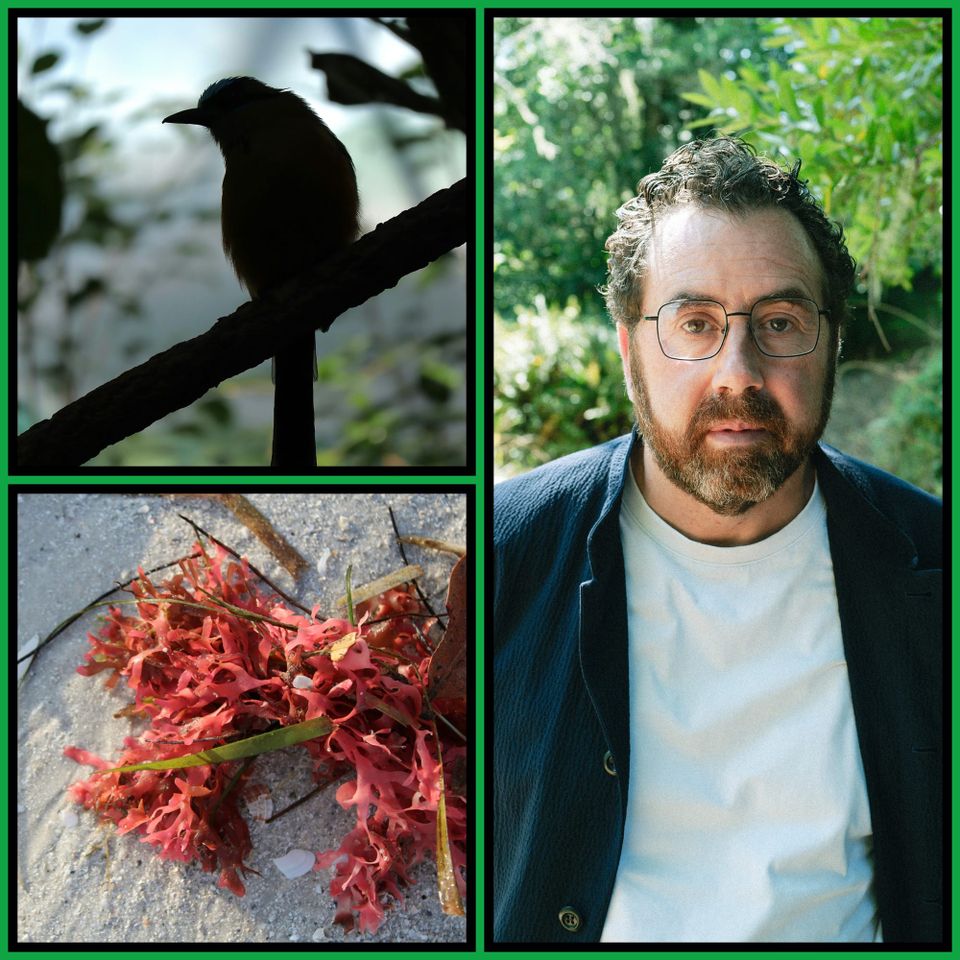
Emergence Magazine founder and Sufi teacher Emmanuel Vaughan-Lee on rediscovering the sacred in ocean waves, birdsong and the living Earth.
0:00 / 0:00
20 Jun 2026
The Spiritual Ecology of Emmanuel Vaughan-Lee
Emergence Magazine founder and Sufi teacher Emmanuel Vaughan-Lee on rediscovering the sacred in ocean waves, birdsong and the living Earth.
ShareEpisode Notes
Emmanuel Vaughan-Lee grew up in London with a Russian Sufi mystic living downstairs, seekers showing up at all hours and meditation happening constantly. Then his family moved to a coastal redwood forest in Northern California, where he learned to surf and fell in love with wilderness.
Today, Emmanuel is the founder, executive editor and podcast host of Emergence Magazine – for nearly a decade, one of the most important venues for spiritually-infused ecological writing. His new book, Remembering Earth, is both a meditation on the sacred nature of the living world and a practical guide to re-entering it.
In this conversation, we explore Sufism's radical vision of the oneness of the divine as also being intimate and immanent, rather than purely distant and transcendent. We also talk about jazz — Emmanuel dropped out of school at age 16 to play acoustic bass – and the liminal space of creative improvisation. Other stops along the way: the epigenetic memory of birdsong, how breath and walking can become a form of prayer; what dreams are and where they come from; and the boundlessness of Earth’s love.
Note: Wonder Cabinet is taking a summer break. We’ll be back in August with new episodes.
- Emergence Magazine
- Emmanuel’s new book, “Remembering Earth”
- "The Nightingale’s Song," a film by Emmanuel Vaughan-Lee and Adam Loften
- Anne’s conversation with Sam Lee
Transcript
Anne Strainchamps: Welcome to Wonder Cabinet.
Anne Strainchamps: I'm Anne Strainchamps.
Steve Paulson: And I'm Steve Paulson.
Anne Strainchamps: Some people say the modern world is disenchanted.
Steve Paulson: Stripped of a kind of magic and mystery that used to be part of life.
Anne Strainchamps: But it's all still pretty miraculous. The hummingbird at my feeder can fly faster than the space shuttle. The flower it's sipping from can turn sunlight into food.
Steve Paulson: The rays of sunlight hitting that flower carry light particles that began their journey during the last Ice Age.
Anne Strainchamps: So there's still plenty to be enchanted about. And yet, we often have a hard time feeling it.
Emmanuel Vaughan-Lee: One of the things that makes me so sad is this world we live in that we say is life now. We've said it doesn't have magic. It's devoid of magic. And there is so much magic! There is magic in the birdsong. There is magic in our dreams. There is magic in our breath. There is so much magic. And we want to say, no, we are the magicians.
Anne Strainchamps: This is Emmanuel Vaughan-Lee. He's the founder of Emergence Magazine and somebody I've admired for a long time for the way he has nurtured and given a voice to the spiritual ecology movement.
Steve Paulson: If you're not familiar with Emergence, it's a publication, a film production studio, and also a podcast, which Emmanuel hosts. For nearly a decade, it has been a hub for the same kind of environmentally-based, spiritually-infused writing and thinking that Anne and I have been bringing to Wonder Cabinet.
Anne Strainchamps: There are some differences, but there is definitely a lot of synergy: deep time, animism, the mythic imagination.
Steve Paulson: Indigenous wisdom, Buddhist philosophy, and mysticism.
Anne Strainchamps: And Emmanuel Vaughan-Lee grew up in a mystical family. He's the son of the Sufi mystic Llewellyn Vaughan-Lee, the lineage successor in the Naqshbandiya Sufi order. Emmanuel is a Sufi teacher himself and the authorized successor to his father. You wouldn't necessarily know any of this just from listening to Emergence, but I wanted to know how that Sufi practice informs Emmanuel's life and work. And since he has a brand new book out called Remembering Earth, it seemed like a good time to talk.
Steve Paulson: Okay, let's listen.
Anne Strainchamps: Emmanuel, I wanted to start by talking a bit about how you grew up, because it was a pretty remarkable spiritual atmosphere.
Emmanuel Vaughan-Lee: Oh, it was definitely a unique way to grow up. The story really begins with my parents, who were disciples of a Sufi teacher, a Russian Sufi mystic named Irina Tweedie, who went to India in the late 50s, met a Sufi master and spent several years with him. And upon his death, she was made his successor, and she took this particular lineage of Naqshbandiya Sufism to England.
Emmanuel Vaughan-Lee: She had given up everything through the course of her training, given all her money away, and was surviving on a war widow's pension and living in a tiny little flat by a train track, meeting with a few disciples, my parents being among the early ones. This is the early 1970s. And a few years later, my father bought a house in a residential area of North London and invited Irina Tweedie to live in the ground floor flat. And so I grew up with a guru living downstairs.
Anne Strainchamps: She was an extraordinary person too. She was born in 1907, so she's part of the generation that lived through both World War I and World War II. And then she goes off to India and she has this spiritual quest – and this is before the Flower Children discover the Eastern religions. She's the first Western woman trained in this particular Sufi lineage. And then she writes a spiritual memoir, which becomes huge, and all these people begin trekking to your house. It’s really a remarkable story of a woman with the kind of spiritual passion that was rare then, and still is today.
Emmanuel Vaughan-Lee: She was a formidable character in every sense. She loved fiercely, like really fiercely, and she would do anything for the sake of the truth. I remember when we were young, you'd wake up one morning and there'd be a note on the table downstairs saying “Gone. If I'm not back in three months, consider me dead.” And she would have gone off somewhere because she had had a dream the night before that she had to seek out a teacher — this is a true story — in Morocco who had to do something to her heart! She lived on the razor's edge, as they speak of in mysticism. And she permeated the house.
Emmanuel Vaughan-Lee: As you said, she wrote this spiritual memoir, which was so unique because it was a diary of the personal journey into her own darkness that this mystical path took her on. It was very intimate, very personal, with nothing held back. There really hadn't been anything like that published in the West. And it drew seekers from all over the world to our door. Word got out that she was just open at this address, and people would ring up and say, “I've just read the book, I must come see Tweedie.” Or they would just show up on the door at all hours, often in states of distress. It was not dull, I’ll say that.
Emmanuel Vaughan-Lee: Growing up with a guru downstairs and then also my father — I would say I lived with two masters. A master downstairs and then a master upstairs, so It was a potent energetic pot.
Anne Strainchamps: It’s a rare thing to grow up with a spiritual leader, a guru, who is a woman. We are not used to seeing the face of the divine through the face of a woman.
Emmanuel Vaughan-Lee: No, you're absolutely right. Although growing up, I don't think I even thought about it. It was just Tweedie. It didn’t even occur to me that other people didn't meditate and pray for hours every day until I went to other kids' houses after school when I was seven or eight years old. You know how it is. You just take it at face value that this is what life is.
Anne Strainchamps: Sufism is the mystical side of Islam. In this country, most people probably associate it with Rumi, the 13th century mystic and poet – still one of the best-selling poets in the U.S. How similar or dissimilar is Sufi mysticism to the other mystical traditions — Christian, Jewish, Hindu? What sets it apart?
Emmanuel Vaughan-Lee: Well, in some ways, nothing. In some ways, they're all the same perennial stream of divine love manifesting in the world through different prophets and experiences in different times and places. And yes, Sufism is considered the mystical heart of Islam, but there is also a tradition among Sufis who say Sufism is much older and just had different names in the past. And within Sufism, there are so many different forms as well, just like within Buddhism and Christianity. It's like Baskin and Robbins – there are 31 flavors for whether you like music or dance or silence or chanting.
Emmanuel Vaughan-Lee: But in the end, it really is one river. And yet, as it flows from the source to the sea, all the countries that are on the banks of the river try to claim it as theirs. And you can't. It really is an essence. And Sufism is about taking you into that essence through love.
Anne Strainchamps: And what about the concept of God, the divine, the Beloved? I have friends and family members who are kind of allergic to those words. They bring a lot of baggage with them. Who or what are you talking about when you talk about God?
Emmanuel Vaughan-Lee: It's a very good question. It's also a deeply personal one. There are many names, and in Sufism we say Beloved because there is this desire to experience the personal side of God. They say in Sufism, “The Beloved is closer to you than your jugular vein,” and you want to come to know that side of God. Of course, there is the other side, the unknowable side of God. And there is also this knowing beyond the form of, in quote, God — there is what they refer to as Absolute Truth, which is this undifferentiated essence. Traditionally in Sufism, they say the first form that emerged from that undifferentiated essence, that was the beginning of God.
Anne Strainchamps: But I do have the sense that for you, this is not and has never been an anthropomorphic vision.
Emmanuel Vaughan-Lee: No, no. Dhu’l-Nun, who's a very famous early Sufi, said, “Whatever you think God is, it is the opposite of that.” This idea that God is this and not that is, to me, one of the saddest stories that has emerged through religious and spiritual forms and has led to the tremendous, horrific — not just in our past, but very much as part of our present — story of separation. When we say the divine exists in heaven and what lies beneath our feet is not that, to me that lies at the root of – if you want, call it the Garden of Eden. I think it's the opposite. We have not been exiled, we exiled the divine.
Anne Strainchamps: We left!
Emmanuel Vaughan-Lee: We exiled the divine and said it is only for people who have access to this particular religion, and only in this form, and only if you do this and that and the other thing.
Anne Strainchamps: I think that’s partly why, in mainstream culture today, we don't talk about it. I’ve had people tell me they’d be more comfortable asking their best friends how much money they make than whether they believe in God. And it should be the opposite!
Emmanuel Vaughan-Lee: It’s become taboo. I think it’s also deeply sad that nowadays if you believe in God in America, then it’s assumed you have a certain political affiliation. So we have to rediscover what it means to be in relationship to the divine – but not through this place of dualism and conflict and owning an image of what we think God is.
Anne Strainchamps: I was trying to imagine what it must have been like to imbibe some of these really beautiful Sufi concepts, like the Oneness of Being, from young childhood. In some ways it's maybe not that different from the way children perceive the world anyway. It sounds like a vision of imminence, of all the world alive.
Emmanuel Vaughan-Lee: Well, we say in Sufism there are really three main parts of the journey. The journey from God, the journey to God, and the journey in God. And the journey from God begins when we are born, and we are still actually much more in tune with our divine nature. We have yet to be formed around an ego consciousness. We represent this kind of boundless experience that’s encapsulated in the ways that children naturally talk to God, whether it's fairies or trees or spirits. Watching my children grow up and seeing other children grow up – they are just naturally in this state of wonder and connection. And as we grow up, that falls away.
Emmanuel Vaughan-Lee: But what was interesting about growing up with Irina Tweedie and my father is that my father never once put a book in my hand and said, “Read this, learn this about Sufism.” My whole experience growing up there was through osmosis. Later I actually came to know that this particular Naqshbandi path that I'm a part of has parallels to Zen, in that it’s about practice and about silence. But it isn't about words on a page.
Anne Strainchamps: And from the little bit I've read, I have the feeling that Sufi meditation practices are fairly simple. Is that right?
Emmanuel Vaughan-Lee: Well, I started meditating when I was about six years old. I saw my father and lots of other people meditating. Actually, I often say some of the first words I remember hearing were, “Sshh. They're meditating.” Because we lived upstairs, so there was a lot of being quiet because people were meditating.
Emmanuel Vaughan-Lee: But one day when I was six – I vividly remember it — I came home from school, and I wanted to go downstairs, and I wanted to meditate. There was just this desire that took over. I went down and stepped over a sea of shoes – imagine 100 pairs of shoes outside this front door. I even remember the smell of 100 people in a small room. And my father was there and they cleared a space for me to sit, and I closed my eyes. And then two hours later, my father said they had to wake me up.
Anne Strainchamps: Two hours! Did you fall asleep or were you actually in meditation? Do you remember what it was like?
Emmanuel Vaughan-Lee: I was sitting in the lotus position, which kids can comfortably do – sadly I can’t anymore. And I have no memory of what I experienced in meditation. All I remember is that I just stepped into a space that was bigger than myself, and then I stepped out again. But after that day, I came downstairs every afternoon and meditated. My father was very nonchalant about it. He just said, “Oh, you've done this before.” He meant in previous lives. He said “You're doing what you already know,” and did not make a big deal of it. And so I did this for a while, maybe a year or two. And then kids on my street would be riding bikes or skateboarding or whatever, and I wanted to go and do that after school instead, and I stopped.
Anne Strainchamps: At its most profound, are there mystical experiences that you have had that have been utterly transformative?
Emmanuel Vaughan-Lee: Yes, many. Some of them have been deep in meditation and prayer. Many have been in my dreams – I've had very powerful experiences in my dreams – and many in waking consciousness. As the years go by, the delineations between what is meditation, what is prayer, what is breath, and what is just getting up and going about my day have shifted and become more porous. I used to have experiences in meditation where I’d see things, certain patterns or shapes. It's a remarkable world, this inner world that we've denied!
Anne Strainchamps: We should switch to talking about Emergence and spiritual ecology. Your family moved to Northern California, where you live and work now, when you were, I think, 11 or 12, something like that?
Emmanuel Vaughan-Lee: Yeah, 11 years old.
Anne Strainchamps: It must have been a huge change to go from urban London to the coast of Northern California. You had one of those classic experiences of falling in love with a landscape. Can you tell me about it?
Emmanuel Vaughan-Lee: Well, as I said, I grew up in a very nondescript residential part of North London. I loved nature as a child and went to parks, and occasionally we'd go to the countryside or once a year maybe, on a camping trip to the Swiss Alps. And then we moved to this very small town right on the Pacific Ocean, with no direct neighbors, in the middle of a forest overlooking the wetlands and the bay. There weren't enough bedrooms in the house, so they put me in this little cabin on the property. It that had been built in the ‘60s in the shape of a ship, with a ladder that went up to a little sleeping loft, and it was made of redwood planks and all the knots were decorated with pictures of rock stars – Dylan, the Stones, the Beatles, Janis Joplin. It was a creation straight out of the ‘60s, with a little wood stove, and lots of mice and bats.
Anne Strainchamps: You were out there all by yourself at age 11?
Emmanuel Vaughan-Lee: Yeah. I mean, it was across the courtyard from the house, not far, and there was a little intercom — “Dinner's ready!” But transitioning from life in London to Northern California was really rough. I went to this little school where everybody had been together since kindergarten, there weren't a lot of new kids, and I was brutally bullied. Sixth and seventh grade were very, very hard.
Emmanuel Vaughan-Lee: And I found solace in nature. I spent a lot of time on the trails near our home. And I discovered things I’d never experienced before, like that mushrooms grew in the fall that you could eat. So I learned all about mushrooms and I would spend a lot of time foraging. And the ocean was nearby, and I spent a lot of time there and eventually started surfing, and that really nurtured something in me. Being in the ocean reminded me of meditation: you’re immersed in something that is so expansive, beyond what you can see, beyond the horizon. There is this energy there that is kind and unkind at the same time. It is both welcoming, and it is saying, “I'm in control.” It is so many things, and I love that.
Anne Strainchamps: Were you ever afraid?
Emmanuel Vaughan-Lee: When the waves got big enough, yeah, sure. But I loved all of this, I I loved the aliveness of it. I remember when I was 14, a very destructive fire tore through the region and almost came to our house. When we came back from being evacuated, there was a note on the door that said, “We were able to save your home.” And just up the road, everything had burned. I remember sneaking past the firefighters to go and see what had burned and walking the trail towards where the fire had started. It had burned all the way to the ocean by then and was still smoldering in a few places. I shouldn't have been there.
Emmanuel Vaughan-Lee: But the ground was littered with pinecone seeds from the Bishop Pines. Pinecone seeds on this charred landscape – I remember the image, it’s as clear as day to me now. And I've watched that forest regrow over the past 30 years. I've been reflecting recently that it's like I was part of the regrowth birthed by the serotiny of those pine cones seeding themselves in that fire. So my relationship to this home where I've lived my whole life — it has shaped me in so many ways. It helped bring to the surface what had been primarily an interior experience. Even though growing up, it was always understood that wherever you turn, there is the face of God – to feel it in my body and experience it in relationship to a place that nurtured me was a whole other journey. Very different.
Anne Strainchamps: There's a line in your book – I had to stop and think about it for a minute because it struck me as a very different way of thinking about the divine than the Judeo-Christian tradition. You said “The Creator wasn't better than the Creation. Rather, Creation was a form of the Creator.” That opens the door to having a spiritual relationship with Earth.
Emmanuel Vaughan-Lee: You know, you mentioned the Oneness of Being earlier, a philosophy connected to this great, great early Sufi, Ibn Arabi. He developed this metaphysical system, this ontology, to understand how the Beloved reveals themself, and there's this wonderful Hadith Qudsi, which is a saying of the Prophet attributed to God: “I was a hidden treasure and I longed to be known, so I created the world so that I could be known.” And of course the Sufis changed it slightly to say, “I longed to be loved,” because it is through love that we really come to know something.
Emmanuel Vaughan-Lee: For me, one of the sad things about the emphasis on transcendent forms of the divine is the exclusion of the imminent and the desacralization — we were speaking earlier about exile — the desacralization of Earth. And here we find ourselves at a time where that story of separation and desacralization has led us to treat the Earth as a resource for us. To exist in a human-centric reality that denies the holy ground we walk upon.
Anne Strainchamps: Many of us have wanted to fall back in love with the world. To a certain extent, it’s a moral agenda, like, “I definitely should be walking in the woods rather than making a Target run.” But I think often our first instinct is to try to reconnect by learning more – memorizing the names of trees and learning to identify insects and plants. And there has been this amazing explosion of knowledge in the life sciences – one of the most wonder-filled things that's happened in my lifetime is much we know about the natural world now. But I'm guessing that you might say that knowing is not the same as loving?
Emmanuel Vaughan-Lee: I think that it's wonderful that there has been this resurgence of wanting to know the names of trees and to know birdsong. I think it’s in response to a deep hunger, and not just part of the environmental movement. There are a lot of birders out there who might not necessarily consider themselves environmentalists! And I think that going out for a long walk or to learn the names of trees or watch birds, is a beginning – and if we follow that, it will change us.
Emmanuel Vaughan-Lee: But I'm also very interested in what happens if we intentionally try to engage with the living Earth. Because what is spiritual practice but an intentional engagement – whether it's with the divine or consciousness or love or emptiness? There are these tremendous — I call them spiritual technologies — developed from many traditions, Sufism just being one.
Anne Strainchamps: We're jumping ahead a little bit, but the practice section is probably my favorite section in your book. So talk a little bit more about those.
Emmanuel Vaughan-Lee: Well, my own experience over the years was that my own spiritual practice in meditation and zikr — which means recollection, and in my tradition, the primary practice is to be in constant remembrance of God. So every breath you take is like a mantra, you breathe the name of God. And what I discovered is that these practices naturally made me more porous to the experience of the divine and the Earth. Again, I think a lot of people have experiences of God in nature more than anything else these days. But I think that often when we walk through a forest or in a landscape, we're not actually walking in the landscape. We’re thinking about walking in a forest. We may even be thinking about how wonderful it makes us feel to be walking in a forest. But are we actually walking in a forest?
Anne Strainchamps: I feel so busted right now! I do that!
Emmanuel Vaughan-Lee: Right? And to be perfectly honest, part of me feels that's extractive, because it's taking and not giving. But if we focus on our breath, we can actually go beyond that space rather easily. And then we're not in this projected self-image and we can actually have an experience of that landscape.
Anne Strainchamps: Let's give folks a taste. I mean, just take me on a virtual walk. Like a little guided practice, maybe.
Emmanuel Vaughan-Lee: Ok, well the first thing I would do is that before I leave, I would try to put myself in the space of where I am going and why. Because often we begin something without putting ourselves in the space to begin. And then just simply close your eyes and bring your attention to your breath, following your out-breath as it leaves your body, as it enters the sphere and space around you, and then returns back to your body, making you both more aware of where you are and who you are.
Emmanuel Vaughan-Lee: As I walk and leave my door, I think also of the relationship between my step and my breath. And I want to align my breath with my step at a pace that is comfortable to walk. Perhaps it is three steps per out-breath — one, two, three — and three steps per in-breath — one, two, three. And the rhythm of my breath becomes aligned with the rhythm of my step. Each time that my mind is taken over by thoughts, I return to my breath and my step. And the more we walk and the quieter the mind becomes, the more we perceive, the more we feel, the more we hear.
Anne Strainchamps: Let's pause there for just a second. My guest is Emmanuel Vaughan-Lee, founder of Emergence Magazine. His new book is called Remembering Earth.He's also a filmmaker, a former jazz musician and a Sufi teacher in the Naqshbandi tradition. And we'll talk about music, birdsong, and listening into silence after this.
Steve Paulson: Hey, it's Steve. I am so glad you're with us. And I have a favor to ask. This is a new podcast and we're really hoping to reach more listeners. So we'd love for you to tell your friends about Wonder Cabinet. And it will really help when you give us a good rating on Apple Podcasts or wherever you listen. And if you're not already subscribed to our newsletter, you can sign up at wondercabinetproductions.com.
Anne Strainchamps: One of the connections Emmanuel and I discovered is that we are both huge fans of the British folk singer Sam Lee and his Singing with Nightingales project. Nightingales have a famously beautiful song, and every spring, Sam takes small groups of people into the woods at night to listen to them and to hear Sam and his musician friends improvise duets with the birds. Emmanuel was so enchanted by this, he wound up making a short film about it called The Nightingale's Song.
Anne Strainchamps: What was that like, being there in the woods with Sam?
Emmanuel Vaughan-Lee: Well, thank you for asking about that. Sam's a remarkable fellow. We met on a panel for Cambridge University, and he was talking about his relationship with the nightingale, which in Sufism has tremendous symbolism.
Anne Strainchamps: Oh, no, really? The nightingale is big in Sufism, too?
Emmanuel Vaughan-Lee: Oh, it's huge. I mean, this is a bird that makes their home throughout the Middle East, that sings all night to its lover, to its beloved.
Anne Strainchamps: (laughs) Could there be a more spiritual bird!?
Emmanuel Vaughan-Lee: Yeah, and you listen to this bird, and then you have a spiritual experience there with Sam. He does this thing where he leads people from the campfire at midnight into the woods, in silence — 30, 40 people at a time — to find the tree where the nightingale is singing. It’s a different tree every night. So he creates this space where people leave behind the busyness of their lives and step into the wonder of the night, and where they hear a nightingale – which is this very loud bird. I mean, it is not subtle!
Anne Strainchamps: Really? I've never heard it.
Emmanuel Vaughan-Lee: Yeah, we don’t have them in North America. So you're overtaken by their song at first, and then by Sam’s song in response. The film is also a profile of Sam, and it's about the relationship between song and birdsong and the epigenetic imprint that we all carry within us from the thousand years of being the recipients of birdsong. This ancestral memory, which really is like an epigenetic imprint.
Emmanuel Vaughan-Lee: And also in the context of the times we're in, where the nightingale is disappearing. In southern England, there are 5,000 pairs left. In our lifetime, most likely, they will not nest in England again. And so what happens to a place when the birdsong that enveloped it for millennia — or much longer than millennia, maybe a million years — is silent?
Anne Strainchamps: We were talking about that longing to be in a deeper relationship with the Earth. Figuring out how to reconnect and not be gutted by the anguish – that’s the challenge.
Emmanuel Vaughan-Lee: Well, human beings are paradoxical creatures. We live in a constant state of contradiction. We can experience love and joy and pain and longing and heartbreak all at once. What I have found in my own self, Anne, is that the Earth is this incredible outpouring of abundance and compassion. She gives and she gives and she gives, regardless of how we treat her. In the midst of how we are destroying this incredible gift, She gives. She holds. She invites.
Emmanuel Vaughan-Lee: And the more I've stepped into that, the more I’m able to feel contained as I hold these paradoxical realities – feeling this grief and wanting to step more and more into the love. The more I step into the love, the more I feel the grief sometimes. And the love helps me hold the grief, but it doesn't deny it. So it’s messy. But we're not alone.
Anne Strainchamps: I'm curious, why is Earth “Her” to you?
Emmanuel Vaughan-Lee: Because that's how I've experienced Her! Of course, I'm not alone here. She's been referred to as Mother Earth since the beginning – this great outpouring of creation, of birth. Actually, for me the divine has not been gendered, not been a He or a She.
Anne Strainchamps: No, that's why I was curious.
Emmanuel Vaughan-Lee: But my experience is different with Her. And I also feel it's important to acknowledge the feminine nature of Earth because we have denied that. There is a very patriarchal component to the transcendent experience of religion and spiritual life, which is central to the problems that we're experiencing now and to the roots of this crisis. So there needs to be a reclaiming of that.
Anne Strainchamps: You mentioned earlier that you started out as a teenager to become a jazz musician. Riffing a little more on listening,I'm curious about what you might have learned as a jazz musician about listening, about sound. A little backdrop — my dad was a jazz musician. He played in the late ‘50s and early ‘60s in New York City clubs, and he quit when I was very little, so I don't remember hearing him play. But from what he's described, it's always sounded like an ecstatic experience, certainly an altered state. What was your experience like, and what do you feel like you learned from those years of playing jazz?
Emmanuel Vaughan-Lee: I think it was hugely influential, actually. I fell in love with jazz when I was 14. Like many people, I was given a record by Miles Davis.
Anne Strainchamps: Which one?
Emmanuel Vaughan-Lee: “Kind of Blue”. It's a cliched beginning, but that record is a masterpiece. And something just came alive in me. Overnight, I had been bitten by the jazz bug, as they say, and I just immersed myself in that world. I had played bass before that, electric bass and cello, and I immediately traded my electric bass for an acoustic bass. I eventually dropped out of high school when I was 16 so I could play.
Anne Strainchamps: Oh, wow.
Emmanuel Vaughan-Lee: As a bass player, you were often the youngest and least accomplished musician on the bandstand – because everyone needed a bass player, so you could start working before you even knew how to play. And that was my experience — actually learning jazz on the bandstand.
Anne Strainchamps: Were they like, “No, kid – play it like this”?
Emmanuel Vaughan-Lee: If they were nice, they would say that! If the piano player was nice, he'd play the roots in his left hand, with his pinky. But often they wouldn't do that, because they wanted you to learn the hard way, which is by opening your ears. They would say, “Oh, you know this tune? Okay, well, let's play it in D flat. Do you know it then?” So it was a great training.
Emmanuel Vaughan-Lee: I was lucky enough to play with really good jazz musicians from when I was really young. And they would often be like, “Listen to the space between the notes. They have more power than the notes themselves.” The shaping of a melody, the shaping of a phrase – it’s the space around the notes that gives that phrase its potency and its meaning, not just the notes.
Anne Strainchamps: There are long traditions, which I don’t know enough about, that consider music a foundational, almost divine element of the universe — the music of the spheres, and so on. Did you feel there was any connection between playing jazz and your spiritual path?
Emmanuel Vaughan-Lee: I did have transcendent experiences playing music. Not as many as I would have liked, honestly – because jazz is an improvisational art form, but it is also a highly technical one in which you have this mastery of your instrument and music theory and the canon of the great American songbook and all the standards that emerged from greats like Miles and Coltrane. You know a thousand songs, and you've got this great meeting ground where you can play with other players.
Emmanuel Vaughan-Lee: But for the real improvisation to happen, the egos have to be left behind on the bandstand. The technical mastery and your attachment to it have to be left behind on the bandstand. Because then something else would happen. You would step into the space of the imaginal — the mundus imaginalis — where the real creative force could reveal itself. The great ones – Coltrane or Miles, or in more modern times, players like Keith Jarrett — they knew how to do that. They would put themselves in that space of openness and vulnerability.
Emmanuel Vaughan-Lee: Actually, there was a singer I played with who taught me this. Her name was Rhiannon. Wonderful singer. Used to play with Bobby McFerrin. For a while, I played just with her and it was duets of bass and voice. And she would never tell me what we were going to play! You'd go out on a stage with a thousand people, and you wouldn't know what you were going to play. And bass and voice is very naked – there's no harmony except what we create. I learned a lot through that nakedness, listening to a voice and responding to it.
Emmanuel Vaughan-Lee: But I didn't grow up with a lot of music in my house. My particular Sufi path actually emphasizes silence, not song or music. So I wasn't exposed, when I was young, to forms of praise and worship and trance-like experiences that come through music. Later, as a teenager, when I was 14 to 16, I lived two years at an ashram my father sent me to for high school. And there they chanted and sang devotional songs.
Anne Strainchamps: Did you like it? The chanting, that practice?
Emmanuel Vaughan-Lee: I appreciated it, but it didn't feel authentic to my nature. It was a place where people would stay up all night and fast and sing. I did things like — I swallowed 20 yards of cloth down into my system to pull it out, to clean out your inside, which was a yogic practice that they would do. They had pranayamas where they would bend rebar around their arms, and you would lie on beds of nails with boulders on your chest and they would break them open with hammers, using the power of the breath. It was an exposure to a very different physical, spiritual reality all in one. And I tried all this stuff! I was really intrigued.
Anne Strainchamps: It sounds amazing.
Emmanuel Vaughan-Lee: Yeah. It was great. Anyone could go and stay there as long as you did 35 hours of karma yoga. So you had all sorts of people. You had recovering alcoholics and drug addicts who had gotten clean and wanted a place to find meaning. And they’d be washing dishes next to the person who'd been there for 35 years, who was one of the founding members of the community. And behind it all was this kind, silent yogi who wrote on a chalkboard and whistled. He would whistle to get your attention! And if you asked him a question, he’d write the answer on a chalkboard. I loved it. It brought many worlds together for me.
Anne Strainchamps: You mentioned dream work earlier – that's another part of your practice. And you mentioned the imaginal world, this other reality. Do you have a theory of dreams? What do you believe dreams are?
Emmanuel Vaughan-Lee: Dreams are a very traditional part of the Sufi path. My father used to say, “When we dream, the king is not in his castle, the prisoner is not in his cell.” It's often the closest place we have where ego consciousness falls away and we step into this most vast reality. And also in Sufism, it’s part of the tradition of learning to catch the divine hint.
Anne Strainchamps: Oh, I love that – the divine hint!
Emmanuel Vaughan-Lee: Yeah, there are these hints that are given to us, and learning to listen to our dreams is a training, so that when it happens, then we catch the moment. Dreams were such a central part of my childhood. I remember as a child, I actually used to get quite upset because at every breakfast, my father and mother would be talking about the dreams that they had or the dreams that other people had. And it was like, “Oh, can we just have a break?”
Anne Strainchamps: Well, when I asked if you have a theory about dreams – there's one school of thought that the dream is a product of your psyche, that it comes from inside you. And then there's another way of thinking, that, no, it's not just interior – the dream is coming from “out there.”
Emmanuel Vaughan-Lee: Yes, completely. I mean, the world of our psyche is, let's say, the first room that we enter when we enter the dream world. But there are many other rooms. I've experienced many teachings coming through dreams – from people I know who are alive, and from people who are dead. I've experienced the divine speaking to me in my dreams. And so have you! And so have so many other people. We just don't listen to it enough.
Anne Strainchamps: Can I ask you about a dream, then?
Emmanuel Vaughan-Lee: Sure.
Anne Strainchamps: First, can I ask you about one of mine? And then I'll ask you about one of yours.
Emmanuel Vaughan-Lee: Oh, gosh, sure. Let’s see.
Anne Strainchamps: Okay, I have a recurrent dream, and it's always along a body of water – could be the ocean, or a very clear river. I'm wading in it. And there are these incredible shells, seashells like I've never seen before. Once, it was little golden statues, figurines in the water – just the most beautiful things. Treasure, really. Sometimes I'll try to pick things up, but I can never have them or get them. Something else happens, the dream takes a turn, and I have to leave. But it's the most magical place I've ever been. What do I do with that?
Emmanuel Vaughan-Lee: You know, what's interesting to me is that it plays out along a shoreline. And I always think a shoreline or a riverbank is a meeting of worlds. This vast unknown space, the sea, which is often a symbol of the divine in Sufism, or the river — this river of the divine that flows.
Anne Strainchamps: The source.
Emmanuel Vaughan-Lee: The source, and at the shore is often where we interface with it, and there are many treasures that exist there. The question I have – is that a bad thing that you can't take them with you? Or is it just that you experience something in that space, in that dream, where these worlds come together along the shore, and you have access to something there?
Anne Strainchamps: And what about for you?
Emmanuel Vaughan-Lee: Well, since I just shared about my time in this ashram — the backdrop is that like most teenagers, I was rebelling. There was tremendous resentment about my life and my family and being in this small town and not being understood. And I rebelled. I've only done drugs a few times in my life, and it was when I was 12 and 13. But in the small hippie town where we were, the kids could get high with their parents. They'd be like, “Here's a joint, go play.” I had my first experience of mushrooms at a birthday party when I was 13.
Emmanuel Vaughan-Lee: And in the midst of that, of course, my father was insisting that I meditate with him twice a day, at 6 a.m. and at 5 p.m. But when I went to Mount Madonna – which is the name of this school, the ashram – all that fell away and I started to have very, very powerful mystical experiences, and very different dreams. And I had this dream, in which there was a field below the — sorry, I'm getting emotional sharing it with you (pause) — below the main gathering hall on the property. It was foggy, and I was walking towards these figures on the other side of the field.
Emmanuel Vaughan-Lee: And on the left side, I saw my father, and Irina Tweedie standing next to him. And on the right side, I saw Baba Hari Dass, this yogi who was there, and to his right, an older Indian teacher. And they all said together – in one voice – “Come, join us.” It unleashed something in me. Something in me felt validated. And everything changed after that – my spiritual life, everything. And it came in a dream.
Anne Strainchamps: Getting ready to talk with you, I was curious about what your father has been writing lately. I came across an essay, Preparing for the Darkness and Holding the Light. It was a hard essay for me to read. He says we're in an era where the light of the sacred is receding. And that as the future unfolds, there will be small outposts of light that will remain, little hidden enclaves where the seeds of the future can be planted. I found it kind of terrifying – a vision of a new Dark Ages. What's your reading of that?
Emmanuel Vaughan-Lee: Yes, my father's teachings, especially in the last few years — actually, he wrote a whole book called Darkening of the Light a while ago.
Anne Strainchamps: So this is not a new idea.
Emmanuel Vaughan-Lee: No, and this was after he wrote many, many books about human consciousness evolving, and he felt there was a missed opportunity and a window that was closed. I think that there is a darkness about what we have done – you can call it the climate catastrophe, ecocide, the reality of our modern capitalistic system run rampant – that has set certain things in motion. And our responses have completely gone the other direction, away from what we could have been doing.
Emmanuel Vaughan-Lee: If we think even just now about how much money is being invested in AI and data centers, and what else could be done with that? And maybe we want to take this conversation elsewhere, but there is a darkness that is present and that will only grow. And yet, in the midst of that, there is, of course, light. And there is our own engagement with what is unfolding.
Anne Strainchamps: Well, it would be nice if we could know in advance what’s coming. It's funny, but I'm thinking about my experience of being pregnant. I have two children, and they're grown now. But the experience of pregnancy – it’s a kind of death. You're no longer ever the same person that you were. And for the period that you're pregnant, you are two bodies in one. So you have to die to a certain extent to who and what you were before. An old period of life ends – but something amazing comes out of it. So I like to think, well, maybe we're all pregnant with the next world.
Emmanuel Vaughan-Lee: Oh, I think we are. Taking it back to Sufism, one of the most fundamental sayings is “Die before you die.” The death of the ego, the death of the self. I think we’re seeing the death of a culture that denied the divine and the birth of something new. And I am trying to put all of my attention, all of my focus, all of my gaze, the full capacity of my heart and my ears on what is being born. That's the work now. That's the midwifery. But it is indeed a birthing. That's how I think of it.
Anne Strainchamps: It is. It’s a privilege to be part of it. And a privilege to talk with you, too. Thank you so much, on behalf of all your other readers and listeners, for the gift that Emergence has been for all these years. You have really opened a space in our culture for the next thing to come through.
Emmanuel Vaughan-Lee: Thank you. It’s been such a pleasure to speak with you. Thank you for the invitation.
Anne Strainchamps: Emmanuel Vaughan-Lee is the founder, executive editor, and podcast host of Emergence Magazine. He's a documentary filmmaker and former jazz musician and a Sufi teacher in the Naqshbandi tradition. His new book of essays and spiritual ecology practices is called Remembering Earth. And if you want to explore any more, you'll find links on our website at wondercabinetproductions.com.
Steve Paulson: This would be a good time to catch up on any episodes you’ve missed, because Wonder Cabinet is going on vacation. Our audio engineer, Steve Gotcher, is heading out on a month-long bike trip. Our digital producer, Mark Riechers, has some Midwest travel plans. And Anne and I are making our annual summer migration to Vermont. We’ll be back with new episodes in August.
Anne Strainchamps: Whether you are staying home or traveling this summer, I hope you have a chance to spend a lot of blissful time outdoors. We'll be thinking of you.
Subscribe to make sure you never miss an episode.