
09 May 2026
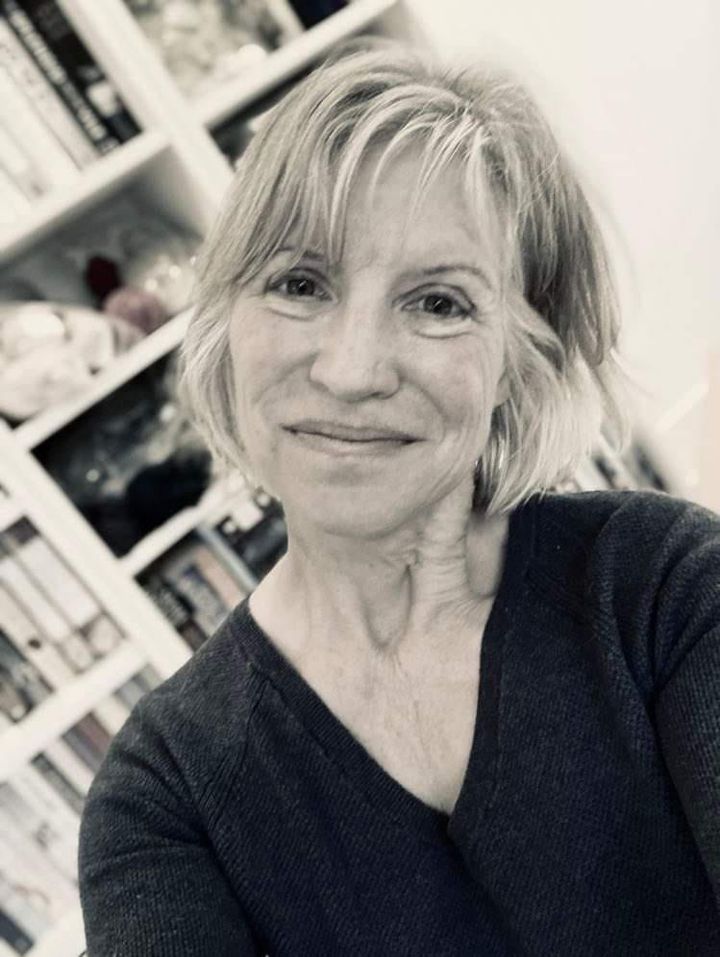
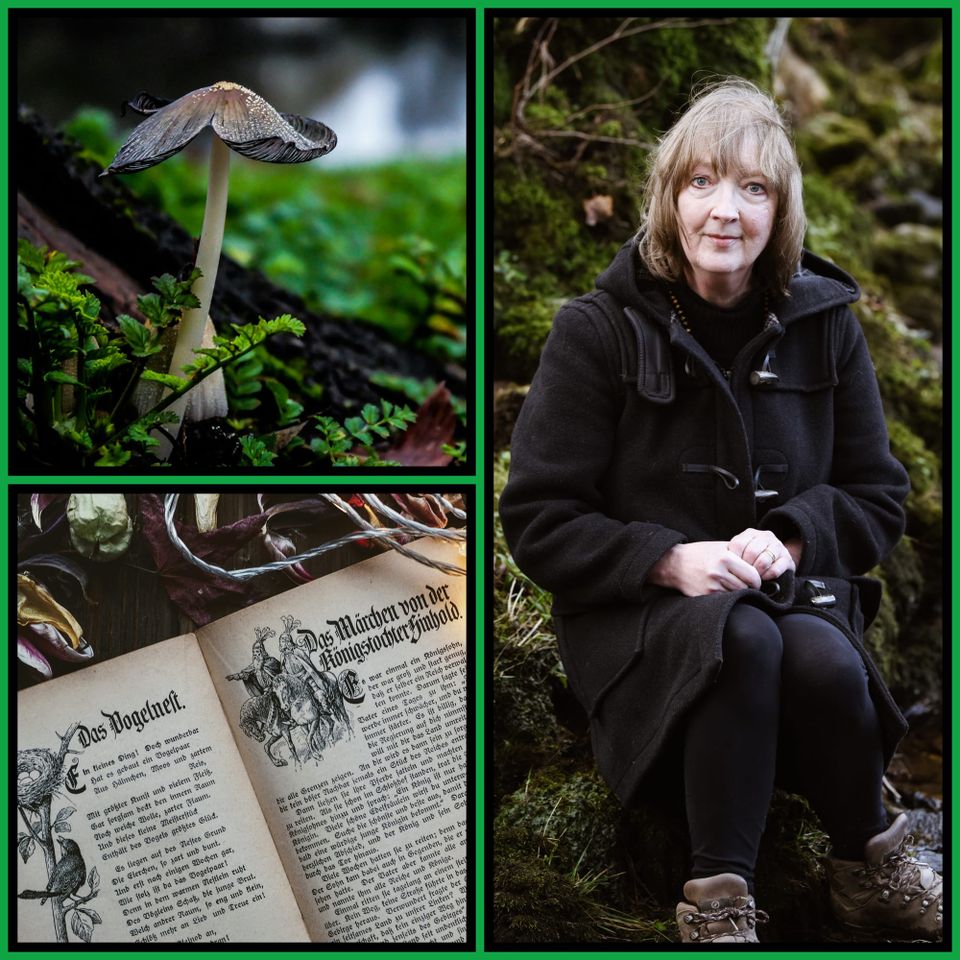
Why We Need Fairy Tales Now — with Sharon Blackie
“Stories are spells,” Sharon Blackie says. “They change things.” Maybe that’s why fairy tales — old, new, fractured and retold — are having a resurgence. As uncertainty rises and old ways disintegrate, fairy tales offer a roadmap to cultural transformation and re-enchantment.
0:00 / 0:00
09 May 2026
Why We Need Fairy Tales Now — with Sharon Blackie
“Stories are spells,” Sharon Blackie says. “They change things.” Maybe that’s why fairy tales — old, new, fractured and retold — are having a resurgence. As uncertainty rises and old ways disintegrate, fairy tales offer a roadmap to cultural transformation and re-enchantment.
ShareEpisode Notes
Sharon Blackie is one of our foremost fairy tale interpreters. In her new book, “Ripening: Why Women Need Fairy Tales Now,” she reclaims the subversive fairy tale heroines of the past. Not passive, well-behaved princesses — think Tatterhood instead of Cinderella, the Fox Wife instead of Sleeping Beauty — figures from centuries-old European folk tales that were whispered over hearths and spinning wheels, and handed down from one generation of women to the next, not as children’s entertainment but a blueprint for survival, maps for soul retrieval and cultural regeneration.
The brave, smart heroines and wise old women in these tales offer us an alternative, “post-heroic” model of psychological development, Blackie says. A code of ethics based on kinship with the more-than-human world of animals and plants, and a celebration of old-fashioned virtues like compassion, kindness and reciprocity. Fairy tale heroines, Blackie says, don’t slay dragons — they make them part of the team.
Fairy tales are part of our collective unconscious, a storehouse of archetypes and images that predate the modern world. There's a bridge back to the enchanted landscapes and animist sensibilities of our ancestors — a gateway to wonder. In this conversation, Blackie shows us how to unlock their power and find our way back the imaginal world.
- Website
- "The Art of Enchantment" Substack
- "Ripening: Why Women Need Fairy Tales Now"
- The Nostos Institute
- Sharon’s other books
Transcript
Anne Strainchamps: Welcome to Wonder Cabinet. I'm Anne Strainchamps.
Steve Paulson: And I'm Steve Paulson.
Anne Strainchamps: Once upon a time, there was a girl and a poisoned apple, a wolf upstairs, a witch at the door.
Steve Paulson: There were hard times and evil spells, a dark castle and a withered land.
Anne Strainchamps: So she has no choice but to set out for the wild woods.
Steve Paulson: Where she cries and wanders, but does eventually find help.
Anne Strainchamps: From a talking tree, or an enchanted bird, or a fox, or a frog.
Steve Paulson: A helpful spider, a den of mice, a family of bears.
Anne Strainchamps: The message is pretty clear.
Sharon Blackie: People who don't really know fairy tales or who didn't grow up with fairy tales are constantly asking me, what on earth are you writing about fairy tales for? They don't get it. And it's kind of hard to explain sometimes just how deeply the images and the characters lodge inside us. Even the simplest of stories can provide this vast array of psychological insight and inspiration. They're magic.
Anne Strainchamps: And they offer what we most need today, a trail of breadcrumbs out of the wasteland and back into relationship with the imaginal world, where archetypes mingle with animist roots and ecological memories.
Steve Paulson: Our guest today is Sharon Blackie, folklorist, fairy tale scholar, feminist psychotherapist, author of half a dozen books about fairy tales.
Anne Strainchamps: Also an extremely popular literary substack, The Art of Enchantment. I've been reading Sharon Blackie's books for a decade or more. She's one of the first people I wanted to talk with for this podcast. Partly because I grew up reading fairy tales, and they've just always felt really potent to me. These are very, very old stories. Folktales that go back hundreds, maybe in some cases thousands of years. You could call them the origin code of our collective unconscious. The wild woods of the human imagination.
Steve Paulson: So maybe messages from the ancestors.
Anne Strainchamps: Or accumulated psychological wisdom distilled into story form. And also a path back to ways of knowing that challenge much of what we've been told about the nature of reality.
Steve Paulson: So it sounds like you and Sharon think there's something countercultural about fairy tales.
Anne Strainchamps: In the sense that they show us how to resist the forces that rob our lives of meaning and enchantment.
Steve Paulson: Okay, let's listen.
Anne Strainchamps: Sharon, you've devoted a lot of your life to reclaiming fairy tales for the modern age. Why are these stories so important to you?
Sharon Blackie: I think because when I was a child, I feel as if they kind of saved me. I had a complicated childhood. I had a father who was violent. I had a mother who was an alcoholic. I grew up in a fairly impoverished environment here in the UK. And what I loved about fairy tales is that they reflected that. There was no sugarcoating. The heroines walk out of the door empty-handed. Their father has cut their hands off. They walk out with just the clothes on their back. There's a wolf waiting in the woods, and it just kind of felt, yeah, okay, that's life.
Sharon Blackie: And so I think they always felt realistic to me. And I loved the way in which even as a child, they helped me believe that you can grow up in an impossible situation. But boy, can you find your way out of it again!
Anne Strainchamps: It sounds like early on, you had the sense that these are more than children's stories. Because the fairy tales you work with are even older than Hans Christian Andersen.
Sharon Blackie: Well, they were never really, back in the day, stories for children. Mostly they were told by women to other women and to their daughters while they were doing domestic work. So while they were weaving or spinning or doing all of the things that women did together. And it's always seemed to me that actually their purpose was to say to the girls, look, there are wolves out there. It all looks very dangerous, but you can get through.
Sharon Blackie: And then, of course, particularly in the Victorian era, there started to be this kind of collection of stories that were more aimed at children to teach them how to be good girls and good boys.
Anne Strainchamps: So that's when you get the women with the ball gowns and Cinderella and Sleeping Beauty and the castles.
Sharon Blackie: That's exactly right. That's when you start to get the insipid, very well-behaved and obedient princesses, which weren't there at all in the oral tradition, say up to the 1700s.
Anne Strainchamps: Well, you've said also that these were stories that were told by women to women. So there's a way in which they are teaching stories, survival codes almost?
Sharon Blackie: I think so. One of the things that I was keen to do in “Ripening” and one of the reasons that I began to write “Ripening”, was this recognition that pretty much every fairy tale, certainly with a heroine as the main character, starts in catastrophe. Her father cut her hands off, her father walled her up in a tower and she breaks out and the land is a wasteland. Or her stepmother throws her out with just the clothes on her back.
Sharon Blackie: I mean, these are stories that always start in catastrophe. And that's what we're kind of living through right now. That's what we've always lived through. And so it has always seemed to me that these stories are about things that have always worried us, and they give us the kind of inspiration to try to find a way through, how to avoid the bad wolf that's always lurking in the forest …or online. So the themes that seem to be very old actually translate right into the present day, don't they?
Anne Strainchamps: And they provide not just hope, but how-to. Because what do you do when your father wants to sell you to somebody? When he walls you up in a tower, leaves you with nothing but a servant and enough food for seven years. What do you do?
Sharon Blackie: And that's the beauty of it, because the first thing that that fairy tale heroine does is she keeps walking. One of my favorite stories is the girl without hands, sometimes called the handless maiden, where her father makes a deal with the devil, basically, because he's fallen on hard times. And the devil says, well, I'll make you rich if you'll give me whatever is standing just behind your house. And he thinks it's an apple tree that the devil wants. Why he would think the devil would want an apple tree, I have no idea. But that's the fairy tale world for you. Actually, what's standing behind his house at the time, in front of the apple tree, is his daughter. But the daughter refuses to go with the devil. And so the father cuts off her hands. And then you have this remarkable scenario where the father becomes rich, one way or another. And he says, “I'll look after you even though I've cut off your hands.” And she says, “No, I can't stay here. I can't stay with you.”
Sharon Blackie: And so even though she has no hands, she has that sense of just being forced to move on, to walk out and to create her own kind of life and destiny. And the way that most fairy tale heroines do this — that's what I love about fairy tales as teaching stories — is they have to do it through building community, and not just necessarily a community of other humans, but a community of hungry mice or crows in the woods or whatever it might be. They never can do it alone.
Sharon Blackie: And that teaches us a lot about the need for community today. They learn how not to “other” the other. They learn about making friends with a very frightening bear, for example. And then they provide us with all of these amazing qualities of character, which sound really old-fashioned. And, you know, yeah, I am just about 65, so I get to be old-fashioned. But it is things like courage, doing the work, being kind — just traditional, simple values of what it is to be a good human.
Sharon Blackie: They're values that situate us in this beautiful, animate, other-than-human world. So it's not just about making good relationships with humans. It's about understanding that a tree is alive, that a tree might actually contain the soul of your dead mother, for example, or that the wind isn't just something that irritates you when you walk out of the door, but something that you might be able to catch a ride on to your destiny. So there's all this wonderful and beautiful interconnected kinship that we really do need in the world today, I think.
Anne Strainchamps: Well, and that’s the story the life sciences are telling us today too. But going back to the story of the Handless Maiden, what does happen to her?
Sharon Blackie: Well, bizarrely, even though it's one of my favorite stories, that is a story where animals don't actually much show up. But what does show up is the natural world in the sense that she manages to find a pear tree. She's hungry and she manages to find a pear tree that she can reach up to with her teeth and pluck the pears – because she hasn't got any hands to pick them. And then a king who owns the pear trees comes along, thinks she's very beautiful, marries her and fashions for her this pair of silver hands — a set of fake hands to replace the ones that she lost. They're very nice and he means well, but they just don't work for her.
Sharon Blackie: So to cut a long story short, she ends up having to go back into the forest. She's cast out by a kind of wicked stepmother who's in league with that devil who just won't go away. She's cast out into the forest again. This time she's got a little baby. And it is through spending –I think it's the classic fairy tale, seven years in the forest, alone with this baby — where in the natural world, nurtured by the forest and by some beautiful spirit who's a bit angelic but clearly is of the forest, she grows back her own hands.
Sharon Blackie: But she can only do it in the natural world. She can only do it in the forest. She's not going to do it in the king's palace. And that's so beautiful because that's clearly how our ancestors felt about the world. You find in these stories real respect for the wisdom of animals, for the wisdom of particular plants and the characteristics of particular plants, because they knew them, because they literally lived among them.
Anne Strainchamps: What do you make of the wild wood? So often in these stories, like the Handless Maiden that we just talked about, or Hansel and Gretel — I can think of dozens, actually – where the action unfolds in a wild wood, which is often the place where you go when you've lost your home. It’s a wilderness, a place where you are lost, but it's also your salvation. It's the place where the animals of the woods help you to survive. What do we make of that?
Sharon Blackie: I think we make of it exactly what you've said. That's a very good way of putting it, that it's kind of shorthand for, I don't know, Carl Jung and others have called it the night sea journey, the descent to the underworld, whatever you might think of it as. It's that place beyond the village. The village is where everything is known, where you know what the rules are. And the enchanted forest, which is, as you say, almost always dark and filled with monsters, is a little bit more like life is when you've lost everything that you once thought defined you, or everything that you once held dear.
Sharon Blackie: So yes, there are dangers, but there's also beauty. There's always the wise old woman with a basket of fruits if you're hungry. And it indicates, in some way, all of the things that we fear, and yet all of the things that we know perfectly well come out of a period of darkness, all of the beauty and the possibility that comes out of a period of darkness, because isn't that just how you grow?
Anne Strainchamps: Through all these years of working with fairy tales as a psychotherapist and with other women, you've developed a theory about the fairy tale heroine's journey, right? A developmental model, but very much not Joseph Campbell's very popularized hero's journey. And I think you would say, “Hallelujah!” About time we got rid of the hero's journey. So first of all, let's talk about what's wrong with the Campbellian hero's journey.
Sharon Blackie: Well, first of all, while I critique the hero's journey vehemently, I do have a great deal of respect for Campbell. But he was a man of his time. And that was an age that was very heroic, particularly in America. And I do wonder, just as a kind of aside, whether today we're finally seeing the decline of the American hero complex that we've all partaken of in one way or another.
Sharon Blackie: But in essence, the hero's journey was this kind of swashbuckling, individualistic journey to glory in which a hero sets off and saves the world. And Campbell, certainly in his first book, “The Hero with a Thousand Faces”, he's talking about heroes like Jesus and Gandhi and people that we cannot all be. This isn't just some bloke. This is somebody exceptional. So that already puts it out of reach for most of us.
Sharon Blackie: They tend to do things like killing dragons or fighting battles. It is very much about glory and individual glory. It's not about community. And I've always had this sense that it buys into the myth of the individual, the myth of exceptionalism, the myth of progress. We must always have more, more, more of everything. But the hero's journey, frankly, has got us into the mess the world is in today. And so we need to go back to those older, less heroic values.
Anne Strainchamps: Didn't somebody – one of his students, Maureen Murdock, right? Didn’t she ask him, “What about the heroine's journey?” And he said something like, “Oh, she's already there.”
Sharon Blackie: He said women don't need to make the journey. She's the place that the hero is trying to get to. He did kind of go back on that towards the end of his life. I think he'd had a lot of pushback, but that was very clearly what he thought – that the woman really was there to be the muse for the hero, or was the goddess that the hero encountered to inform him about his relationship with the feminine.
Sharon Blackie: And women do have a journey, clearly. But it's a different journey. And I do think — forgive me if it sounds essentialist, but just for simplicity — I do think that the feminine is more relational and is less about killing things and more about, as I wrote in one of my books, making the dragon part of your team and seeing what skills he might have to offer, rather than just chopping off his head. And that's just so much more interesting to me.
Sharon Blackie: So yes, I do feel very strongly that the hero's journey has done its part. It's now actively negative and we need to get over it. We need to look at – and this is really what I've been working on – the post-heroic journey, of which the fairy tale heroine's journey, I think, is very typical.
Anne Strainchamps: it has a very different shape, right? Because the hero's journey is quite linear. It starts off and just heads upward, past the dragon, seize the treasure, and you're a hero. But the women's journey spirals. You get tossed out of your parents' house and you're in the woods. Then a prince comes along and you go with him, but that doesn't work out. And woops, you're back in the woods again – over and over. It's a kind of circular path.
Sharon Blackie: It is more a spiral, as you first said, than a circular path. Because, of course, what you're accruing knowledge as you go around the circle again. So it's not like you ever go right back to the beginning. But yes, you repeat the same patterns. It's a much more realistic shape, I think, for the journey, actually, that most men also make, but certainly for the journey that women make.
Sharon Blackie: I think that's why actually in spirals are everywhere in old Celtic art — because perfectly expresses the soul's journey through life.
Anne Strainchamps: Well, if you think about it, it's encoded in DNA. What is that, a spiral? Or look up at the night sky and imagine the spiraling galaxies. Another way of saying that, I think, is that life is built around a series of arrivals and departures. You leave your family of origin, and then you build a family or you life of your own. But then if you have children, your children leave. If you have a job that's the center of your life, you retire. There are always these periods where you reach a place and the thing that you thought was it – is not.
Sharon Blackie: You're exactly right. But what we're taught by the overculture is that it is supposed to be linear. That you're young and then you get married, then you have kids, then you retire and play golf or whatever, and then you die happy and rich. But there's a whole new journey that appears at midlife, you're coming into this starting point again, this call to adventure, if you want to use Joseph Campbell's terminology, that sets you off along a journey with a slightly different aim.
Sharon Blackie: In the second half of life, it's very much a turning inwards. It's like, what was all that about then? And so it becomes more of a journey in search of meaning rather than stability or persona. And at a minimum, for all of us, there are these two key journeys. But we're not taught culturally to see it in that way.
Sharon Blackie: And hasn't that always been the problem with women and midlife and menopause? It's just like, okay, your journey, which was linear, has now come to an end. Bye-bye. And actually, it's like, no. We have done that spiraling around. We're ready to set off again.
Anne Strainchamps: These journeys always begin with a feeling of being cast out. For men as well as women, you get to a certain age and it’s like, “Well, we don't need you anymore.” And we now have such a long period of aging – early old age, middle old age, and late old age. But throughout this entire period, the larger culture doesn't really have a whole lot of use for us.
Sharon Blackie: Indeed. And I think that is partly because of this focus on the heroic and the outward journey. And that's not what most people are doing by the time they get to midlife and beyond. We're not looking at accruing status. We're looking for what we can give back. We're looking for what it means. We're looking for some sense of what we're here for.
Sharon Blackie: And our current culture doesn't really know how to recognize that as valuable. Whereas in the past, that would have been immensely valuable, particularly since back then, of course, most people didn't get to old age. So they tended to be valued.
Anne Strainchamps: What are some stories you found that you think are especially valuable after that midlife transition?
Sharon Blackie: There’s an old Siberian story about a woman at midlife who's married to a man who she realizes one day that she doesn't know very well. Through all of the years of their marriage, he leaves every morning and goes to work – or she guesses he goes to work – and comes back in the evening. She’s had no idea for all this time what he's done. So one day she follows him. And he goes into a wood, finds a clearing, and sits on a log. And that's what he does all day.
Sharon Blackie: The woman is looking at him thinking, “Okay, this is really weird. What am I doing in this marriage? Who is this man? I don't think I can do this anymore.” So she goes home, she puts a few things in her pockets and she says, “I'm leaving.” She has no idea what she's going to do, where she's going to go. She just knows that something has to give and she has to leave.
Sharon Blackie: So she sets off along the village road, and she hasn't gone very far before she meets a giant. And the giant, as a giant will do, picks her up, slings her over his shoulder, runs with her to the top of a mountain, dumps her in a cave, and then goes away and just leaves her there. So the woman is thinking, this wasn't quite what she had in mind. So she starts crying, because it's dark and it's cold and she has no idea what's going to happen to her now.
Sharon Blackie: And all of a sudden, she hears a voice say, “Don't cry, look up, look up. You'll see the skins of land birds above you.” So she looks up, there's a ledge, there's something on the ledge. She pulls it down. It's a beautiful cloak made of black, shiny crow feathers. And she thinks, that's it, that's it. And she puts it on, except it doesn't fit.
Sharon Blackie: So she starts crying again, and eventually the voice comes back, “Look up, look up, and you'll see the skins of land animals above you.” So it looks up, there's another ledge, there's another beautiful orange shiny thing up there, pulls it down, and it's a coat made of fox skins, and it fits, so that's very fine. She's warm, she's feeling a little bit more courageous, and she decides to make a run for it before the giant comes back.
Sharon Blackie: So off she trots down the mountain. It's Siberia, so it's full of snow. And she gets to a pool and she stops and has a drink of water. And she's looking in the pool and thinks, what's that? And she sees her own reflection and she's grown a pair of snow-tipped fox ears. She thinks that's very strange, but off she sets again. And then as she gets to the bottom of the mountain, she gets a sense that there's something behind her. So she whips around and it is her own snow-tipped fox tail that is behind her. And by the time she gets to the village again, she is full-on vixen. She has turned into a fox.
Sharon Blackie: So she sees her father go out fishing and she thinks, okay, I'll go back to my father's house because I'll be safe there. And then I'll regroup, I'll think what am I going to do now? And so she goes to her father's house, but every time she tries to poke her head through the door of her father's house, her fox body whips her around again and it won't let her go in. And so she has no choice but to set off across the snowy field in search of new life.
Sharon Blackie: And the reason I love that story so much is I think it kind of perfectly expresses this sense that at midlife, you've got to leave something behind. It doesn't have to be your husband. It's not always about relationships, but it's that leap of faith. She doesn't know when she sets off across the field what waits for her as a new fox. And it's also very beautiful because it's that kind of sense of the wild embodied knowing.
Anne Strainchamps: Yeah, that moment when she tries to go home again and her body won't let her go in.
Sharon Blackie: Her body knows. And every woman at midlife — most of us earlier than that, if we're lucky — knows that that is exactly how we finally figure this stuff out, when we start to take notice of our body. So there are loads and loads of stories about older women and about the process of menopause, but that one just says everything in a way for me.
Anne Strainchamps: And I think it's about how we know things. Going back to, the over-culture, it tells us the way to know things is with our rational mind. That's not how these stories work, and it's not the only kind of knowing.
Sharon Blackie: No, I mean, clearly these stories tell us that intuition and that embodied sense — I don't even know what to call it — is also a way of knowing. And that if you can bring all of these different ways of knowing together, chances are something good will happen. The average fairy tale heroine is clever. She can use her mind. But she only uses her mind very often in service to her intuition. The two are interlinked.
Sharon Blackie: There's a lovely old English, very old English fairy tale called Mr. Fox. And this is about a woman called Lady Mary, who is supposed to be married to this very slick gentleman. Something just isn't quite right, and particularly when he won't let her visit the castle where they're going to live after he's married. And anyway, she takes it into her own hands and sets off one day to the castle, discovers that he is a murderer. It's a bit of a Bluebeard story, so he's murdering these women. There is a bloody chamber there, too.
Anne Strainchamps: She spies him in the middle of murdering somebody, dragging another young woman into his house!
Sharon Blackie: Yeah, because he's trying to steal the ring, the golden ring off the finger of some woman that he's about to kill. And he can't get it off. And so he chops the woman's hand off. But the hand lands in Lady Mary's lap where she's hiding behind a chest in the hall. Anyway, eventually she kind of exposes him at breakfast the next morning, surrounded by her brothers. She tells him, “I know exactly what you are.” And ends up with Mr. Fox being cut to pieces by her brothers. But it begins with that kind of intuition that something's not right here.
Sharon Blackie: And I love that fairy tales always bring both into balance, because the fairy tale heroine is normally clever, but she always has that kind of embodied deep instinctual knowing.
Anne Strainchamps: We're going to talk more about what fairy tales offer all of us right now — not just individually but collectively — because Sharon thinks there is something about the way fairy tale narratives work that is an antidote to modern disenchantment.
Steve Paulson: Hey, it's Steve. I am so glad you're with us. And I have a favor to ask. This is a new podcast and we're really hoping to reach more listeners. So we'd love for you to tell your friends about Wonder Cabinet. And it will really help when you give us a good rating on Apple Podcasts or wherever you listen. And if you're not already subscribed to our newsletter, you can sign up at wondercabinetproductions.com.
Anne Strainchamps: We're talking about the wisdom of fairy tales with Sharon Blackie, author of Hagitude, Wise Women, and Ripening, Why Women Need Fairy Tales Now. Sharon, so many people have fallen in love with these stories, and especially psychotherapists like you. I'm thinking of people like Carl Jung and Marie-Louise von Franz and Bruno Bettelheim. My sense is that your take is a little bit different, though. How would you describe your approach to fairy tales?
Sharon Blackie: I would say I do find difficult what I think of as the traditional Jungian approach to fairy tales. By that, I don't necessarily mean going back to Jung. I mean what Jungian analysts today make of fairy tales, which is that all of the characters in them are part of our own individual psyche. So, you know, inside you, there is a king. Inside you, there is a crow. It's like, no, come on, it's got to be more interesting than that. I find that viscerally unpleasant.
Anne Strainchamps: Wait, why? You don't like the idea that we have archetypes inside ourselves?
Sharon Blackie: We clearly do have archetypes inside us. But what a lot of these people are proposing is that all of the archetypes and all of the stories, all of the images are products of our own psyche. They come from us. We make them up. They're just part of us. And it's part of this thing again about we have made for ourselves such a human-centric world, where everything comes from us, even the stories.
Sharon Blackie: Now, if you go back a couple of thousand years to ancient Greek philosophy, to ancient Sufi philosophy, there was this very, very strong belief in archetypes, images, stories, myths, living outside us, having a life in some other world or what has been termed the imaginal world, and if we're very lucky, happening to us. So this was part of the Western spiritual tradition for a very, very long time.
Sharon Blackie: And I find it very much a part of what we lost as a consequence of the scientific revolution and the Enlightenment, where all of the animate agency of the world, which perhaps Plato and others thought was imbued with the world soul — it was alive like we are — we lost that. And now it's all dead except for us, and everything that matters comes from us. And I do object to that.
Sharon Blackie: The psychologist that I probably most relate to, apart from Jung, who is often misunderstood in this context, is James Hillman. So he was an American post-Jungian psychologist who very much took on this and made it the foundation stone of his work, this idea that the image is outside us and happens to us. And we have to treat it with respect. And we have to wait for it to reveal itself to us.
Sharon Blackie: Hillman had this beautiful phrase — images, he said, but I also use it for fairy tales — images come to us with a moral claim. They reveal themselves to us and they nag at us and they gnaw away at us and they will not let us go. We obsess over them until we figured out what it is that they have to reveal to us. That's very much my approach to it, that the stories are coming to us and they're happening to us.
Anne Strainchamps: I really love that because, going back to the power of these fairy tales, the plots are relatively simple. It's the images — the red shoes that dance on and on, the selkie's seal skin, the poisoned apple, the horse's head that talks, the mountain made of glass. I don't know how to describe how powerful they are. I feel the power, but I can't tell you why they're so powerful.
Sharon Blackie: Exactly. And that is the beauty of image. They kind of transcend any ability to define them and so to confine them. And certainly, one of the — probably the key image that I've always taken for fairy tales, which just, the idea of it still, at 65 years old, makes me want to weep — is that glass mountain, which appears in a number of fairy tales. It's the kind of slippery, very beautiful but very slippery landmark that the heroine has to scale in order to find the husband that she lost again, get out of an impossible situation, whatever it might be.
Sharon Blackie: Everything that she needs, the whole entire purpose of her life, lies on the other side of that glass mountain, and she can't get across it. And so that whole sense of the kind of beautiful impossible that nevertheless she finds a way across — I mean, how could you not want to live by such an image? But as soon as you start trying to explain it, the magic kind of falls away a little bit. So, of course, that's what we all try to do as writers and poets and what have you, is to find a way to express what we can only really see and feel. But that's not even just a visual image, is it? It's something that you feel in your body.
Anne Strainchamps: Yeah. Well, I was thinking, you were talking about the power of the image, and I was thinking, well, that's what a symbol is, right? It's a visual language. And I thought, no, a symbol is something that sits static on a page. It's like a synonym. This stands for X, Y, or Z. An image, the kind you're talking about, is alive.
Sharon Blackie: And growing and has its own process of becoming. And as soon as you start to say, like a lot of dream workers do, they have like the dream dictionary. It's like, oh, you dreamed about water, therefore it must mean you're worried about emotions or whatever. And Hillman's perspective on this was, as soon as you've said that black snake represents my sexuality, you've killed it. You've killed the snake. The snake's gone because you haven't allowed it to express itself.
Sharon Blackie: As so many people do in human relationships, you've told it what it is, and it isn't actually. It might be something very much more interesting than that. So I've always loved that whole sense of the imaginal world that dates back to the cosmologies of ancient Europe, where it was generally believed that between the physical world of our senses and the kind of spiritual world or the world of consciousness is this world of soul, which is called the imaginal world in some traditions, which is where, again, the stories and the images and the archetypes and the gods and the angels and all of the strange supernatural creatures — dreams come from it, synchronicities emerge from it.
Sharon Blackie: It's a world that doesn't function through physical laws, but it has meaning. And we tap into it through story and through archetype and through image. And that as a cosmology, as a spirituality, has always made sense to me. It's the foundations of Western philosophy, for heaven's sake. And it's only very recently that we've lost it.
Anne Strainchamps: It's an idea that I love so much, but I find difficult even to think my way into, partly because it is so counter to the Western worldview, as though my mind doesn't work that way. So can you talk just a little bit more? Tell me more about that. The mundus imaginalis, the imaginal world, I know a tiny little bit about. I associate it with — there's a French philosopher named Henri Corbin, who was a specialist in Sufi Islamic mysticism, right? So this is also a tradition that goes way back in the Middle East. And now we've reached the limit of what I know.
Sharon Blackie: You're exactly right. It was Henri Corbin, a French theologian who specialized in ancient, mostly Arabic mysticism, Sufism specifically. What's interesting about this is that that tradition, just like the Christian tradition and the traditions of Judaism, really emerged — were profoundly influenced by, people might shout at me if I say emerged, although mostly it's true — from Plato and from philosophers around about the third century AD who were called the Neoplatonists. And they had this very strong concept of the world as divine and the world imbued, as I said, with the anima mundi, the world soul.
Sharon Blackie: The Sufis were interesting. They took these old Neoplatonic ideas, which I'm not going to go into because we'll be here all day, and they really did conceive of this sense that there was the world of the divine, there was kind of like a transcendental world where what we might think of — it's not really God, but it's kind of the ground of being, some kind of universal ground of being. So they would call that the world of consciousness, the world of the intellect, the physical world.
Sharon Blackie: But there was this intermediary world, which was basically, as you say, the mundus imaginalis, the imaginal world, which is where the world soul kind of dances. It's like the dance floor of the world soul. And it contains intermediaries that try to mediate between us and the divine. So it contains gods, it contains angels, who've always been seen as in some way trying to connect people to the divine in one way or another. But also, and particularly in the Sufi tradition, it does contain images and archetypes. Dreams come from there. It's very similar in lots of ways to the Celtic concept of the otherworld.
Anne Strainchamps:I was going to ask you if it's related to that idea of the world behind the veil.
Sharon Blackie: Exactly that. And when I was studying Celtic mythology, that's one of the main insights that I had, that this concept that we have, which is so clear even today, and certainly in Scotland and Ireland and Wales, and I think also in lots of parts of England, this concept of the otherworld as being something that we can just tap into is very much the same as this idea of the mundus imaginalis. It's a world where — I mean, we think of them as the fairies, but back in the day, they would have been thought of as the gods live there.
Sharon Blackie: And sometimes you can peer through it and you can see into the other world. I've always said about Ireland, where I lived for many, many years, and I'm a national of Ireland as well as of Britain, that they still walk with one foot in the other world. It's a way of saying, as you describe it, it's like seeing through the veil. And this is no different. This idea of the mundus imaginalis is no different, really. It's a sense that there are layers of reality and that all that modern Western culture teaches us to believe in is the physical reality.
Anne Strainchamps: When you say the otherworld is real and people can see some of it, walk with one foot there, I think we have to sort of specify what do we mean by real? Because some people listening would say, that's not real. That's imaginary. That's the definition of not real. So we think what's real means it's made of matter. To put it another way, I would love nothing more on the planet than to go for a walk and encounter an other being. I do not believe that's possible. But in my mind's eye, I might. And so then the question is, well, why do I think if it's in my mind's eye, it's not real? Do you know where I'm going? I'm getting lost there.
Sharon Blackie: No, no, no. You're exactly right. It's like ways of knowing. We're taught that only the intellectual way of knowing is possible, a proper way of knowing — that the only thing that is real is something that we can touch or see with our physical senses. And of course, everybody knows that's nonsense, right? It's just that we don't have a framework.
Sharon Blackie: Again, and I can only talk about the places that I have lived on the western fringes of Ireland and the western fringes of Scotland and the islands and what have you. It's just like, everybody knows it's there. And some people are more gifted than others at being able to express it. But I defy really to find anybody who has not had an example of Carl Jung's big dream, for example, where we have those dreams that have this profoundly numinous quality. We know they're different.
Sharon Blackie: And they turn out either to be prophetic or they turn out to really represent something that we really need to know, or some essence of who we are or the nature of our work. Then where do we think they come from? They don't come from matter. Synchronicities, more than just coincidences, those things that cannot possibly happen, and they do — where do we think they are coming from? So I do think that most people believe in such things, but we don't have a framework for talking about it in any way that doesn't sound completely bonkers.
Anne Strainchamps: Well, it was in the late 1800s, Max Weber, the German sociologist, famously came up with his concept, the disenchantment of the world, to describe modern Western industrial civilization. And I think that that is a phrase that really resonates for a lot of us, that most of us would have a bone-deep sense of what it means to live in a disenchanted world. Although at the same time, we couldn't exactly tell you what would it be like to live in a magical or enchanted world. Like, I don't know how to get there.
Sharon Blackie: A lot of people, when they think about enchantment as a phenomenon, they think, oh, it's magical thinking. And it isn't magical thinking. It is very much about that sense of the world around you as being alive, that you can actually be in relationship with a tree. I've never heard a tree's voice. I'm not hearing voices. That's not my gift. But I know perfectly well that something in me is reaching out to the tree and that the tree is reaching back.
Sharon Blackie: I firmly believe that old, ancient, millennia-long concept of everything filled with soul. And I think there are times when you can catch it, but we're not taught to look for it. And I think if we do look for it and we're just a bit more aware of that possibility, then most people will find it. And I think this sense of disenchantment — yes, I think you're absolutely right. It's been imposed upon us really by the current culture. But it runs contrary to most people's experience.
Anne Strainchamps: Well, let's finish up by talking about the technique of active imagination, which can be used to let yourself move into that imaginal world.
Sharon Blackie: A bit like lucid dreaming. Kind of. And this is something that I've been working with for a long time now. And it is very much based on Jung's experiences, which he outlined in the Red Book during what people call his breakdown years at midlife, where he produced this technique which he later called active imagination, which was basically — it's not like a guided imagination journey or like shamanic journey, which some people do. It's just like, yeah, you close your eyes.
Sharon Blackie: I tend to take people deeper into a more kind of trance-like state and bring to mind either a particular scene — now, it can be a scene from a fairy tale if that's where you want to go. You can imagine yourself standing in front of a glass mountain if that's where you want to go. Or you can just imagine yourself outside or in a dream that you had last night. And then you don't control it. You wait to see what happens. You wait for something to move. A character will happen along, the mountain will disintegrate and become, I don't know, a pool of water or whatever.
Sharon Blackie: And then you invite whatever is showing itself to you into conversation and you treat it with respect. You treat it as you would, hopefully, another human being that you happen to encounter in a place. You ask it what it is, what it has to say, if anything. I find it incredibly powerful because it does enable people who, say, you've woken up and you had a really weird dream and you know that it must mean something because it was so vivid, but you don't know what. It's like, okay, imagine yourself back in that dream world and engage in conversation with whatever's revealing itself to you.
Anne Strainchamps: Well, I have to thank you for enriching our lives and selfishly for enriching my life. There have been, as there are for all of us, I think, small wasteland periods, when you just feel kind of empty. And there have been times in my life when it was one of your books that reminded me that there is this deeper way of connecting and it shook something loose. So I just wanted to say thank you for the work that you've given all of us.
Sharon Blackie: Wow, that's lovely to know. It makes it worthwhile. Thank you so much.
Anne Strainchamps: Sharon Blackie. She's the author of Hagitude, Wise Women, Foxfire, Wolfskin, and other stories of shapeshifting women. Also a popular substack, The Art of Enchantment. And she has a brand new book coming out called Ripening, Why Women Need Fairy Tales Now. If you want to know more about the Neoplatonists, you can check out her new project, The Nostos Institute. And we've put all those links on our website, so just visit wondercabinetproductions.com.
Steve Paulson: Wonder Cabinet is produced by Anne and me, wherever we are, sometimes in Madison, Wisconsin, or Vershire, Vermont. Our audio engineer is Steve Gotcher, with digital direction from Mark Riechers. I'm Steve Paulson.
Anne Strainchamps: And I'm Anne Strainchamps. Thanks for joining us today. Wonder Cabinet, you know, is a labor of love. So if you liked what you heard, let us know. It makes a difference.
Steve Paulson: Until next time.

Subscribe to make sure you never miss an episode.